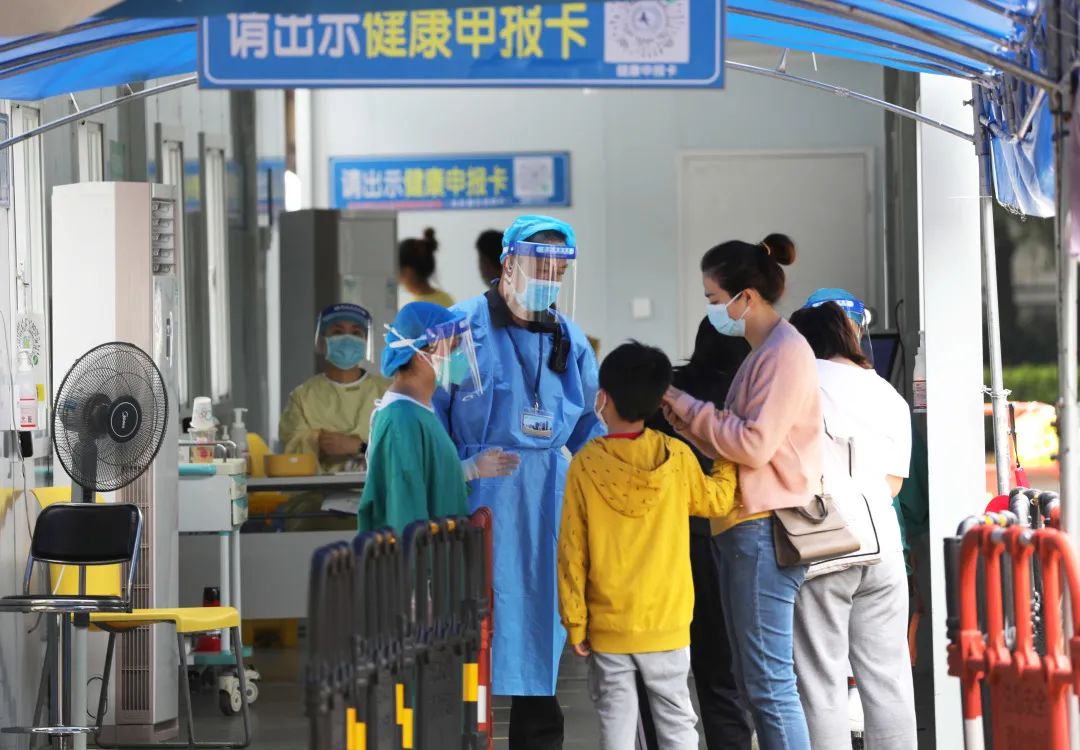
Adhere to the general policy of "dynamic clearing" and fight a protracted war of "precision prevention"

  Strengthening confidence and being ready for battle are two sides of the same body. With confidence in winning the protracted war of epidemic prevention and control, we can be strict and orderly, busy but not chaotic. This confidence is the "magic weapon" from China to control the epidemic — — General policy of "dynamic zero clearing" for epidemic prevention and control.

  The essence of "dynamic zero clearing" is fast and accurate. "Dynamic" means not pursuing absolute zero infection; "Clearing" means finding together, quickly and accurately fighting together, and keeping the bottom line without a large-scale rebound of the epidemic. Therefore, we should keep a calm, scientific and rational attitude towards sporadic cases, attach great importance to them ideologically, be calm and scientific in judgment, act quickly and decisively, and be busy but not chaotic.

  Adhering to the general policy of "dynamic clearing" is the best practice of the concept of people first and life first. China has a huge population base and susceptible population. In the face of the global epidemic that is still raging, choosing the path of "dynamic clearing" is the greatest respect for the vital interests of the broad masses of people and scientific laws.

  At present, to achieve "dynamic zero clearing" is to find the epidemic situation earlier with a more sensitive monitoring system, and to implement various prevention and control measures such as finding and managing the source of infection, cutting off the transmission route and protecting susceptible people, in view of the new characteristics of the spread of mutant strains in Omicron.

  At the press conference held by the joint prevention and control mechanism in the State Council, Liang Wannian, the leader of the expert group of the epidemic response and disposal leading group, said that accurate prevention and control is actually the essence of "dynamic zero clearing", and the most important thing is accurate prevention and control.

  Shenzhen put forward "precise prevention", that is, to carry out the flow tracing in the shortest time, quickly cut off the epidemic transmission chain, accurately define the "three districts" and take differentiated prevention and control measures by district and grade.

  It should be noted that since the beginning of this year, the ups and downs of the epidemic have repeatedly reminded us that "precision prevention" is a protracted war, and we can’t expect to accomplish everything in one battle; A little slack, a little carelessness, our phased achievements may be wasted.

  He who travels a hundred miles is half ninety. We must be cautious from the beginning, tread on thin ice, adhere to the general strategy of "external defense input, internal defense rebound" and the general policy of "dynamic clearing", resolutely compact the "four-party responsibility", do a good job in the prevention and control of epidemic normalization accurately, scientifically and efficiently, continuously improve the level of accurate prevention and control of regional differentiation, and resolutely find and put out together, laying a solid foundation for "stable growth" and "benefiting people’s livelihood"

  Everyone is an important link in the chain of prevention and control. It is also necessary for citizens and friends to establish the ideology of "precise prevention", implement the "three-character classics" of epidemic prevention, actively vaccinate and do personal protection, and make contributions to "precise prevention, steady growth and benefit people’s livelihood" with "resolute implementation of personal protection responsibility".

The first case in China: A director of Hainan was held accountable for failing to update the website for a long time due to dereliction of duty.

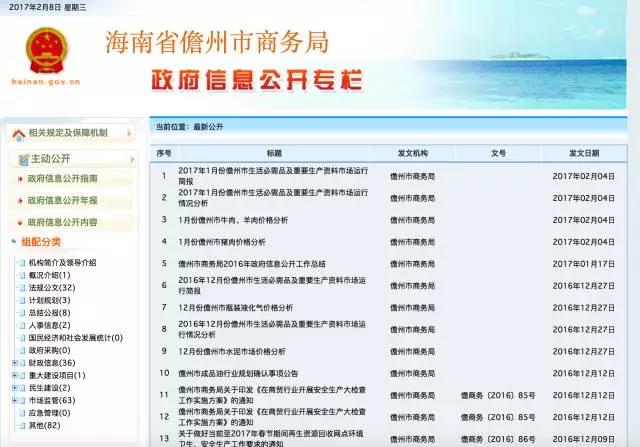
  CCTV News:Recently, the General Office of the State Council announced the fourth national government website spot check in 2016. So far, hundreds of unqualified government websites have been notified, but few officials have been held accountable. However, just a few days ago, Dong Haifeng, director and party secretary of Danzhou Municipal Bureau of Commerce in Hainan Province, was sentenced to administrative demerit and warning within the party for "dereliction of duty caused the website of the bureau not to be updated for a long time".The reporter inquired about the public report and found that this is the first case in China that was held accountable for failing to fulfill the responsibility of information disclosure.

  At present, the original website of Danzhou Municipal Bureau of Commerce in Hainan has been permanently shut down, and the relevant content has been moved to the government information disclosure column of the provincial government portal.

nine

  The website has not been updated for a long time, and the director has been put on file for review.

  On November 2, 2016, Danzhou Municipal Bureau of Commerce was notified as an unqualified government website by the Secretariat Bureau of the General Office of the State Council because of the outstanding problem of "the front page has not been updated for a long time", which is the only website notified in Hainan Province. After that, Liu Cigui, governor of Hainan Province, instructed that it should be dealt with seriously. Recently, the Danzhou Municipal Commission for Discipline Inspection also reported this case as a typical case of "no official, no responsibility", and the Danzhou Municipal Committee put Dong Haifeng on file for review.

  According to "Hainan Daily" reported on February 6, the Commission for Discipline Inspection of Danzhou City, Hainan Province reported five typical cases of not being an officer and not taking responsibility, including "Dong Haifeng, director and party secretary of Danzhou Municipal Bureau of Commerce, Hainan Province, was notified by the Secretariat of the General Office of the State Council that the website of the bureau was not updated for a long time due to dereliction of duty.”。

  According to the circular, Dong Haifeng, as the main person in charge of the Municipal Bureau of Commerce, has important leadership responsibilities, and his behavior has violated work discipline. On December 6, 2016, the municipal party Committee decided to file a case review of Dong Haifeng’s disciplinary behavior. Now, two months have passed, and the reporter recently learned exclusively that Dong Haifeng was given administrative demerits and warnings within the party respectively.

  Why is this punishment? Party discipline and regulations have a basis.

  Wang Zhengjie, director of the Information Disclosure Division of the General Office of the Hainan Provincial Government, said that the punishment of Dong Haifeng by the Danzhou Municipal Party Committee and the Municipal Government is well-founded in party discipline and regulations.

nine

  Wang Zhengjie said that official website, the Danzhou Municipal Bureau of Commerce, failed to update for a long time, which was "inaction" and was notified by the General Office of the State Council. Therefore, Danzhou City imposed administrative demerits on him according to the first and second items of Article 35 of the Regulations on the Openness of Government Information. Among them, the first case is "not fulfilling the obligation of government information disclosure according to law", and the second case is "not updating the open government information content, government information disclosure guide and government information disclosure catalogue in time".

  According to the relevant regulations of the party, Danzhou Municipal Committee gave Dong Haifeng a warning within the party for failing to perform his duties.

  Some websites have doubts. In the second national government website spot check report published by the State Council in 2016, the official website of the Housing and Urban-Rural Development Bureau of Baoting Li and Miao Autonomous County of Hainan Province also appeared on the notification list because "many columns were blank". Why didn’t the relevant person in charge be punished at that time? Wang Zhengjie said that many columns of Baoting Housing and Construction Bureau in official website were blank because the website was in the revision period and there were information and contents in the database. According to the situation at that time, the instructions of the leaders were not so strict.

  Expert: I hope this case can open the precedent of accountability system for information disclosure in China.

  According to the information released by the State Council a few days ago, at present, 84% of provinces (autonomous regions and municipalities) in China have established an accountability mechanism for problematic websites. At the provincial level, except for Xizang, Guangdong, Heilongjiang, Liaoning and Shanxi, other provinces in China have established accountability mechanisms for problematic websites. Although accountability mechanisms for problematic websites have been established in various places, in practice, there are few news that the main person in charge of administrative units is held accountable for poor information disclosure.

nine

  Scholars expressed the hope that this case can open a precedent for the accountability system of information disclosure in China and enable governments at all levels to perform their duties of information disclosure through various measures.

High-quality development in various fields has achieved fruitful results, and China’s economy has made steady progress.

Cctv newsOn September 22nd, News Network reported some good news, such as the celebration of "China Farmers Harvest Festival", the high-quality development of tax services, and the acceleration of large-scale equipment updating. In the autumn season, high-quality development in various fields has achieved fruitful results, and China’s economy has made steady and far-reaching strides.

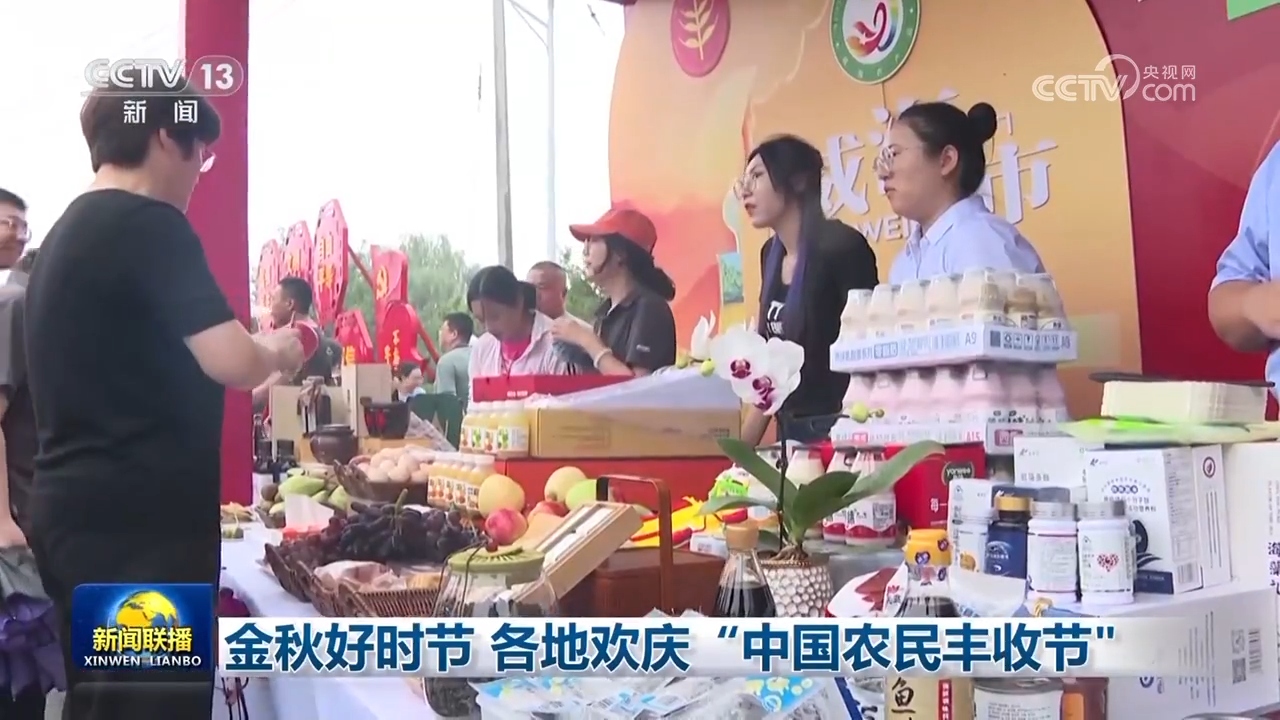
In the golden autumn season, the "China Farmers Harvest Festival" is celebrated everywhere.

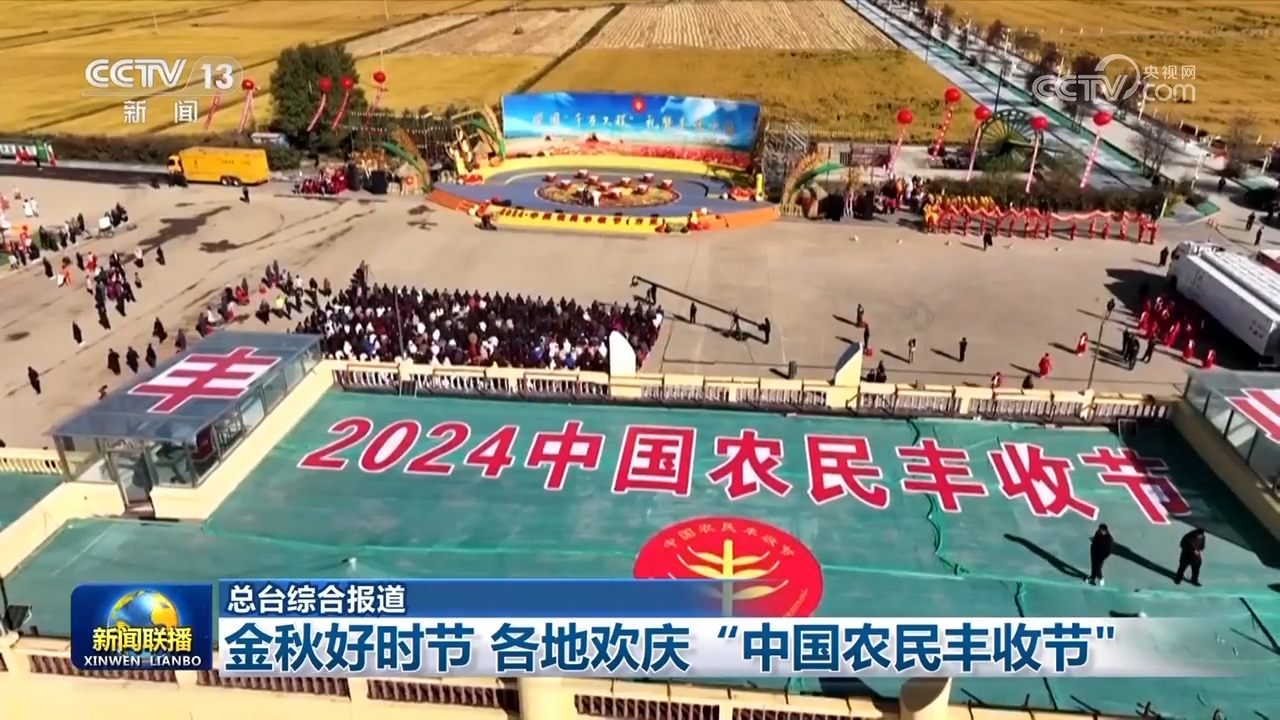
In the autumn season, the land of China is golden with fragrant fruits and vegetables. On September 22nd, people from all over the country celebrated the China Farmers Harvest Festival in various forms and shared the joy of harvest.

On September 22nd, the main activity of "China Farmers Harvest Festival" was held in lankao county, Kaifeng, Henan Province. The activity consisted of three sections: tribute to harvest, tribute to farmers and tribute to farming, and each section carefully designed colorful activities.

During the Harvest Festival, the special agricultural products of 16 cities in Shandong Province showed the new achievements of rural revitalization. In Yunnan, a series of harvest celebration activities such as "Revitalizing You and Me in the Countryside" were launched. In Anhui, new varieties of agriculture and new equipment of agricultural machinery attract many farmers to visit. In Heilongjiang, the activities closely focused on six links, namely "reporting a bumper harvest, exhibiting a bumper harvest, producing a bumper harvest, helping a bumper harvest, enjoying a bumper harvest, and celebrating a bumper harvest", showing the great achievements in the field of agriculture, rural areas and farmers and the prosperity of rural revitalization in an all-round way.

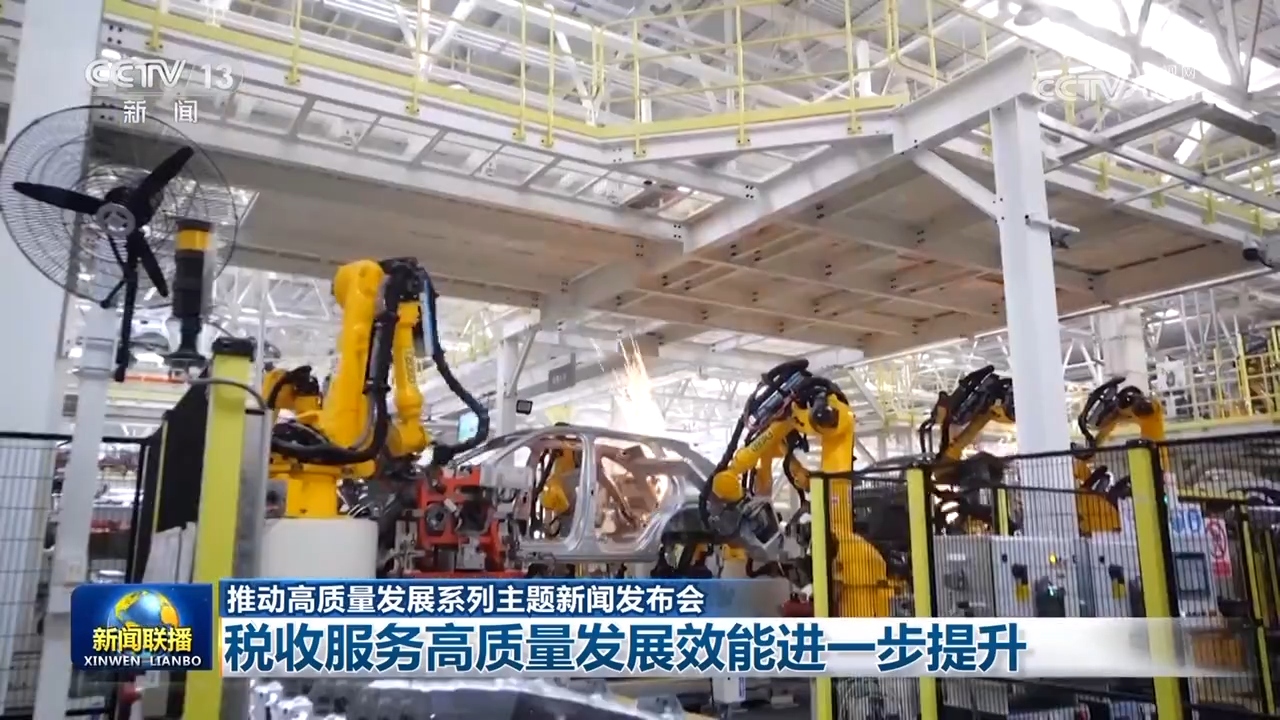
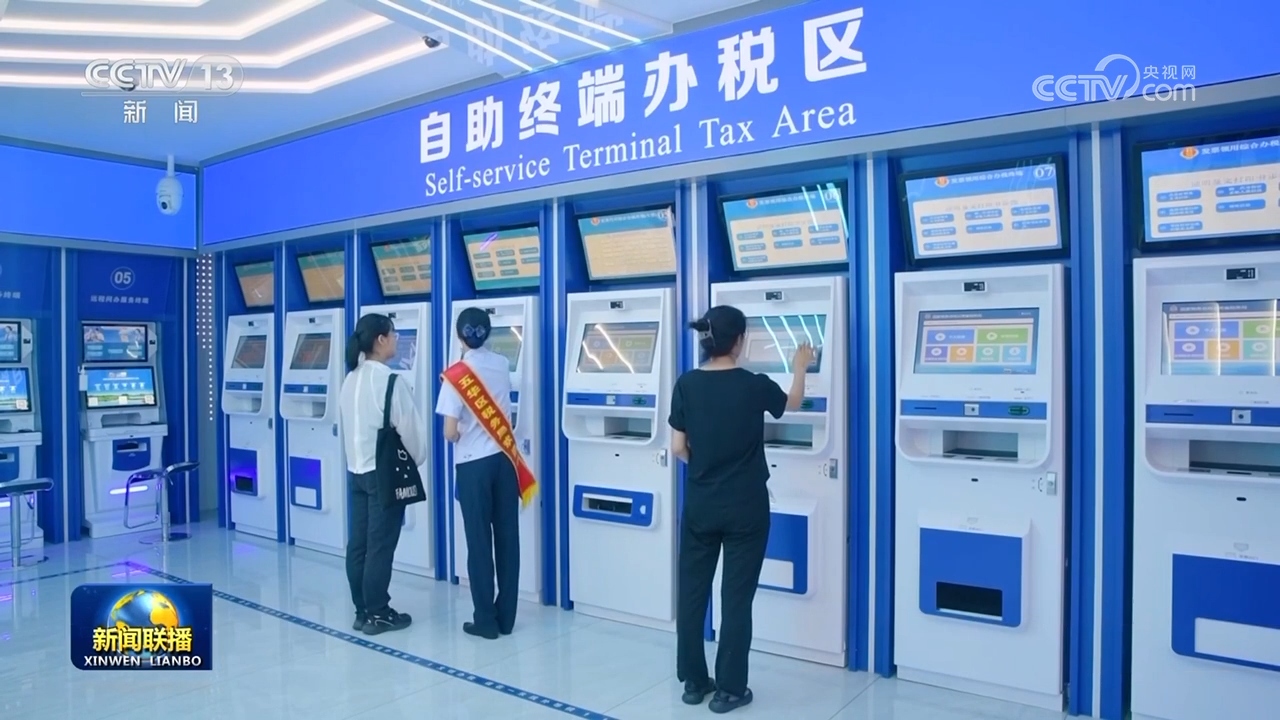
The efficiency of high-quality development of tax services has been further improved.

The State Council Press Office held a series of press conferences on "Promoting High-quality Development" on the 20th, and the relevant person in charge of State Taxation Administration of The People’s Republic of China introduced the new achievements made in the high-quality development of tax services.

The relevant person in charge of State Taxation Administration of The People’s Republic of China said that since the beginning of this year, the tax authorities have insisted on organizing tax revenue according to laws and regulations, and implemented preferential policies for reducing taxes and fees. 1— In August, the current major policies supporting scientific and technological innovation and manufacturing development reduced taxes, fees and tax rebates by over 1.8 trillion yuan. Relying on tax big data, various tax and fee preferential policies were accurately pushed by 360 million person-times, and the unified and standardized new electronic tax bureau was launched nationwide, and the tax time was reduced by 20% year-on-year.

At the same time, we will continue to focus on people’s livelihood concerns and promote the full release of tax policy dividends. According to the data of individual tax settlement and payment that ended at the end of June this year, in 2023, the special additional deduction standard for "one old and one small" personal income tax was raised, benefiting about 67 million people, and the scale of tax reduction exceeded 70 billion yuan.

In the next step, State Taxation Administration of The People’s Republic of China will further deepen the reform in the tax field, implement the structural tax reduction and fee reduction policy, maintain the economic operation order and national tax security, and better serve high-quality development.

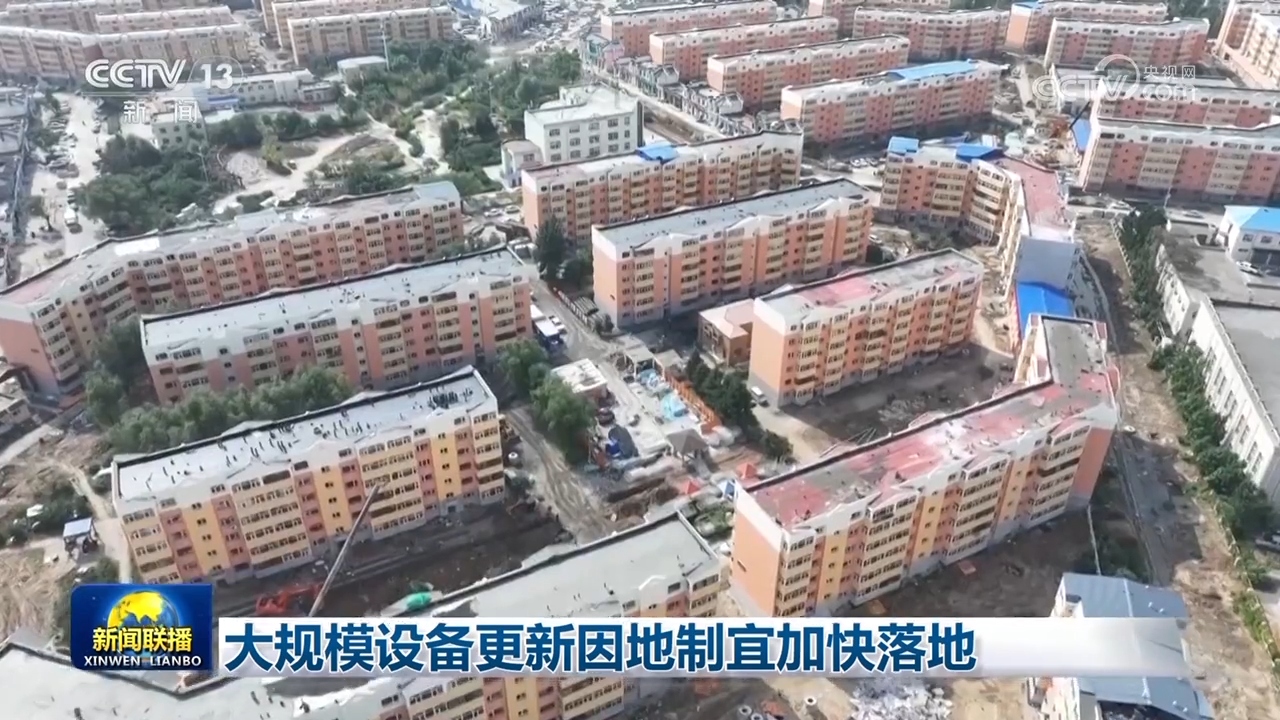
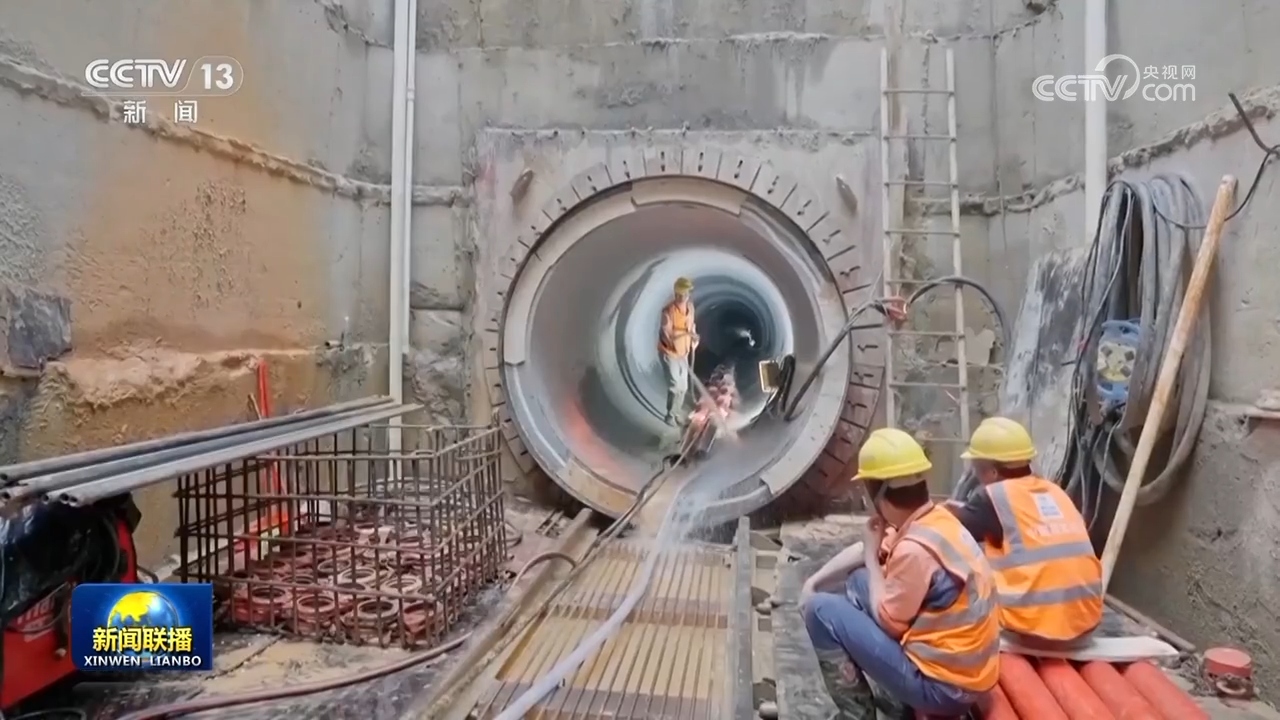
Large-scale equipment updating and speeding up the landing according to local conditions

The reporter learned from the National Development and Reform Commission on September 22nd that two batches of funds totaling 150 billion yuan supported by ultra-long-term special national debt for large-scale equipment renewal have all been allocated to the project, and all localities have accelerated the implementation of policies in the fields of education, construction and industry, benefiting enterprises and benefiting the people.

At present, it is the new autumn semester, and new desks and chairs and folding beds have entered primary and secondary schools in Zhejiang, so students can "lie down and sleep" during their lunch break. In universities and laboratories, a batch of new scientific research equipment is ushered in, among which high-precision equipment with a unit price of more than 500,000 yuan is an important direction of this round of equipment renewal.

With the heating season approaching, Heilongjiang and other places have stepped up efforts to update the insulation and heating system equipment of old residential areas. Taking advantage of the construction window before winter, in Hunan, the renovation of underground pipe network was further rolled out to enhance the city’s flood control and drainage capacity. In Jiangsu, the renewal of elevators in old communities has been accelerated.

In the industrial field, Shandong and Guangdong, major manufacturing provinces, have accelerated the green transformation of key energy-using industries such as steel, ceramics and textiles, and upgraded key energy-using equipment such as boilers, motors and transformers. Since the beginning of this year, China’s industrial energy utilization efficiency has been further improved.

The National Development and Reform Commission (NDRC) recently stated that with the total of 150 billion yuan of funds supported by ultra-long-term special national debt for large-scale equipment renewal being allocated to the project, it will further support equipment renewal and recycling in more than 10 fields such as industry, transportation and logistics. It is estimated that more than 2 million sets of equipment will be updated, which will further inject new vitality into equipment investment in related fields.

A new round of automobile trade-in policy stimulates new vitality of the market.

With the implementation of the new round of automobile trade-in policy, consumers’ enthusiasm for buying cars continues to rise.

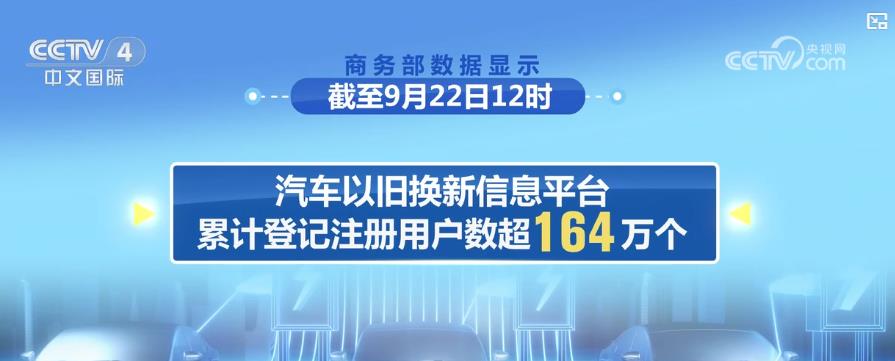
According to the data of the Ministry of Commerce of China, as of 12: 00 on September 22nd, the number of registered users of the information platform of automobile trade-in exceeded 1.64 million, and more than 1.1 million applications for subsidies for automobile scrapping and renewal were received. The steady and orderly promotion of automobile trade-in has also driven the growth of automobile sales, especially since September. September 1st — On the 15th, the retail sales of passenger cars nationwide reached 828,000, up 18% year-on-year. Among them, the retail sales of new energy passenger cars was 445,000, a year-on-year increase of 63%.

The first box girder of Kangyu section of Xi-Yu high-speed railway was successfully erected.

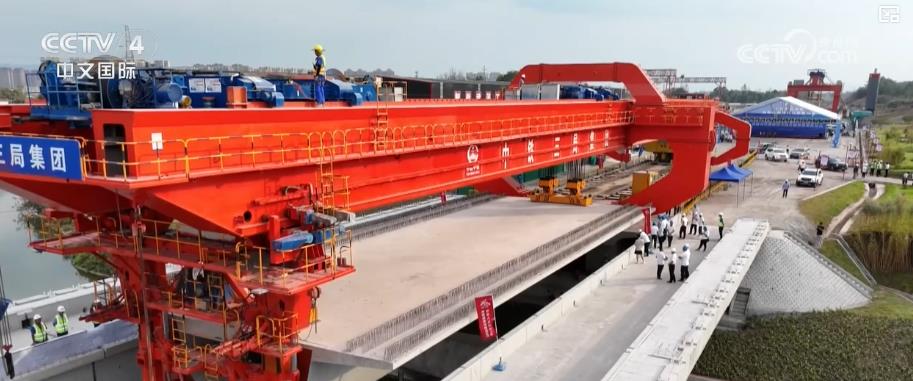
Recently, the first box girder of the Kangyu section of the Xiyu high-speed railway has been stabilized at the middle bridge of Zhangjialiang No.4 Line of the Eighth Standard of Kangyu of China Railway Third Bureau, which indicates that the Kangyu section of the Xiyu high-speed railway has turned from offline construction to online construction.

The box girder erection adopts cloud platform monitoring, operation and maintenance, automatic driving of beam carrier and other systems to realize "front operation and rear control" and ensure the safety of beam erection.

Xi-Yu high-speed railway is an important part of the "eight vertical and eight horizontal" high-speed railway network, which will further improve the railway network structure in the central and western regions after the project is completed.

China’s steady strong magnetic field sets a new world record for water-cooled magnets.

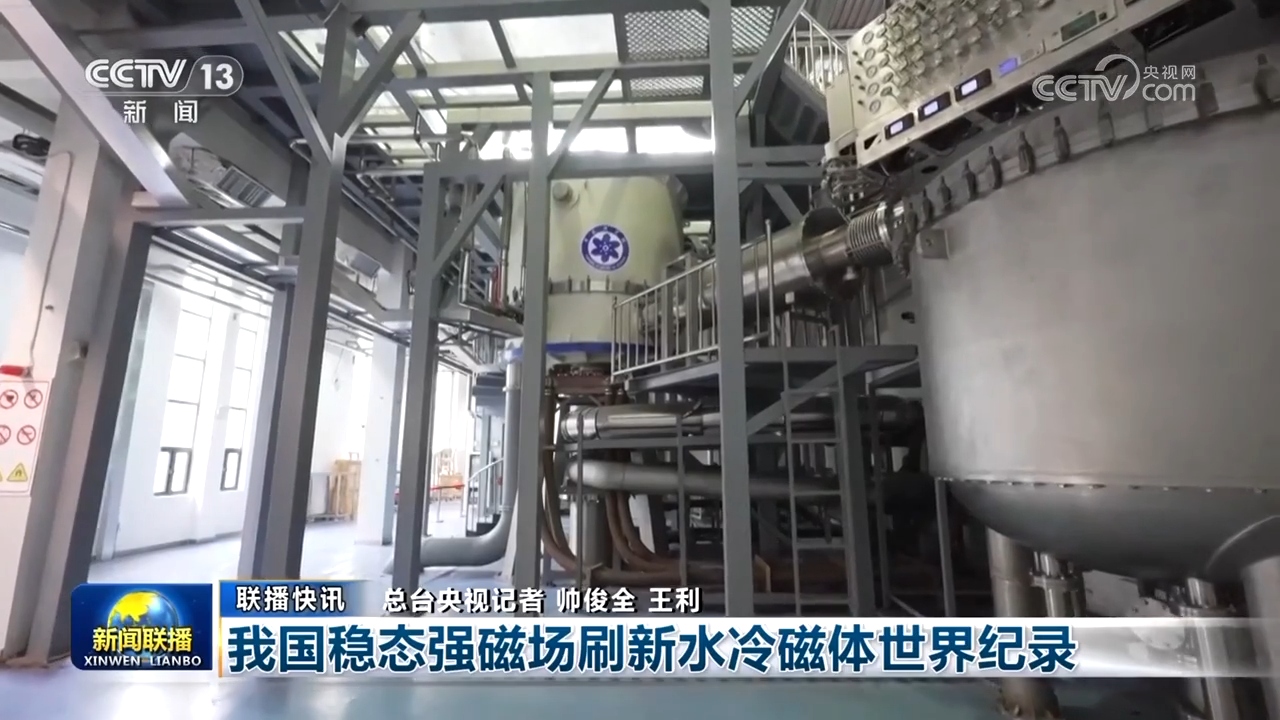
On September 22nd, the water-cooled magnet independently developed by China High Magnetic Field Center produced a steady magnetic field of 420,200 Gauss, setting a new world record, which provided a powerful experimental platform for studying the phenomenon and law of material properties changing under high magnetic field.

Wenzhou Airport’s "sky-high price of car ferry" caused controversy and responded that it was clearly marked.

  "The apron is only about 300 meters away from the terminal building. Why do you have to charge so much for such a short distance in car ferry?" Recently, passenger Xiaoxin (pseudonym) posted on the Internet that she and her colleagues flew from Beijing to Wenzhou on the 4th. After disembarking, she took the first-class exclusive car ferry with her to help her first-class colleagues with their luggage. However, Xiaoxin was charged 398 yuan by the airport because she was an economy class passenger. Faced with the query of Xiaoxin’s "overlord clause", Wenzhou Airport responded that the charges were clearly marked and the passengers had been informed in advance.

  passenger

  It is unreasonable to charge 398 yuan for 300 meters.

  It is understood that on May 4, Xiaoxin and a colleague returned to Wenzhou from Beijing on business. Because they didn’t buy a first-class ticket, they took economy class. After arriving at the airport, Xiaoxin went to car ferry in the first class for the sake of helping his colleagues with their luggage.

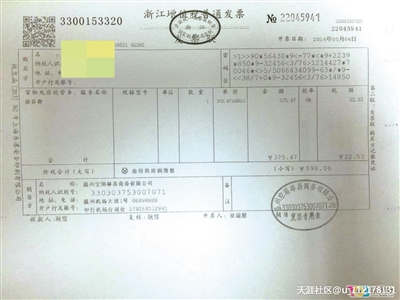
  According to Mr. Chen, a colleague of Xiaoxin, "Xiaoxin thought this charge was expensive at that time, so after paying the fee, he specifically asked them for the invoice."

  On the evening of the 6th, Xiaoxin reported this problem to the airport staff through the complaint telephone number of Wenzhou Airport, and asked if there were any relevant documents stipulated by the price department, and the reply was "This is the regulation of the airport".

  "As for the relevant documents, they said they did, but they could not provide them to us." Later, the airport also explained that the VIP room and car ferry consumption are linked together and belong to VIP consumption.

  Is there a charge for car ferry? In this regard, Xiaoxin has several questions. First, should this fee be collected? Secondly, if you really want to pay the fee, does this 398 yuan meet the relevant charging standards stipulated by the price department? "Who will go to the VIP room to sit for a few hours when leaving Hong Kong? Why do you have to be tied up with other services such as VIP rooms when you leave Hong Kong? This is the overlord clause. "

  airport

  Passengers have been informed before charging fees.

  According to a related person in charge of Wenzhou Airport, the car ferry flight attendant told the passenger that there was a charge of 398 yuan when he found this situation.

  "The colleague of the passenger paid us the fee on the spot. This communication is no problem. The other party also recognized our obligation to inform, and we also provided them with invoices at that time."

  As for whether the fees have been approved by the price department and whether the amount of fees is reasonable, the person in charge said that Zhejiang Province publishes the pricing catalogue of goods every year, but since 2015, the pricing catalogue of civil aviation no longer includes fixed item fees.

  "Our fixed services are completely market-leading prices and do not need the approval of the price department. According to the operating conditions, we have the right to make price adjustments on our own. Moreover, we have also clearly marked the price, which is explained on the official website and service counter of the airport. " The person in charge also said that this price is not high from the price level of national airports, and it belongs to the lower-middle level.

  For the specific expenses included in the 398 yuan, the person in charge said that "all services are included". "Whether entering or leaving Hong Kong, for example, passengers enter and leave through special passages, rest in VIP rooms, or enjoy refreshment services. The charges of this set of processes are inseparable, and it is impossible to extract one of the services for separate charges. The service model is the same throughout the country. "

  Municipal bureau of commodity price

  Currently involved in the investigation.

  Yesterday, in response to this matter, the reporter of Beiqing Daily telephoned the Wenzhou Municipal Price Bureau. According to relevant sources, the competent price department of Wenzhou Municipal Government has been involved in the investigation that morning, and the relevant results will be announced as soon as possible.

  The price bureau said that Xiaoxin’s affairs involved many aspects and were more complicated. It said, for example, can economy class passengers take first class car ferry? If you can, if everyone pays to sit, it may affect the feelings of other passengers. In addition, the Price Bureau has no information about whether the behavior of taking car ferry like Xiaoxin should be charged and who should set the fee standard.

  "At present, there are three modes of price management in our country, namely, government pricing, government-guided pricing and market-regulated pricing. However, this case is quite special. Although we stipulate that there is no charge for passengers to use car ferry now, it is hard to say that passengers in economy class take first-class passengers in car ferry."

  Expert opinion

  Charge or no relevant basis

  Whether car ferry should be charged at the airport, Zhang Qihuai, the chief expert of China Aviation Legal Service Center and lawyer of Lanpeng Law Firm, thinks that there is no relevant basis for the airport to charge passengers for taking car ferry.

  Zhang Qihuai introduced, "There may be a corresponding price regulation for the driving route between the operation of car ferry and the airport, but this cost occurs between the operator of car ferry and the airport and has nothing to do with passengers, so passengers should not be charged any fees."

  But at the same time, as a passenger, this practice also has some shortcomings. "Passengers should consciously abide by the relevant regulations on taking car ferry. It is also inappropriate to take an economy class ticket like Xiaoxin to take the first class exclusive car ferry, but it cannot be used as a reason for the airport to charge it."

  Text/reporter Kong Dejun Intern reporter Wang

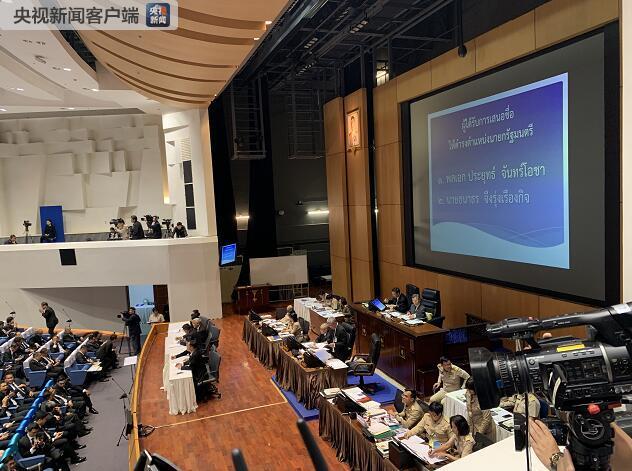
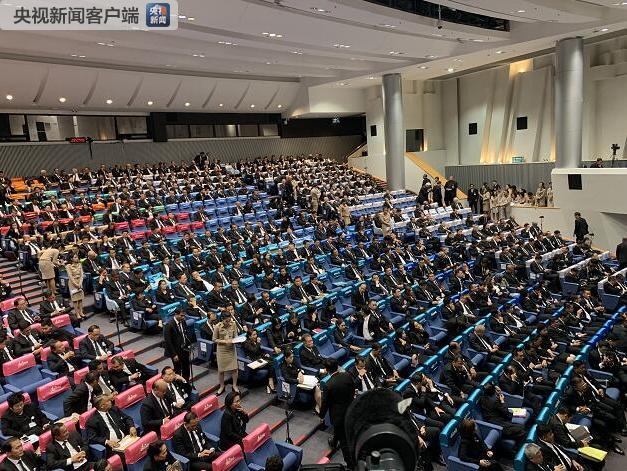
Thai prime minister election results released Ba Yu was elected as the new prime minister of the government.

  CCTV News:On the 5th local time, the Thai Parliament held a joint meeting of the upper and lower houses to jointly elect the new Prime Minister. According to the results of the voting statistics that night, the Thai Parliament announced that the current Prime Minister, Ba Yu Zhan Aocha, was elected as the new Prime Minister.

  On the same day, the joint meeting of the upper and lower houses of Congress officially began at 11: 00 am local time. Members of the Thai People’s Power Party nominated the current Prime Minister Ba Yu as the candidate for the new government, while members of the New Future Party of Thailand nominated its leader Tanatong as the candidate for the prime minister.

  Subsequently, members of all political parties had a heated debate on the qualifications of the two candidates. After nearly 11 hours of discussion, it was around 10 pm local time on the 5th. Chuan leekphai, President of the National Assembly, announced the beginning of voting to elect the Prime Minister of the new government from the two existing candidates.

  The voting session of the day was an open vote, and members of the upper and lower houses expressed their support to Congress in turn. According to the final vote count, a total of 747 members of the 750 members of the upper and lower houses of Congress voted. Tanatong, the leader of the New Future Party, won 244 votes, while the current Prime Minister Ba Yu won 500 votes and three abstained. Ba Yu was successfully elected as the new Prime Minister and became the 30th Prime Minister of Thailand.

  News background:

  Thailand held its first general election in nearly five years since the coup on March 24th this year, and elected 500 members of the House of Commons. Different from the previous general elections, according to the latest constitution revised after the coup, the candidate for Prime Minister of Thailand is jointly elected by members of the upper and lower houses of Parliament, and all 250 members of the House of Lords are selected by the National Peacekeeping Order Committee led by the current Prime Minister Ba Yu.

  In 2014, the Thai military launched a coup to overthrow the Thai government led by Yingluck. The former army commander Ba Yu led the establishment of the National Peacekeeping Order Committee, which served as the Prime Minister and has been in power ever since. (CCTV reporter Luo Wei)

Summary of the situation of Wenchuan earthquake with magnitude 7.8 in Sichuan Province

Topic: An earthquake of magnitude 7.8 occurred in Wenchuan County, Sichuan Province.

  Essential life-saving tips for emergency measures  Don’t jump off a building. What does the earthquake do to the human body the most?


    Ten rules of escape in an earthquake   The National Disaster Reduction Committee urgently launched the second-level emergency response for disaster relief.


    Earthquake self-help encyclopedia is highly recommended. China Meteorological Bureau started the second-level emergency response of earthquake disaster meteorological service.


    Zhang Hongwei, spokesman of the Seismological Bureau of China, said that the earthquake was strong and spread widely. The latest measured magnitude is 7.8, and it is felt in Ningxia, Qinghai, Gansu, Henan, Shanxi, Shaanxi, Shandong, Yunnan, Hunan, Hubei, Shanghai, Chongqing and other provinces and cities.


  Casualties: 14,463 people died in Sichuan, 280 in Gansu and 106 in Shaanxi.


  According to statistics from relevant departments, as of two o’clock in the afternoon of May 14th, the death toll of Wenchuan earthquake was 14,866, including 14,463 in Sichuan, 280 in Gansu, 106 in Shaanxi, 14 in Chongqing and 2 in Henan.> > > more


   Sichuan/Chongqing


  As of 16: 00 on the 14th.ChengduThe death toll is 1215.


  [Video] Mianyang TV reporter: As of 18: 30 on the 13th, 18,600 people were buried.


  [Video] The death toll in Mianyang reached 7395. Deyang died 2674 959 people died in Chengdu 


  The severe disaster in Zundao Town, Mianzhu City has caused more than 400 deaths (photos)


   Wenchuan:Yingxiu Town has a population of 12,000, and more than 3,000 people have been given food by the army.


         About a third of the houses collapsed. About 60,000 people have not been heard from. 


  Guangyuan Qingchuan County No.1 Middle School had more than 400 students killed or injured at 15: 00 on the 13th.


  Beichuan:3,000 to 5,000 people died Most buildings in the county collapsed. More than a thousand teachers and students were buried. 


  Some school buildings in Deyang collapsed and a group of students were buried.  Ten people were killed and 86 injured in ziyang.


  Marcand, Sichuan, Jiuzhaigou, Shifang and other places released preliminary reports of casualties.


  Several buildings in shifang city collapsed in the epicenter and hundreds of people were buried. Meishan 8 died and more than 3000 people were injured.


  Eleven people were killed in the Chongqing earthquake.


    As of 8: 00 on the 13th, there were 16 aftershocks of magnitude 5 or above in the earthquake zone, with a maximum magnitude of 6.0.


  The strong earthquake affected Dujiangyan and the road leading to Wenchuan has been completely interrupted.  The highway from Chengdu to Wenchuan is blocked.


  Chengdu can still feel traffic jams and communication difficulties in some sections of aftershocks.  The earthquake is obvious Underground water pipe rupture


  Primary and secondary schools and kindergartens in Chengdu will have a holiday tomorrow.  The social order was basically normal after the Chengdu earthquake.  


  Chengdu Airport was temporarily closed until 18: 00. Flights to Chengdu are preparing to descend to Chongqing Airport.


    Chengdu, Chongqing, Xi ‘an and other areas were closed due to the earthquake.  The first trains of Chengdu Railway Station were all stopped.


  180 trains were stranded due to Wenchuan earthquake. The earthquake caused some trains in Chongqing to leave late. 


  Wenchuan earthquake caused 15 railway collapses and more than 200 trains were stranded on the way. 


   Many highways in Sichuan and Shaanxi were interrupted, and the Ministry of Communications responded to the earthquake disaster urgently. 


  An earthquake of magnitude 7.8 occurred in Sichuan, and many provinces and cities felt it clearly [photos]


  Many Chengdu citizens take refuge outdoors [Photos]


   Don’t believe rumors because of the magnitude 7.8 earthquake in Wenxian County, Sichuan Province.


    Xinhuanet Beijing, May 12th According to the China Seismological Network, at 14: 28 on May 12th, 2008, an earthquake of magnitude 7.8 occurred in Wenxian County, Sichuan (103.4 degrees east longitude and 31.0 degrees north latitude). This earthquake has a high magnitude and a wide range of feelings. It has spread to Ningxia, Gansu, Qinghai, Shaanxi, Shanxi, Shandong, Henan, Hubei, Hunan, Chongqing, Guizhou, Yunnan, Guangxi, Xizang, Jiangsu, Liaoning and Shanghai.> > > more


   Seismological Bureau of Chongqing: The earthquake in Chongqing tonight is a rumor. 


  Experts believe that the Wenchuan earthquake belongs to shallow earthquakes and its destructive power is greater.


    Xizang earthquake experts will rush to Sichuan to support the rescue.  Yunnan earthquake experts rushed to Sichuan to support rescue.


    Hospital emergency transfer patients actively take care of the wounded after the earthquake.


   Sichuan takes measures to prevent new losses caused by aftershocks.


    Dujiangyan scenic area personnel have not found any signs of damage to Dujiangyan water conservancy project.


  There will be little to moderate rain in most parts of Sichuan in the next three days. 


………………………………………………………………………………………………


the Three Gorges


   The Three Gorges Dam has not been affected by the earthquake and is safe at present.


   The epicenter of Wenchuan earthquake is about 1000 kilometers away from the Three Gorges Dam, and the dam is normal (Figure).


………………………………………………………………………………………………


Yunnan/Hainan  


   More than 16,000 residents were resettled in Zhaotong earthquake-stricken area, Yunnan Province.


  One person died and nine people were injured in Zhaotong, Yunnan.


  Xinhuanet Kunming, May 12 (Reporter Guan Guifeng) On the 12th, after the Wenchuan earthquake in Sichuan, Zhaotong City, Yunnan Province felt a strong earthquake. As of 19: 00, the earthquake has caused one death and nine injuries in Zhaotong, and more than 3,000 houses have been damaged to varying degrees.> > > more


  Yunnan: Chuxiong Zhaotong and other places have strong earthquakes and some houses collapsed.


    Kunming, May 12 (Xinhua) According to the news from the Yunnan Provincial Department of Civil Affairs, Chuxiong and Zhaotong in Yunnan were affected by the Wenchuan earthquake in Sichuan, which had a strong sense of earthquake and some houses collapsed. No casualties were reported as of 15: 00.


  The earthquake in Kunming is strong. Haikou city has obvious earthquake sensation. House damage in some areas of Yunnan


  ………………………………………………………………………………………………


Gansu/Shaanxi/Ningxia/Shanxi


  The earthquake in Lanzhou, Gansu Province is obvious There was an obvious earthquake in Qingyang, Gansu.  Emergency response to the earthquake of magnitude Ⅲ in Gansu Province.


    Xinhuanet Lanzhou, May 12 (Reporter Song Changqing) Affected by a strong earthquake, at 14: 30 on the 12th, Lanzhou city felt an obvious earthquake.


    Citizens have taken to the streets to avoid danger, and schools and other units have immediately evacuated people to safe places to avoid danger. A large number of vehicles parked on the side of the road were affected by the vibration, and the alarms sounded one after another. Mobile communication was once generally blocked.> > > more 


  The death toll in Longnan, Gansu Province has increased to 198, and the number of injured has increased to 2414.  12 hours in Longnan disaster area


   The death toll from Wenchuan earthquake in Gansu province rose to 48.  At least 10 people died.


  Xinhuanet Lanzhou, May 12 (Reporter Song Changqing) According to the latest statistics of department of gansu province, as of 21: 00 on the 12th, the death toll from the Wenchuan earthquake in Gansu Province has risen to 48, 16 people were seriously injured, and more than 20,000 people have been resettled. At present, the number of casualties is still under further statistics, and the disaster situation in Wenxian County, which is adjacent to Sichuan, cannot be counted.> > > more


  The Wenchuan earthquake in Sichuan caused 61 deaths and 176 injuries in Shaanxi.


    Xinhuanet Xi ‘an, May 12 (Reporter Yu Shaoliang Mao Haifeng) According to the Shaanxi Provincial Emergency Office, as of 22: 00 on the 12th, the Wenchuan earthquake in Sichuan has caused 61 deaths and 176 injuries in Shaanxi, and the number of casualties reported in various parts of Shaanxi is still increasing.> > > more


  The earthquake in the center of Xi’ an is obvious.


  Students from Xunyi Middle School in Shaanxi Province were evacuated on the playground. image-text  


    The office building in Yinchuan area shook for about 4 minutes.


    Shanxi: I feel that many people ran to the outdoor open area after the earthquake.  


    Strong earthquakes have caused poor communication and power damage in parts of western China. 


   Shaanxi urgently deploys earthquake relief work.


………………………………………………………………………………………………


Beijing/Tianjin/Shijiazhuang


   The State Seismological Bureau said that the rumor that there will be aftershocks in Beijing tonight is not true.


   Xinhua News: The duty room of the State Seismological Bureau said that the rumor that there will be aftershocks in Beijing tonight is not true, and there will be no destructive earthquake in Beijing in the near future.


   The Bird’s Nest, a 3.9-magnitude earthquake in Tongzhou, Beijing, was unaffected.


  There is obvious earthquake sensation in Tianjin area.

    Shijiazhuang area has obvious earthquake sensation.

   Affected by the earthquake, flights from Beijing to Chengdu, Chongqing and Xi ‘an were delayed. 

  Beijing’s public transport systems, such as buses and subways, were not affected by the earthquake.


  Seismological Bureau of Beijing: There will be no destructive earthquake in Beijing in the near future. 

Song Zhanying, the former inspector of the China Banking Regulatory Commission’s Office for Handling Illegal Fund-raising, was expelled from the Party.

  CCTV News:According to the website of the State Supervision Commission of the Central Commission for Discipline Inspection, according to the news of the Discipline Inspection and Supervision Team of the State Supervision Commission of the Central Commission for Discipline Inspection in the State Financial Supervision Administration and the Supervision Commission of Hebei Province, a few days ago, the Discipline Inspection and Supervision Team of the State Supervision Commission of the Central Commission for Discipline Inspection in the State Financial Supervision Administration and the Supervision Commission of Handan City, Hebei Province conducted a disciplinary review and supervision investigation on Song Zhanying, the former inspector of the China Banking Regulatory Commission’s Office for Handling Illegal Fund-raising.

  After investigation, Song Zhanying, as a leading cadre in party member, lost his ideals and beliefs, abandoned his initial mission, violated organizational principles, concealed personal matters, and helped others to join financial institutions in violation of regulations; The bottom line of integrity has fallen, illegally accepting and holding shares of non-listed companies, and illegally doing business; Violation of life discipline; Illegal possession of classified information; Taking advantage of his position to make profits for others in bank loans, employment in financial institutions, etc., and illegally accepting huge amounts of property.

  Song Zhanying seriously violated the party’s organizational discipline, integrity discipline and life discipline, and constituted a serious duty violation and was suspected of taking bribes and using influence to take bribes. He did not converge or stop after the 18th and 19th National Congress of the Communist Party of China, which was serious in nature and had a bad influence. It should be dealt with seriously. According to the Regulations on Disciplinary Actions in the Communist Party of China (CPC), the Supervision Law of People’s Republic of China (PRC), the Law on Administrative Actions of Public Officials in People’s Republic of China (PRC) and other relevant regulations, Song Zhanying was dismissed from the Party Committee meeting of the State Financial Supervision and Administration Bureau, and the treatment he enjoyed was cancelled according to regulations; Collect their illegal income. After the research and decision of the Supervision Committee of Handan City, Hebei Province, Song Zhanying’s suspected crime was transferred to the procuratorate for review and prosecution according to law, and the property involved was transferred with the case.

People’s Republic of China (PRC) Military Facilities Protection Law

Xinhua News Agency, Beijing, June 10th

People’s Republic of China (PRC) Military Facilities Protection Law

(Adopted at the 12th meeting of the 7th the NPC Standing Committee on February 23rd, 1990, the first amendment was made according to the Decision of the 10th meeting of the 11th the NPC Standing Committee on August 27th, 2009, and the second amendment was made according to the Decision of the 9th meeting of the 12th the NPC Standing Committee on June 27th, 2014, and revised at the 29th meeting of the 13th the NPC Standing Committee on June 10th, 2021).

catalogue

Chapter I General Provisions

Chapter II Delimitation of Military Restricted Zones and Military Administrative Zones

Chapter III Protection of Military Restricted Zones

Chapter IV Protection of Military Administrative Zones

Chapter V Protection of Military Facilities Not Classified into Military Restricted Zones and Military Administrative Zones

Chapter VI Management Responsibilities

Chapter VII Legal Liability

Chapter VIII Supplementary Provisions

Chapter I General Provisions

Article 1 This Law is formulated in accordance with the Constitution for the purpose of protecting the safety of military installations, ensuring the efficiency of military installations and the normal conduct of military activities, strengthening the modernization of national defense, consolidating national defense and resisting aggression.

Article 2 Military facilities mentioned in this Law refer to the following buildings, sites and equipment directly used by the state for military purposes:

(1) Command organs, ground and underground command projects and combat projects;

(2) Military airports, ports and docks;

(3) Camp, training ground and testing ground;

(4) Military caves and warehouses;

(five) military information infrastructure, military reconnaissance, navigation and observation stations, military surveying, navigation and navigation AIDS;

(6) Military highways, special railway lines, military power transmission lines and military oil, water and gas pipelines;

(7) frontier defense and coastal defense control facilities;

(eight) other military facilities stipulated by the State Council and the Central Military Commission (CMC).

The military facilities mentioned in the preceding paragraph include temporary facilities necessary for the army to perform its tasks.

Article 3 The protection of military facilities shall adhere to the leadership of the Communist Party of China (CPC). People’s governments at all levels and military organs should jointly protect military facilities and safeguard national defense interests.

The State Council and the Central Military Commission (CMC) are responsible for the protection of military facilities nationwide according to their division of responsibilities. Local people’s governments at various levels shall, jointly with relevant military organs, administer the protection of military facilities within their respective administrative areas.

The relevant military organs shall, in accordance with the prescribed authority and procedures, put forward the requirements for the protection of military facilities that need to be implemented by the local people’s government, and the local people’s government shall, in conjunction with the relevant military organs, formulate specific protection measures and implement them.

Where military facilities are installed, the relevant military organs and local people’s governments at or above the county level shall establish a coordination mechanism for the protection of military facilities, cooperate with each other, supervise and inspect the protection of military facilities, and coordinate and solve problems in the protection of military facilities.

Article 4 Organizations and citizens in People’s Republic of China (PRC) have the obligation to protect military installations.

It is forbidden for any organization or individual to destroy or endanger military facilities.

Any organization or individual has the right to report and accuse acts that destroy or endanger military facilities.

Article 5 The State gives overall consideration to economic construction, social development and the protection of military facilities, and promotes the coordination between economic and social development and the protection of military facilities.

Article 6 The State implements the policy of classified protection and ensuring key points for military facilities. The classification and protection standards for military installations shall be stipulated by the State Council and the Central Military Commission (CMC).

Article 7 The state shall adopt corresponding supporting policies and measures for places where military facilities and economic construction are greatly affected. Specific measures shall be formulated by the State Council and the Central Military Commission (CMC).

Article 8 Organizations and individuals who have made outstanding contributions to the protection of military facilities shall be commended and rewarded in accordance with the provisions of relevant laws and regulations.

Chapter II Delimitation of Military Restricted Zones and Military Administrative Zones

Article 9 Military restricted zones and military administrative zones shall be demarcated according to the nature, function, security and confidentiality requirements and efficiency requirements of military facilities. The specific demarcation standards and procedures shall be stipulated by the State Council and the Central Military Commission (CMC).

The term "military restricted zone" as mentioned in this Law refers to a military area with important military facilities or military facilities with high security and confidentiality requirements and major risk factors, which needs special measures to be protected by the state and is demarcated in accordance with legal procedures and standards.

The term "military administrative zone" as mentioned in this Law refers to a military zone with relatively important military facilities or military facilities with high security and confidentiality requirements and great risk factors, which needs the state to take special measures to protect it, and is demarcated in accordance with legal procedures and standards.

Tenth military restricted zones and military administrative zones shall be determined by the State Council and the Central Military Commission (CMC), or by the relevant military authorities in accordance with the provisions of the State Council and the Central Military Commission (CMC).

The revocation or alteration of the military restricted zone and the military administrative zone shall be handled in accordance with the provisions of the preceding paragraph.

Article 11 The scope of military restricted zones and military administrative zones on land and water shall be jointly delineated by the people’s governments of provinces, autonomous regions and municipalities directly under the Central Government and relevant military organs at or above the corps level, or by the people’s governments of provinces, autonomous regions and municipalities directly under the Central Government, relevant departments of the State Council and relevant military organs at or above the corps level. The scope of air military restricted zones and particularly important land and water military restricted zones shall be delineated by the State Council and the Central Military Commission (CMC).

The adjustment of the scope of military restricted zones and military administrative zones shall be handled in accordance with the provisions of the preceding paragraph.

Twelfth military restricted zones and military administrative zones shall be set up by the local people’s governments at or above the county level in accordance with the unified regulations of the state.

Article 13 The delineation or adjustment of the scope of military restricted zones and military administrative zones shall take into account economic construction, ecological environment protection and the production and life of local residents on the premise of ensuring the security and confidentiality of military facilities and their use efficiency.

If it is necessary to delimit or adjust the scope of military restricted zones and military administrative zones due to the construction of military facilities, it shall be completed before the construction of military facilities construction projects starts. However, unless approved by a military organ at or above the theater level.

Article 14 Delineation or adjustment of the scope of military restricted zones and military administrative zones shall be handled in accordance with the provisions of relevant laws and regulations if it is necessary to expropriate and requisition land, houses and other real estate, overwhelm mineral resources, or use sea areas and airspace.

Article 15 Where the temporary military facilities set up by the army to perform tasks need to delimit the temporary restricted military zones and temporary military administrative zones on land and water, they shall be jointly demarcated by the local people’s governments at or above the county level and the relevant military organs at or above the regimental level, and shall be filed with the organs at the next higher level respectively. Among them, if the functions and powers of the relevant maritime administrative agency are involved, their opinions shall be sought before delimitation. After delimitation, it shall be announced by the local people’s government at or above the county level or the relevant maritime administrative agency.

After the military completes its mission, it shall, in accordance with the procedures specified in the preceding paragraph, promptly cancel the designated temporary military restricted zones and temporary military administrative zones on land and water.

Chapter III Protection of Military Restricted Zones

Article 16 The administrative unit of the military restricted zone shall, according to the specific conditions and the designated scope, build fences, barbed wire and other obstacles for the land military restricted zone, and set obstacles or boundary markers for the water military restricted zone.

Where it is difficult to set obstacles or boundary markers in the actual waters within the scope of the military restricted zones in waters, the relevant maritime administrative agency shall announce the location and boundary of the military restricted zones in waters to the public. The military restricted zone in the sea area shall be marked on the chart.

Article 17 Personnel, vehicles, ships and others other than the land and water military restricted zones management units are prohibited from entering the military restricted zones, aircraft are prohibited from flying at low altitude over the land and water military restricted zones, and photography, video recording, reconnaissance, measurement, positioning, description and description of the military restricted zones are prohibited. However, unless approved by the relevant military authorities.

Aircraft are prohibited from entering the military restricted zone in the air, except those approved in accordance with relevant state regulations.

The use of photography, video recording, audio recording, survey, measurement, location, description and description of materials in military restricted zones shall be approved by the relevant military organs.

Article 18 It is forbidden to build or set up non-military facilities and to develop and utilize underground space in the land military restricted zone. However, unless approved by a military organ at or above the theater level.

In the military restricted zone of waters, it is forbidden to build or set up non-military facilities, and it is forbidden to engage in aquaculture, fishing and other activities that hinder the movement of military ships and endanger the safety and efficiency of military facilities.

Article 19 If the protective measures taken in the military restricted zones on land and water are insufficient to ensure the safety and confidentiality of military facilities, or the military facilities in the military restricted zones on land and water have significant risk factors, the people’s governments of provinces, autonomous regions and municipalities directly under the Central Government and the relevant military organs, or the people’s governments of provinces, autonomous regions and municipalities directly under the Central Government, the relevant departments of the State Council and the relevant military organs may jointly delimit the scope of the military restricted zones on land and water according to the nature, topography, local economic construction and social development.

Safety warning signs shall be set up by the local people’s governments at or above the county level in accordance with the unified regulations of the state, and the location shall be jointly determined by the military restricted zone management unit and the local people’s governments at or above the county level.

If it is difficult to set up safety warning signs in the actual waters within the security control scope around the military restricted zone in waters, it shall be implemented in accordance with the provisions of the second paragraph of Article 16 of this Law.

Article 20 Delineation of the security control scope around the military restricted zones on land and waters shall not change the ownership of the original land, land attachments and waters. Within the security control area around the military restricted zones on land and water, local residents can work and live as usual, but they are not allowed to carry out blasting, shooting or other activities that endanger the safety and efficiency of military facilities.

If the delineation of the security control scope around the military restricted zone affects the exercise of the rights of the real estate owner or usufructuary right holder, compensation shall be made in accordance with the provisions of relevant laws and regulations.

Chapter IV Protection of Military Administrative Zones

Article 21 The administrative unit of a military administrative zone shall, according to the specific conditions and the designated scope, build a fence, set up barbed wire or set up boundary markers for the military administrative zone.

Twenty-second personnel, vehicles, ships, etc. outside the administrative unit of the military administrative zone must be approved by the administrative unit of the military administrative zone to enter the military administrative zone or to take photos, video recordings, survey, measure, locate, describe and describe the military administrative zone.

Twenty-third in the land military administrative zone, it is forbidden to build or set up non-military facilities, and it is forbidden to develop and utilize underground space. However, unless approved by a military organ at or above the corps level.

It is forbidden to engage in aquaculture in the military administrative zone of waters; Without the approval of military organs at or above the corps level, non-military facilities shall not be built or set up; Fishing or other activities shall not affect the combat readiness, training, duty and other actions of military ships.

Twenty-fourth waters designated as military and civilian ports in military administrative zones shall be managed by military and civilian zones; Where it is necessary to build new non-military facilities in the waters under local administration, the consent of the unit in charge of military facilities must be obtained in advance.

Measures for the administration of airports, ports and docks for military and civilian use designated as military administrative zones shall be formulated by the State Council and the Central Military Commission (CMC).

Chapter V Protection of Military Facilities Not Classified into Military Restricted Zones and Military Administrative Zones

Twenty-fifth military facilities that are not classified into military restricted zones and military administrative zones shall be protected by military facilities management units; Management units at or above the regimental level may also entrust local people’s governments to protect them.

Article 26. Quarrying, taking soil, blasting and other activities within a certain distance of military facilities that are not included in the military restricted zone or the military administrative zone shall not endanger the safety and efficiency of military facilities.

Article 27 The scope of security protection shall be delineated on the periphery of combat projects that are not included in military restricted zones and military administrative zones. The scope of safety protection of combat engineering shall be jointly defined by the people’s governments of provinces, autonomous regions and municipalities directly under the Central Government and the relevant military organs according to the nature, topography and local economic construction and social development of combat engineering, or by the people’s governments of provinces, autonomous regions and municipalities directly under the Central Government, relevant departments of the State Council and relevant military organs. In areas where the layout of combat engineering is relatively concentrated, the scope of security protection of combat engineering can be delineated in contiguous pieces. The local people’s governments at or above the county level shall, in accordance with the relevant provisions, set boundary markers for the scope of safety protection of combat projects.

The revocation or adjustment of the scope of safety protection of combat engineering shall be handled in accordance with the provisions of the preceding paragraph.

Twenty-eighth delimit the scope of safety protection of combat projects, without changing the ownership of the original land and land attachments. Within the scope of safety protection of combat engineering, local residents can produce and live as usual, but they are not allowed to carry out mountain quarrying, mining and blasting; Engaged in building buildings, structures, roads, irrigation and water conservancy capital construction, logging and other activities, shall not endanger the safety and efficiency of combat engineering.

If the delineation of the scope of safety protection of combat projects affects the exercise of rights by real estate owners or usufructuary rights holders, compensation shall be made in accordance with the provisions of relevant laws and regulations.

It is forbidden to open closed combat projects without permission, to destroy the camouflage of combat projects, and to block access to combat projects. Without the approval of the superior competent military organ at or above the division level of the combat engineering management unit, photography, video recording, survey, measurement, positioning, description and description of the combat engineering shall not be carried out, and non-military materials and equipment shall not be stored in the combat engineering or engaged in production activities such as planting and breeding.

If it is really difficult to avoid combat engineering in new projects and construction projects, an application for dismantling or relocating or rebuilding combat engineering shall be made in accordance with the relevant provisions of the state; If the application is not approved, it shall not be dismantled or relocated or rebuilt.

Article 29 In the military airport clearance protection zone, it is forbidden to build buildings, structures or other facilities that exceed the airport clearance standard, and it is forbidden to engage in activities that affect flight safety and the use efficiency of airport navigation AIDS.

Military airport management units shall regularly check the airport clearance protection, and if they find that the buildings, structures or other facilities built exceed the standard of military airport clearance protection, they shall promptly report to the relevant military organs and the competent department of the local people’s government. The relevant military organs and the competent departments of the local people’s governments shall deal with them in a timely manner in accordance with the provisions of this law.

Article 30 The relevant military organs shall inform the local people’s government about the situation and needs of the clearance protection of local military airports.

The local people’s government shall inform the relevant military authorities about the local land and space planning and the construction plan of tall building projects that may affect the clearance protection of military airports.

The local people’s government shall formulate protective measures and urge the relevant units to set up flight obstacle signs for tall buildings, structures or other facilities in the clearance protection area of military airports.

Article 31 The relevant provisions on the clearance protection of military airports shall apply to the clearance protection of civil-military airports and the old airports and helicopter landing pads managed by the army.

The clearance protection of highway airstrips shall be implemented with reference to the relevant provisions on clearance protection of military airports.

Thirty-second local people’s governments at all levels and relevant military organs adopt the methods of entrusted custody and sectional responsibility to implement joint defense between the military and the people to protect the safety of military pipelines.

Underground military pipelines should be set up with route markers or permanent signs, and signs should be set up on vulnerable sections and parts. The underwater military pipeline in the sea area where the specific location, boundary and route have been announced shall be marked on the chart.

Article 33 Within the scope of electromagnetic environment protection of military radio fixed facilities, it is forbidden to build or install equipment and electromagnetic obstacles that affect the use efficiency of military radio fixed facilities, and it is forbidden to engage in activities that affect the electromagnetic environment of military radio fixed facilities.

Protection measures for electromagnetic environment of military radio fixed facilities shall be jointly determined by the military and local radio management institutions in accordance with the relevant provisions and standards of national radio management.

The provisions of the preceding two paragraphs shall apply to the protection of electromagnetic environment of radio fixed facilities in military restricted zones and military administrative zones.

The electromagnetic environment protection of military radio fixed facilities involves radio management between military systems and non-military systems, which shall be implemented in accordance with the relevant provisions of the state on radio management.

Article 34 Without the approval of the State Council and the Central Military Commission (CMC) or the authorities authorized by the State Council and the Central Military Commission (CMC), the frontier defense and coastal defense control facilities shall not be dismantled or moved, nor shall civilian facilities be built or set up on them. Arranging construction projects around frontier defense and coastal defense control facilities shall not endanger the safety and efficiency of frontier defense and coastal defense control facilities.

Article 35 No organization or individual may damage or move military surveying markers without authorization. Arranging construction projects around military surveying markers shall not endanger the safety and use efficiency of military surveying markers.

The protection of military surveying markers shall be implemented in accordance with the provisions of relevant laws and regulations.

Chapter VI Management Responsibilities

Article 36 The local people’s governments at or above the county level shall make plans for national economic and social development and arrange construction projects that may affect the protection of military facilities, and the relevant departments of the State Council and local people’s governments shall take into account the needs of the protection of military facilities and solicit the opinions of relevant military organs in writing in accordance with regulations. When necessary, the local people’s government may, jointly with relevant departments and relevant military organs, evaluate the construction project.

The relevant departments of the State Council or the local people’s governments at or above the county level shall examine the situation of soliciting opinions from military organs when examining and approving the construction projects specified in the preceding paragraph; If the opinions of the military organs are not solicited according to the regulations, they shall be asked to solicit opinions; If the changes in the contents of the construction project during the examination and approval process may affect the protection of military facilities, the opinions of the relevant military organs shall be sought again.

The relevant military organ shall submit a written reply within 30 days from the date of receiving the letter for comments; If it is necessary to consult a military organ at a higher level or to conduct investigation, measurement and testing, the time for reply may be appropriately extended, but usually it shall not exceed 90 days.

Article 37 The armed forces shall consider the needs of local economic construction, ecological environmental protection and social development when making plans for the construction of military facilities and organizing the construction of military facilities projects, conform to the overall requirements of land and space planning, and conduct safety and confidentiality environmental assessment and environmental impact assessment. Involving land and space planning, it shall solicit the opinions of the relevant departments and local people’s governments in the State Council, and try to avoid the red line of ecological protection, nature reserves, hot areas of local economic construction and areas with dense civilian facilities. If it is really unavoidable and it is necessary to dismantle or relocate the production and living facilities, it shall be done according to law.

Thirty-eighth local people’s governments at or above the county level shall avoid military facilities when arranging construction projects or opening up tourist attractions. If it is really unavoidable and it is necessary to dismantle, relocate or convert military facilities to civilian use, it shall be negotiated by the people’s governments of provinces, autonomous regions and municipalities directly under the Central Government or the relevant departments of the State Council and the military organs at the theater level, and reported to the State Council and the Central Military Commission (CMC) for approval or the authorities authorized by the State Council and the Central Military Commission (CMC) for approval; If it is necessary to rebuild military facilities, it shall be approved by the relevant military organs.

Where military facilities are demolished, relocated, rebuilt or converted to civilian use due to the reasons mentioned in the preceding paragraph, the local people’s government that requests them shall give policy support or financial subsidies to the relevant military organs in accordance with relevant regulations. Where the relocation or reconstruction of military facilities involves the use of land and sea islands, the local people’s government shall go through the relevant formalities in a timely manner according to law.

Article 39 If military facilities lose their effectiveness and need not be rebuilt due to the adjustment of military tasks, changes in surrounding environment and natural damage, the administrative unit of military facilities shall, in accordance with the prescribed procedures, promptly report to the State Council and the Central Military Commission (CMC) for approval or the authorities authorized by the State Council and the Central Military Commission (CMC) for approval, and dismantle them or convert them to civilian use.

After the army completes its mission, it shall dismantle the temporary military facilities set up in time.

Fortieth military airports and ports shall be jointly used by military and civilian, and shall be approved by the State Council and the Central Military Commission (CMC). The joint use of military and civilian wharf shall be approved by the people’s governments of provinces, autonomous regions and municipalities directly under the Central Government or the relevant departments of the State Council in conjunction with the military organs at the theater level.

Article 41 The local people’s governments at or above the county level shall, in conjunction with the units in charge of military facilities, formulate specific protective measures for military restricted zones, military administrative zones and military facilities that are not included in them, which may be announced for implementation.

Specific protection measures for military installations classified into military restricted zones and military administrative zones shall be submitted for approval together with the plan for delineating the scope of military restricted zones and military administrative zones.

Article 42 Military organs at all levels shall strictly perform their duties of protecting military facilities, educate military personnel to cherish military facilities, keep them secret, establish and improve rules and regulations for the protection of military facilities, and supervise, inspect and solve problems in the protection of military facilities.

The relevant military organs shall support and cooperate with law enforcement and judicial activities for the protection of military facilities.

Forty-third military facilities management units should conscientiously implement the rules and regulations on the protection of military facilities, establish military facilities files, and inspect and maintain military facilities.

Military facilities management units shall take safety monitoring and technical preventive measures for important parts of military facilities, and upgrade and improve them in a timely manner according to the needs of military facilities protection and scientific and technological progress.

Military facilities management units shall not use military facilities for non-military purposes, except for emergency rescue and other emergency tasks.

Article 44 The unit in charge of military facilities shall know about the construction projects around military facilities, and if it finds that it may endanger the safety and efficiency of military facilities, it shall promptly report to the relevant military organs and the competent department of the local people’s government, and cooperate with the relevant departments to deal with it according to law.

Article 45 The administrative units of military restricted zones and military administrative zones shall, in accordance with the provisions of relevant laws and regulations, protect the ecological environment, natural resources and cultural relics in the military restricted zones and military administrative zones.

Forty-sixth military facilities management units shall, when necessary, provide the local people’s governments at or above the county level with the location information of underground and underwater military pipelines. Local people’s governments shall protect underground and underwater military pipelines when local construction is carried out.

Article 47 People’s governments at all levels should strengthen education on national defense and the protection of military facilities, so that all citizens can enhance their awareness of national defense, protect military facilities, keep military facilities secret, and stop acts of destroying and endangering military facilities.

Article 48 The local people’s governments at or above the county level shall, jointly with the relevant military organs, organize regular inspections and assessments of the protection of military facilities within their respective administrative areas, urge them to rectify hidden dangers and problems that affect the protection of military facilities within a time limit, and improve the protection measures for military facilities.

Article 49 The State practices the responsibility system and assessment system for the protection of military facilities, and regards the completion of the protection of military facilities as the content of assessment and evaluation of local people’s governments, relevant military organs, military facilities management units and their responsible persons.

Article 50 Where a military restricted zone or a military administrative zone needs the assistance of a public security organ to maintain public security management order, a public security organ may be established upon the decision of the State Council and the Central Military Commission (CMC) or upon the approval of the public security organ of a province, autonomous region or municipality directly under the Central Government by the relevant military organ.

Article 51 In violation of the provisions of this Law, the personnel on duty of the unit in charge of military facilities shall stop any of the following circumstances:

(1) illegally entering a military restricted zone, a military administrative zone or flying at low altitude over a military restricted zone on land or in waters;

(2) Illegally photographing, videotaping, recording, surveying, measuring, locating, depicting and describing the military restricted zones and military administrative zones;

(3) engaging in activities that destroy or endanger military facilities.

Article 52 If one of the circumstances listed in Article 51 of this Law fails to stop it, the unit in charge of military facilities may, in accordance with the relevant provisions of the state, take the following measures:

(1) Forcibly take away and control the personnel who illegally enter the military restricted zone, the military administrative zone, or drive or control an aircraft to fly at low altitude over the military restricted zone on land and water, detain the personnel who violate the law seriously and immediately transfer them to organs with jurisdiction such as public security and national security;

(two) immediately stop the transmission of information and other acts, seize the equipment, tools or other articles used to commit illegal acts, and transfer them to public security, national security and other organs with jurisdiction;

(three) in case of emergency, remove obstacles that seriously endanger the safety and efficiency of military facilities;

(4) using weapons according to law in emergency situations such as endangering the safety of military facilities or the life safety of personnel on duty.

Soldiers, civilian military personnel and other military personnel who are under any of the circumstances listed in Article 51 of this Law shall be dealt with in accordance with the relevant provisions of the military.

Chapter VII Legal Liability

Article 53 Anyone who, in violation of the provisions of Article 17, Article 18 and Article 23 of this Law, enters the military restricted zone of waters without authorization, engages in aquaculture and fishing in the military restricted zone of waters, engages in aquaculture in the military administrative zone of waters, or engages in fishing in the military administrative zone of waters, which affects the actions of military vessels, shall be given a warning by the competent departments of transportation and fisheries, ordered to leave, and his fishing gear and catches shall be confiscated.

Article 54 Whoever, in violation of the provisions of Article 18, Article 23 and Article 24 of this Law, builds or sets up non-military facilities in the land and water military restricted zones and military administrative zones, or develops and utilizes the underground space of the land military restricted zones and military administrative zones without authorization, or builds or sets up non-military facilities in the waters under the local management of military and civilian ports designated as military administrative zones without the consent of the military facilities management unit, shall be ordered by the competent departments of housing and urban and rural construction, natural resources, transportation and fisheries to stop construction activities.

Article 55 Whoever, in violation of the provisions of the first paragraph of Article 28 of this Law, starts quarrying, mining and blasting within the scope of safety protection of combat projects shall be ordered by the competent departments of natural resources, ecological environment and public security organs to stop the illegal act and confiscate the products and illegal income; If the construction of buildings, structures, roads or capital construction of farmland water conservancy affects the safety and efficiency of combat projects, the competent departments of natural resources, ecological environment, transportation, agriculture and rural areas, housing and urban and rural construction shall give a warning and order it to make corrections within a time limit.

Article 56 Whoever, in violation of the provisions of the third paragraph of Article 28 of this Law, opens a closed combat project without permission, destroys the camouflage of the combat project, blocks the passage of the combat project, and uses the combat project for storing non-military materials and equipment or planting, breeding and other production activities, shall be ordered by the public security organ and the competent department of natural resources to stop the illegal act and restore the original state within a time limit.

Article 57 Whoever, in violation of Article 28, paragraph 4, and Article 34 of this Law, dismantles, relocates or reconstructs combat projects without authorization, or dismantles or moves frontier defense and coastal defense control facilities without authorization, shall be ordered by the competent department of housing and urban and rural construction and the public security organ to stop the illegal act and restore to the original state within a time limit.

Article 58 Where buildings, structures or other facilities that exceed the standard for the clearance protection of military airports are built in violation of the provisions of the first paragraph of Article 29 of this Law, the competent department of housing, urban and rural construction and natural resources shall order the removal of the ultra-high part within a time limit.

Article 59 Whoever, in violation of the provisions of Article 33 of this Law, constructs or sets up equipment and electromagnetic obstacles that affect the use efficiency of military radio fixed facilities within the scope of electromagnetic environment protection, or engages in activities that affect the electromagnetic environment of military radio fixed facilities, shall be given a warning by the competent departments of natural resources, ecological environment and radio management institutions and ordered to make corrections within a time limit; If no correction is made within the time limit, the jamming equipment shall be sealed up or obstacles shall be forcibly removed.

Sixtieth any of the following acts shall be subject to the punishment provisions of Article 23 of the People’s Republic of China (PRC) Public Security Administration Punishment Law:

(1) illegally entering a military restricted zone or a military administrative zone, or driving or manipulating an aircraft to fly at low altitude over a military restricted zone on land or water, and refusing to stop it;

(2) conducting activities that endanger the safety and use efficiency of military facilities within the security control range outside the military restricted zone, or within a certain distance of military facilities not included in the military restricted zone or the military administrative zone, and refusing to stop them;

(three) in the military airport clearance protection area, activities that affect flight safety and the efficiency of airport navigation AIDS are not stopped;

(4) illegally photographing, videotaping, recording, surveying, measuring, locating, depicting and describing the military restricted zones and military administrative zones, and refusing to stop them;

(5) Other acts that disturb the management order of military restricted zones and military administrative zones and endanger the safety of military facilities, if the circumstances are minor enough for criminal punishment.

Article 61 Whoever, in violation of state regulations, intentionally interferes with the normal work of military radio facilities, or causes harmful interference to military radio facilities, and refuses to make corrections according to the requirements of relevant competent departments, shall be punished in accordance with the provisions of Article 28 of the Law of People’s Republic of China (PRC) on Public Security Administration Punishment.

Article 62 Whoever destroys frontier defense and coastal defense control facilities, fences, barbed wire, boundary markers or other military facilities in military restricted zones and military administrative zones shall be punished in accordance with the provisions of Article 33 of the Law of People’s Republic of China (PRC) on Public Security Administration Punishment.

Article 63 Whoever commits one of the following acts, which constitutes a crime, shall be investigated for criminal responsibility according to law:

(1) destroying military facilities;

(2) negligently damaging military facilities, resulting in serious consequences;

(3) Stealing, robbing or robbing equipment, materials and equipment of military facilities;

(4) divulging secrets of military facilities, or stealing, spying, buying or illegally providing secrets of military facilities for overseas institutions, organizations and personnel;

(5) damaging the electromagnetic environment of military radio fixed facilities and interfering with military radio communication, if the circumstances are serious;

(six) other acts that disrupt the management order of military restricted zones and military administrative zones and endanger the safety of military facilities, if the circumstances are serious.

Sixty-fourth soldiers, military civilians and other military personnel who commit one of the following acts shall be punished in accordance with the relevant provisions of the military; If the case constitutes a crime, criminal responsibility shall be investigated according to law:

(1) Having the acts specified in Articles 53 to 63 of this Law;

(two) unauthorized use of military facilities for non-military purposes, or other abuse of power;

(3) AWOL or dereliction of duty.

Article 65 Any public official who neglects his duty, abuses his power or engages in malpractices for personal gain in the protection of military facilities shall be punished according to law; If a crime is constituted, criminal responsibility shall be investigated according to law.

Article 66 Whoever, in violation of the provisions of this Law, destroys or endangers military facilities shall be dealt with by the marine police agency according to law if it falls within the scope of functions and powers of the marine police agency.

In violation of the provisions of this law, there are other acts of destroying or endangering military facilities, which shall be dealt with by the relevant competent departments according to law.

Article 67 Whoever violates the provisions of this Law and causes losses to military facilities shall be liable for compensation according to law.

Article 68 Anyone who violates this Law in wartime shall be severely investigated for legal responsibility according to law.

Chapter VIII Supplementary Provisions

Article 69 This Law shall apply to the protection of military facilities belonging to the Chinese People’s Armed Police Force.

Article 70 The protection of facilities such as scientific research, production, testing and storage of important weapons and equipment in the national defense science, technology and industry shall be implemented with reference to the relevant provisions of this Law. Specific measures and facilities catalogue shall be stipulated by the State Council and the Central Military Commission (CMC).

Article 71 the State Council and the Central Military Commission (CMC) shall formulate measures for implementation in accordance with this Law.

Article 72 This Law shall come into force as of August 1, 2021.
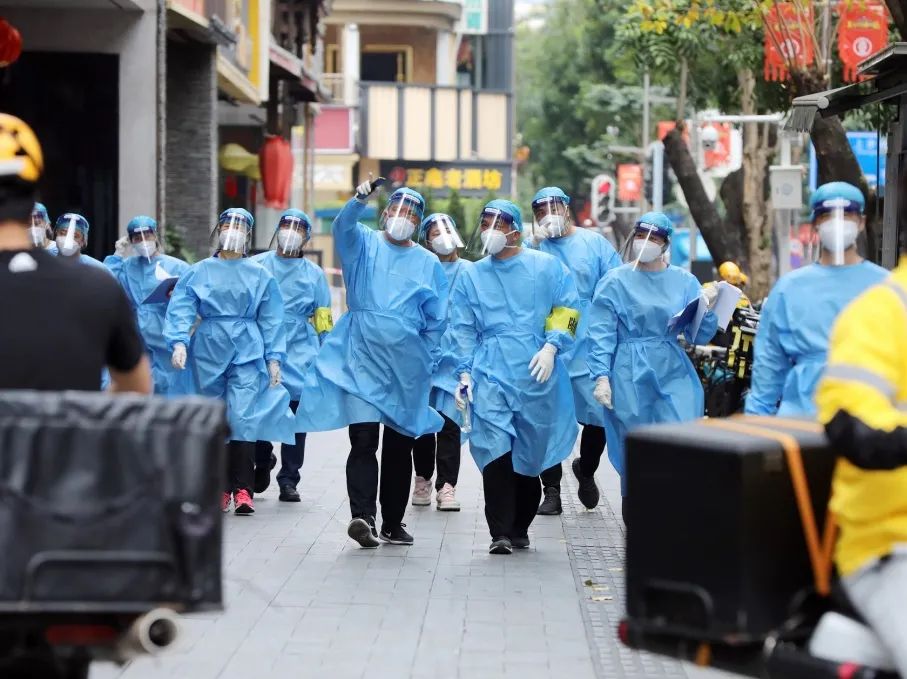
How to promote the development of our military vocational education in the new era? The authoritative answer is coming!

The way to strengthen the army is to get people. President Xi stressed at the Central Military Commission’s talent work conference that it is necessary to adhere to the road of independent training of talents, adhere to the combination of military training and various ways, form a talent training and use mode with our military characteristics, and improve the supply capacity and level of talents preparing for war.

In recent years, our army has vigorously promoted military vocational education, built a ubiquitous learning environment where everyone can learn, learn everywhere and learn all the time, and provided strong talent and intellectual support for realizing the party’s goal of strengthening the army in the new era and building a world-class army in an all-round way.

December 11th is the first anniversary of the promulgation of the Regulations on Military Vocational Education (Trial). Looking back at this special node, what achievements have been made in the development of our military vocational education in the new era and what changes have been brought to the training of military talents? The reporter of the People’s Liberation Army Daily interviewed the relevant leaders of the Vocational Education Bureau of the Training Management Department of the Military Commission, and looked forward to the boosting role of military vocational education in improving the quality of officers and men, enhancing the combat effectiveness of the troops and improving the ability to win future wars.

Win talents and strengthen the army by learning.

-Leaders of the Vocational Education Bureau of the Training Management Department of the Military Commission answered questions from reporters on the development of military vocational education in the new era.

■ Liberation Army Daily reporter Liu Jianwei Peng Bingjie Special correspondent Xu You Wu Xu


The air force in the western theater vigorously promoted military vocational education, and the officers and men of a radar brigade were all smiles after obtaining the certificate. Photo by Liang Jie

The continuous "military academy with camp" accelerates the growth of officers and men.

-The network-based open military vocational education system covers military camps.

Q: What is the overall development of our military vocational education?

A: At present, military vocational education is being carried out in an all-round and orderly way. More than 2,500 massive open online course courses, more than 13,000 micro-courses and more than 248,000 test questions have been launched on the service platform of the military comprehensive network (including the Armed Police Network) of military vocational education. There are 2.7 million registered users of the military integrated network service platform, 5.4 million registered users of the Internet service platform and nearly 110,000 registered users of the military mobile phone APP … The learning resources are constantly enriched and the functions of the network platform are constantly improved.

At this stage, military vocational education has initially formed a ubiquitous learning environment of military vocational education, which combines military comprehensive network, armed police network and Internet, web version, APP version and WeChat applet, and online learning and offline learning.

Q: How to promote practical and effective learning measures in military vocational education?

A: Since the promulgation of the Regulations on Military Vocational Education in the Army (Trial), all major units have formulated and promulgated relevant rules for the implementation of the Regulations in light of their own reality, which has provided a basis for promoting the work.

In order to clarify the functions and responsibilities of all levels in military vocational education, we have established a regular docking and exchange mechanism with large units to grasp the classified guidance; We went to more than 70 colleges and troops to find out the truth and seek practical solutions, organized 250,000 officers and men to conduct online questionnaires, sorted out 34 practical problems in five categories, and studied and put forward solutions one by one.

Coordinate the construction of three-network learning platforms such as military integrated network, Internet and military mobile APP. Set up a lifelong learning account for each officer, and provide online courses and other learning resources, seminars, exchanges and exams; Select and push courses according to thematic modules, strengthen classified management, and facilitate officers and men to choose courses; Provide online learning groups and effectiveness tracking data kanban and other functions to help officers and men keep abreast of learning trends and improve learning efficiency.

Many grass-roots units have built or renovated online learning rooms and micro-lesson production rooms in Yinglian, providing officers and men with a fully functional learning platform. The continuous "military school with the camp" has accelerated the growth of officers and men, and learning to punch in, do exams, and exchange and share has become a daily habit of officers and men.

Q: With the vigorous development of military vocational education, what changes have been brought to the construction of learning-oriented military camps?

A: A networked, open and full-coverage military vocational education system has gradually taken shape, completely opening the "fence" of college education.

The military integrated network service platform provides one-stop online services such as learning, teaching and management for officers and men; Internet service platform is connected with online learning resource platforms such as China University massive open online course and Xuetang Online, and more than 20,000 general military and military courses have been introduced, thus enriching digital learning resources.

From the Gobi desert to the alpine forest, from the "underground dragon palace" to the offshore island reef, every officer and soldier can realize various functions such as resource learning, discussion exchange and examination through the network platform. In order to meet the needs of troops’ field training, voyage and diversified military tasks, we have also developed an offline learning system without network environment, which is gradually put into use.

As an organized and self-employed modern continuing education, military vocational education has not only become a platform for talent training, but also a supplement, extension, expansion and support for military academy education and military training practice. Colleges and universities use the military vocational education platform to carry out preparatory courses, which greatly promotes the reform of classroom teaching mode. The troops use the military vocational education platform to carry out outline theory courses and professional courses, which greatly improves the quality and efficiency of training.

Full-time, full-time and global ubiquitous learning has become a common practice.

—— Virtual game-based learning platform stimulates officers and men’s interest in learning.

Q: How to give full play to the initiative of the grassroots and officers and men and form a ubiquitous learning environment?

A: Military vocational education is not a simple self-study, but a systematic design with careful organization and clear objectives around the career development of officers and men, so that the knowledge structure of military personnel can be updated in time, and their performance ability and professional quality can be improved in an all-round way.

Therefore, the army should guide officers and men to make learning plans and choose learning contents according to their missions and construction and development needs; Through individualized study plan, diversified course selection, precise study guidance and interactive teaching organization, officers and men should learn independently, voluntarily and individually.

Many units have made active explorations, such as "tailoring" a study plan for each officer, arranging courses according to the actual tasks, hobbies and shortcomings of the individual, and assigning the backbone of the study group to lead the inspectors.

In the new era, the organization level of military vocational education has been continuously improved and the methods have become more flexible, and full-time, full-time and global ubiquitous learning has become a common practice. Some officers and men reported that at the beginning of the operation of the military vocational education platform, they and people around them were not enthusiastic about learning. With the increasingly personalized and interactive course content and learning plan, everyone became eager to learn and loved learning.

Q: Under the background of the new era, how to stimulate the interest of officers and men in autonomous learning?

A: Take "Re-taking the Long March Road", the most popular open class on the platform, as an example. This online virtual training course for ideological and political courses launched by the Armed Police Academy has set a record for nearly 1.18 million people to choose courses.

Through roaming VR, video lessons, audio lessons, encyclopedias, games, answering questions and other forms, the production team truly reproduces the history of that bloody battle, and officers and men can go deep into the immersive experience of field scenes in several provinces and cities along the Long March footprint.

What kind of learning methods do officers and men like? This course is a vivid answer-to stimulate the interest of officers and men in autonomous learning through networked and flexible learning methods.

We have successively set up columns such as "Military Micro-course" and "Scientific Training" on the network platform, organized online reading group activities, and launched the knowledge contest PK on "Party History and Military History", attracting more than 400,000 users to participate in it … By creating a "course supermarket" and a "central kitchen" that gather all kinds of high-quality resources, we have launched a online celebrity course that is close to actual needs and loved by officers and men, effectively meeting the diverse learning needs of officers and men.

From offline to online, from prescribed actions to independent choices, more and more officers and men have realized the transformation from "I want to learn" to "I want to learn" and benefited from it.

Q: What changes have military vocational education brought to grassroots officers and soldiers in the new era?

A: The development of military vocational education pays close attention to the needs of officers and men to become talents and combat effectiveness, so that everyone can understand what they need to learn, where to learn, how to learn and how to learn efficiently.

In the past, many officers and men reported that although there was a lot of information from various channels, there was a lack of professional knowledge that could really meet the needs, and what they wanted to learn could not be seen and what they saw could not be used. Now, in the system of military vocational education, which has no "fence" and is fully open, the "package" of learning courses tailored for various positions for the vast number of officers and men has truly covered the learning content. The course content focuses on preparing for war, taking into account personal career development, quality improvement, hobbies, etc., and also meets the needs of officers and men for academic upgrading and skill learning.

In recent years, many officers and men have realized post transformation, ability improvement and self-change through military vocational education. Up to now, 160,000 officers and men have upgraded their academic qualifications through military vocational education, and nearly 30,000 people have obtained special certificates for the national information and communication industry through examinations and entered the database of skilled personnel of the Ministry of Industry and Information Technology.

Military vocational education covers the main positions of various arms and services.

-Taking the ability to fight and win as the starting point and the end result.

Q: How to implement the requirements of "post-oriented, integrated and open" in military vocational education in practical work?

A: Focusing on preparing for war is the common requirement of the core competence of military vocational posts. Focusing on military occupations, highlighting the main business of fighting and serving for training and preparing for war are also the core values of military vocational education.

Military vocational education, guided by the core competence and quality requirements of various military professional posts at all levels, is effectively connected with the practical needs of the army and the requirements of post performance, and builds an educational resource system covering all military professional posts. Through the integration of training and preparation, central work, main responsibility and cultural life, it plays a service and synergy role in the all-round construction of the army.

In practice, many units have organically integrated military vocational education with combat readiness training, coordinated with combat training tasks, promoted education and learning to be close to actual combat, and served to support officers and men in studying military affairs, wars and wars.

In June this year, the whole army started the construction of 649 key courses of military vocational education to meet the needs of improving officers’ professional quality, performing their duties in typical posts, and simulating training of new equipment, and combined with combat readiness training, political education, daily management, and major tasks to further strengthen the awareness and ability of the majority of officers and men in lifelong learning.

Q: What specific measures have been taken to promote the integration of military vocational education into the "four orders" and serve for training and preparing for war?

A: In recent years, the whole army has made great efforts to improve the "trinity" new military personnel training system, give full play to the unique advantages of military vocational education, and carry out strategic literacy, joint literacy, command literacy and scientific and technological literacy learning and training; Using the new concept of post knowledge map, make a list of learning guidance for commanders at brigade and battalion levels and develop online learning courses; Compile a series of counseling books such as Military Intelligence and High-tech Knowledge in combination with the job requirements at all levels … In short, officers and men should offer whatever they need to learn to improve their winning ability.

In addition, on the military integrated network service platform, we launched a variety of emergency response topics, with a total of 300,000 visits; The number of "unique skills and unique skills" micro-courses built and shared by officers and men of the army reached more than 12,000; Introduced eight information literacy skills certification trainings from the Ministry of Industry and Information Technology, and registered more than 350,000 officers and men; The Army, Navy and Rocket Army are docking with local industry departments, conducting pilot training for UAV operators, and boosting the rapid generation of new combat effectiveness of the troops … All these have promoted military vocational education to focus on training and preparing for war, focusing on the urgent needs of the troops, focusing on post performance, and focusing on cutting-edge development.

Q: Looking to the future, how to further promote the development of military vocational education?

A: We should thoroughly study and implement the spirit of the talent work conference of the Central Military Commission, thoroughly implement the strategy of strengthening the army with talents in the new era, and take the ability to fight and win as the starting point and the end result of promoting military vocational education.

Compared with the practice of military academy education and military training, military vocational education can realize the benign interaction of military and local personnel training in a larger space, at a higher level and in a wider field. To firmly establish the learning ability is the clear orientation of competitiveness, development and combat effectiveness, constantly improve the learning ability and win the acceleration of strengthening the army.

Military vocational education, as an overall strategic and long-term systematic project, needs to be promoted steadily and steadily. Especially in the new era, it is necessary to strengthen the concept of integration and sharing and further promote diversified implementation, personalized learning, intelligent service and refined management.

We must firmly establish the concept that grasping military vocational education means grasping the construction of combat effectiveness, and promote the development of military vocational education in depth with the perseverance of "sticking to the green hills and not relaxing", the mind of "predecessors planting trees and future generations enjoying the cool" and the tenacity of "accumulating thousands of miles" to provide strong talent support for realizing the party’s goal of strengthening the army in the new era.


Teachers of a base of airborne troops teach wartime political work in the airborne simulation training ground. Fan Guizhen

Learning ability is competitiveness, development ability and combat effectiveness.

■ Teaching will succeed.

At present, the atmosphere in which the whole army pays great attention to learning is increasingly strong. Military vocational education adapts to the characteristics of fragmented time learning of officers and men, and gives play to the unique advantages of "fast, accurate, new, practical and flexible", which effectively promotes the improvement of the level of military training and preparation and the ability of officers and men to perform their duties.

A strong army depends on talents, and a first-class army must first have first-class talents. As an important support of the "Trinity" new military personnel training system, military vocational education shoulders the glorious mission of building a learning army and cultivating learning soldiers, which is related to the process and quality of military personnel modernization and is the fundamental way for us to keep up with the times, be competent for our posts and enhance our ability.

We must set up a lofty pursuit, continue to exert ourselves for a long time, and embark on a path of military vocational education with the characteristics of our army. Only in this way can we improve the ability of officers and men to perform their duties, enhance their comprehensive quality, help officers and men grow into talents, and push our army to be at the forefront of the times, military, strategic and technological, and finally achieve checks and balances and surpass their opponents.

We must adhere to the only fundamental standard of combat effectiveness. To promote military vocational education, we must focus on fighting, guide officers and men to study the military, war and war, learn high-tech knowledge, and promote the solution of shortcomings and weaknesses in fighting ability. Focus on the post, take the core competence of the post as the main line, distinguish different war zones and different services and arms, distinguish different types of commanding officers, technical officers, non-commissioned officers and civilian personnel, and build a learning content system of military vocational education to help officers and men grow into talents and be competent for their posts. Focusing on the urgent need, what officers and men lack most and what they need most, military vocational education should highlight what to learn and what to make up, so as to truly be in urgent need of urgent delivery and specialized study. Focus on the future, highlight professional qualities such as strategic literacy and joint literacy, design the content of military vocational education in a forward-looking way, and focus on building a world-class army and cultivating first-class talents.

We must adhere to the "four orders" of the army and achieve sustainable development. The development of military vocational education should be well integrated with training and preparation for war, central work, taking charge of the main business and cultural life, and should not be eager for success, quick success, and rank in name only, so as to solve the contradiction between learning and working, and play a role in enhancing service for the all-round construction of the army. Based on the existing conditions, we should adhere to the combination of online and offline, fixed and mobile, guide officers and men to stand on their posts, use effective methods, rely on useful resources and learn useful knowledge in a limited time, and help improve the overall quality of officers and men and their ability to prepare for war.

A brigade of the 81st Army

Innovative means to open the "fence" of education

■ Liberation Army Daily reporter Liu Jianwei Peng Bingjie correspondent Yang Xingcan

In the middle of the night, the multimedia classroom of a brigade of the 81st Army was brightly lit. Jia Xiangyu, the third-class sergeant, conducted a long-distance discussion and exchange with college experts around topics such as equipment anti-jamming and missile shooting preparation in complex electromagnetic environment, seeking the optimal solution in many aspects of equipment training.

"In recent years, the brigade has actively innovated the normalized organizational model of military vocational education, and the learning methods of officers and men have become more flexible and enthusiastic." Zhang Haichao, chief of the brigade’s training section, said with relief.

"Only by keeping up with the pace of development of the times and opening the education’ wall’ with innovative means can we promote the effectiveness of military vocational education." According to the leaders of the brigade, starting from consolidating the talent base, they have sent 16 officers and men to local colleges and technology companies for further training, invited professors and technicians from resident colleges and universities to give lectures and guidance, and trained a group of compound talents who understand the network and have technology.

Driven by the technical backbone team, the brigade keeps a close eye on the needs of army building and the talents of officers and men, and relies on the "micro-course mobile production station" to complete the production of more than 20 courses, such as military physical fitness and methods of leading troops, to guide the daily work training of officers and men; In order to meet the learning needs of officers and men during the training, they independently developed an intelligent auxiliary platform for theoretical learning in the "learning era", and embedded the excellent military-civilian courses produced by the brigade into the mobile APP, so that officers and men can learn at any time and place.

"In the past, when I encountered equipment failure problems, I needed to consult information and ask questions from many parties, and the solutions I got were very limited." From a grassroots officer to a military camp "maker", missile trumpeter Zhuang Kai felt a lot. "Now, it is very convenient and quick to consult with college experts one by one." Not long ago, he used the military integrated network service platform to develop an insulation detection device for missile launch vehicles under the guidance of experts, which greatly shortened the equipment detection time.

An experimental brigade of the army

Learning achievement extends to the proving ground.

■ Liberation Army Daily reporter Liu Jianwei Peng Bingjie correspondent Su Dingkang

In early December, a new equipment test mission was launched in a test position in Saibei grassland. In the simulated confrontation exercise, in the face of the sudden interference and suppression of the "enemy" and the complex electromagnetic environment, Luo Yong, the leader of a test brigade of the Army, immediately changed his deployment and reorganized the network in various ways to ensure accurate, confidential and uninterrupted communication, and the test task was successfully completed.

"The’ inspiration’ of today’s’ operation’ comes from a course of’ Mobile Operations of Radar Soldiers in Complex Electromagnetic Environment’ that I took on the military vocational education platform." At the group’s resumption meeting, Luo Yong said excitedly, "I didn’t even think about it before being able to complete such a difficult task independently. Thanks to my’ online teacher’ to help me quickly expand my ability! "

According to zhaowei, a staff member of the brigade, in recent years, the brigade has vigorously promoted military vocational education, helped each officer to choose no less than two professional courses and one interest course according to his personal post and military training plan, and organized regular small discussions, small discussions, small comments and small reports in the form of personal in-depth study, help and supervision, and mutual exchange, so that officers and men can talk about the gains of online learning and encourage officers and men to use the knowledge they have learned to solve practical problems.

In the face of the emergency situation that the drone engine suddenly failed to operate, Zhang Huru, the fourth-level master sergeant, quickly found the cause of the failure according to the knowledge taught by the online course "UAV drone operation". Inspired by the course of "Electromagnetic Environment in Battlefield", Gao Wanfeng, a senior engineer in a laboratory of the brigade, focused on designing and improving the examination and test scheme for the subsequent new equipment tests … "Driven by the guidance of grasping learning for the war, the officers and men of the brigade are more and more enthusiastic about learning, and the atmosphere of applying what they have learned is getting stronger and stronger." Zhaowei said happily.

High-resolution UAV image data in Yangbi epicenter area was delivered to the earthquake relief headquarters.

  After the Yangbi 6.4 earthquake in Yunnan Province, nine technicians from the UAV Emergency Surveying and Mapping Support Team (Yunnan Basic Surveying and Mapping Technology Center) of Yunnan Provincial Department of Natural Resources rushed to the earthquake area with four UAVs to carry out emergency surveying and mapping support. On the morning of 23rd, the emergency surveying and mapping support team has provided the remote sensing image of unmanned aerial vehicle (UAV) with the resolution of 0.15m in the epicenter area and 0.05m in Xiuling Village, which was seriously damaged, to the earthquake relief headquarters, providing intuitive and fine image data for scientifically judging the disaster situation and formulating post-disaster rescue plans.

  It is understood that the geological conditions in the disaster area are complex, with high mountains and deep valleys, steep and steep, with an average elevation of 2,250 meters within the epicenter of 5,000 meters, abnormal weather changes and low clouds, and the operation of drones is facing great challenges. In order to ensure the safe and rapid acquisition of high-resolution remote sensing image data in the disaster area, technicians worked out a scheme of simultaneous operation of fixed-wing and multi-rotor groups according to the actual situation in the disaster area. The fixed-wing group can realize plane flight and obtain large image area by using the fixed-wing UAV. Through multi-ground station monitoring, it took off and landed in Dali City and Weishan County, 40 kilometers away from the epicenter, flying for 2 hours and 8 minutes, with a range of 250 kilometers, and obtained 80 square kilometers of UAV remote sensing images with a resolution of 0.15 meters in the epicenter area. Another group of multi-rotor groups used the characteristics that multi-rotor aircraft can fly in points and obtain high-resolution real-life three-dimensional images, and went straight to Xiuling Village, which was seriously damaged in the epicenter, and made two flights to obtain 1 square kilometer of UAV remote sensing images with a resolution of 0.05 meters.

  After the mission, the emergency surveying and mapping support team processed the UAV remote sensing image data overnight, made special maps, and delivered them to the earthquake relief headquarters at 10 am on the 23rd, which provided important data support for scientific earthquake relief and prevention of secondary geological disasters. (Reporter Li Tengfei, General Desk)