Understand these nine questions and you will understand why Annihilation is a science fiction masterpiece.

The Lost South: Annihilation
Special feature of 1905 film network In 2014, a novel named "Lost South: Annihilation" overwhelmed Liu Cixin’s "Three-body" and won the American nebula award for best novel.
Now, this sci-fi classic has been put on the big screen by alex garland, the director of Mechanical Ji, and Natalie Portman, the Oscar-winning actress, has been invited to help out, which is the now-showing "Annihilation" with a somewhat difficult name.
After the film was released in North America, it was praised by the media for its unique aesthetic style, the perfect combination of thriller and sci-fi genre and the profound and long theme pattern. Garland also ushered in a new peak in his directing career after the birth of Mechanical Ji.

Speaking of it, the story of Annihilation is not complicated.
Three years ago, an asteroid hit the earth, and the "flash" surrounded a lighthouse near a beach in Florida, forming a huge, colorful foam-like protective layer.
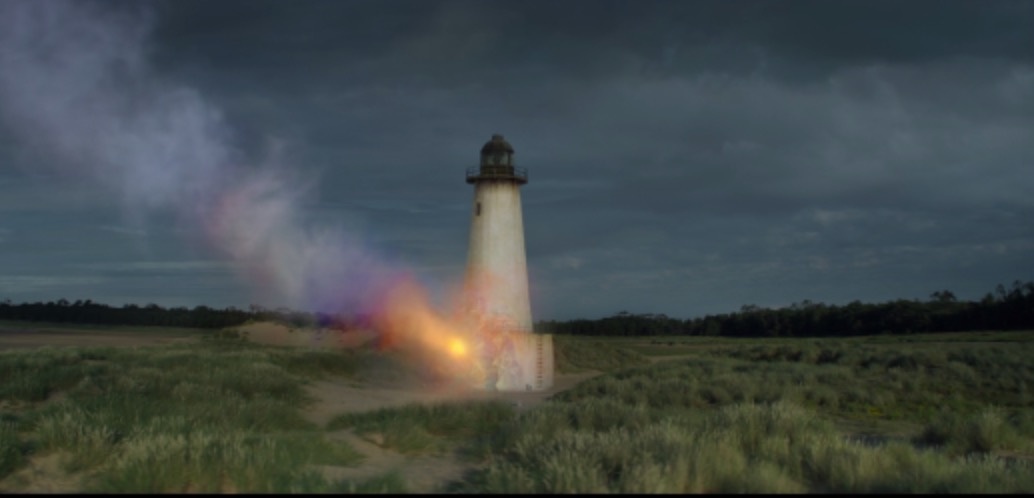
In the past three years, this area has been expanding, and the government has sent teams of expeditions to the restricted area "Area X" to find out, but they have never returned. The only survivor is the heroine Lena (Natalie Portman)’ s husband Kane.
After the reunification, Kane was terminally ill, with multiple organ failure and life-threatening. Lena, a biologist, decided to join four other female scientists to enter Area X to uncover the secret of her husband’s illness.
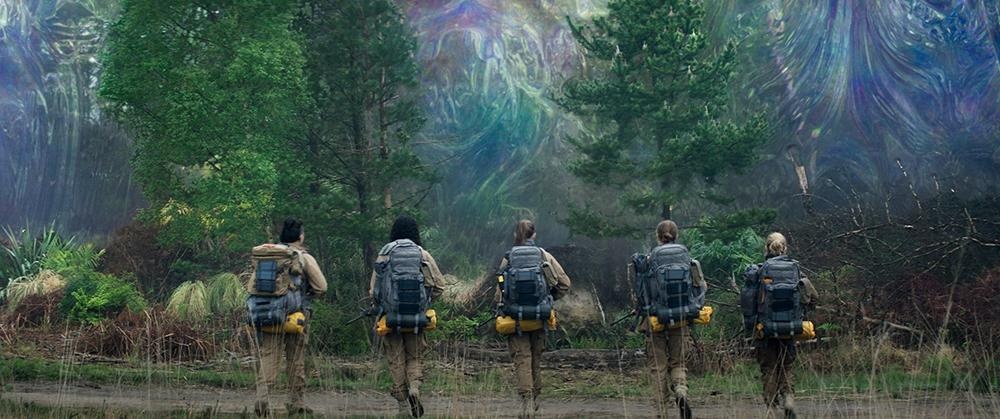
In Region X, they witnessed the wonders of genetic variation of human beings, animals and plants under the action of "flash", and their members died one after another for various reasons.
Finally, Lena went to the lighthouse by the sea alone, where she saw an energy group from another planet. Lena’s gene was instantly copied by the energy group, and a "clone Lena" with completely synchronized appearance, movement, thinking and memory was produced.

At the end, area X was reduced to ashes in the flame of white phosphorus explosion, and only Lena survived alone. At this time, whether Lena is a human being or a Replicator created by the energy group has become the ultimate question left by the director to the audience.
The story told in Annihilation is like a game about "genes". As a representative figure of hard sci-fi movies, director Garland still does not forget to build a solid scientific foundation for the film when dealing with such an aerial sci-fi story.

alex garland
To this end, he not only taught himself a lot of genetic knowledge, but also invited Adam Rutherford, a geneticist who had cooperated since the period of Mechanical Ji, to be the film science director again.
In the following, Xiao Dianjun will try his best to interpret the cold scientific knowledge you may not understand or miss in Annihilation from a scientific point of view. Maybe after reading this article, you will have a new understanding of Annihilation, genes and even life.
[3 key points]
1. What are the immortal Hella cells?
At the beginning, the meaningful "cell" class of biology professor played by natalie portman is actually the foreshadowing of the director’s kindness.
First of all, she is giving students a possibility of "the origin of species": "basically all cells are split from one cell, one becomes two, and two becomes four."
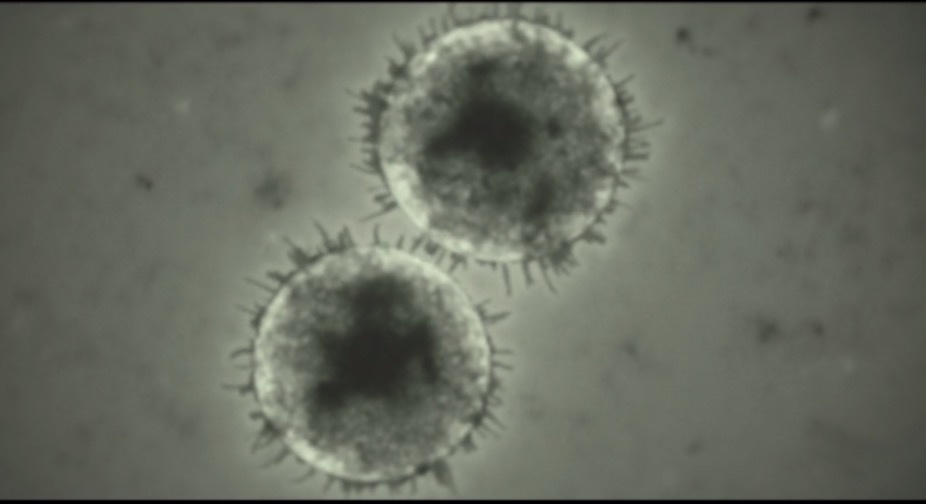
Then, she leads to the highlight of curriculum research — — Hela cells extracted from patients with cervical cancer.
The name of Hella cell comes from Henrietta Lacks, an American black woman suffering from cervical cancer. In 1951, a surgeon at Johns Hopkins University Hospital (yes, the school where the woman worked) took a tissue sample from her tumor and cultured it in the laboratory.
Scientists were surprised to find that unlike ordinary human cells, which will die by themselves after a certain period of time, Hella cells not only don’t age, they can divide indefinitely, but also proliferate rapidly and are highly infectious..
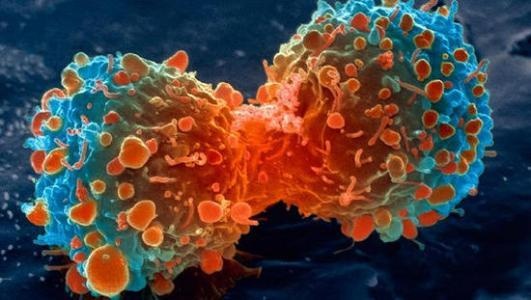
Hela cell line
Today, 67 years later, Hela cells continue to proliferate and divide, becoming an important tool for medical and genetic research. About Hella cell and a series of social problems caused by scientists illegally extracting it, you can refer to the movie "Hella for eternity" (starring oprah winfrey) released last year.

On the other hand, the director arranged this scene at the beginning to remind the audience of the possibility of rapid and infinite cell division after gene mutation. After the expedition entered "Region X", it received special effects such as radiation, gene mutation and cell division speed increased rapidly.
There is another detail, hidden in one of the "climaxes" of the whole film — — In the "boat play" of men and women. One second, I was still talking about watching the snow, the stars and the moon. The next second, Mr. Portman began to talk to her husband about academic issues.

She said that we think aging is a natural process, but in fact it may be a genetic defect.If we can break through the "Hayflick limit", we are expected to overcome aging and gain eternal life..
The "Havelick limit" she mentioned was put forward by American microbiologist Leonardo Havelick in 1965, that is, every cell will rapidly secrete toxins after 56 times of self-replication, leading to necrosis. The 56th time is the Hayflick limit, which is also the reason why all species will die out regularly.
In the "area X", this limit seems to be exceeded. Does this imply that the so-called "alien invasion" may not bring destruction, but more advanced life forms and the possibility of prolonging life?
Next page: How ridiculous is "gene refraction"?