Why does rainstorm cause disaster?


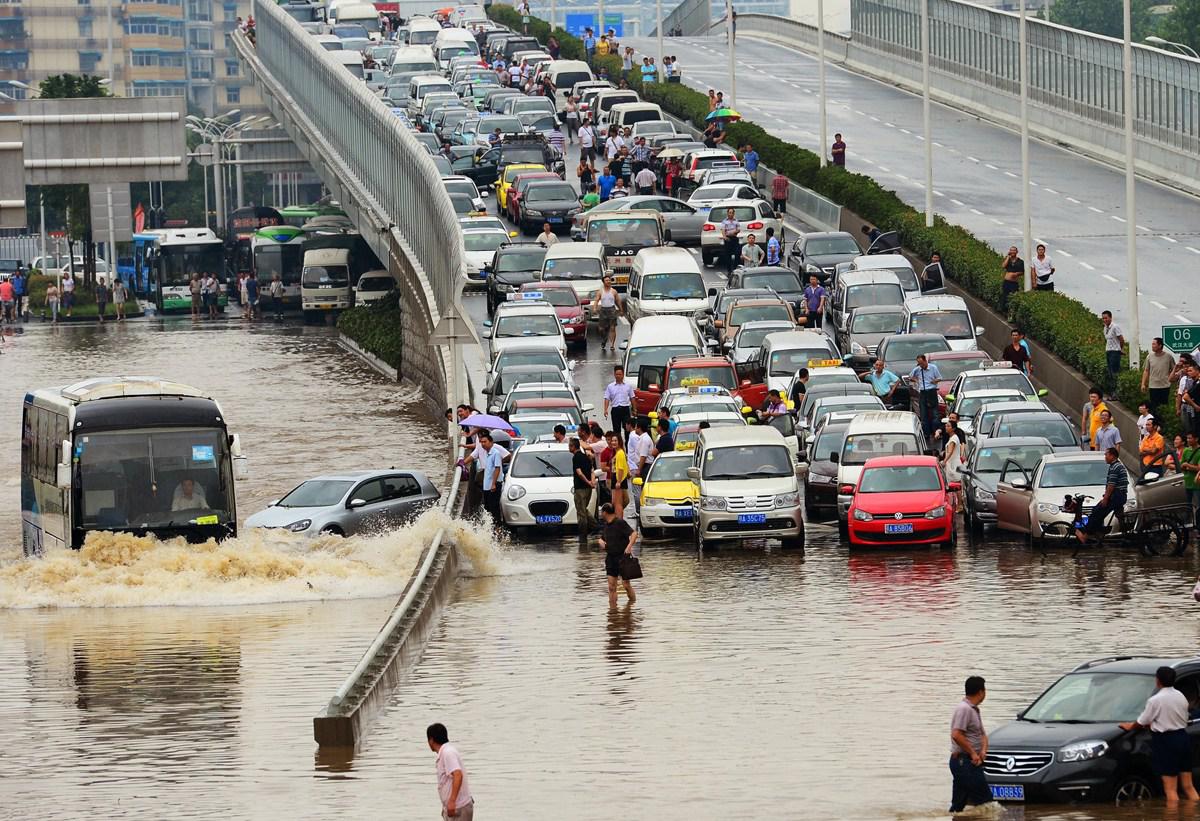
  Urban water accumulation. Image source: Network


  When rainstorm weather occurs, it is often accompanied by lightning and gale, which often leads to flash floods, river flooding, waterlogging, destruction of crops, buildings and materials, casualties of people and animals, crop failure or failure, traffic and communication obstruction, etc. Heavy rain can directly cause disasters, and also easily induce geological disasters such as collapse, landslide and debris flow. Rainstorm and flood disasters involve industrial and agricultural production, transportation, communication, building facilities, urban operation, people’s daily life, ecological environment and other aspects.


  Rainstorm itself is a natural phenomenon, but it is also one of the most important disastrous weather in China. In other words, rainstorm is potentially destructive and dangerous. If a rainstorm does not directly cause casualties and social property losses, it is not a rainstorm disaster. There are several factors that determine whether a rainstorm causes a disaster, besides natural factors such as rainfall intensity, duration and the time when a rainstorm occurs, it also depends on social and human factors such as geographical environment, socio-economy, population, disaster prevention and resilience.


  The intensity and duration of rainstorm are the most basic disaster-causing factors. If the rainfall of 50 mm is evenly distributed and falls within 24 hours, which is equivalent to the rainfall of 2 mm per hour, people will feel it is a gentle drizzle. But in fact, the rain does not fall evenly, and it often rains a lot in a short time. On the one hand, the intensity of rainstorm mentioned here refers to the amount of accumulated rainfall in 24 hours (1 day). For example, on November 9, 2004, there was a rare rainstorm in late autumn in Taizhou and Wenzhou, Zhejiang Province, in which Wenling’s 24-hour rainfall reached 253 mm, breaking the record of the largest daily rainfall in November in the province. On August 7, 1975, the rainfall in Shangcai, Henan Province reached 755.1 mm, which is also the extreme value of daily rainfall in China. On the other hand, it refers to the amount of rainfall per unit time, such as hourly rainfall and minute rainfall. China has recorded 5 minutes of rainfall of 53.2 mm (appearing in Meitonggou, Shanxi Province on July 1, 1971), and the extreme rainfall of 1 hour is 198.3 mm (Linzhuang, Henan Province on August 5, 1975). On July 18, 2007, a heavy precipitation weather process occurred in Shandong Province, in which the maximum rainfall in Jinan city reached 151 mm in one hour, the highest in history since 1958. On July 21-22, 2012, a torrential rain occurred in Beijing. The rainfall was concentrated in 20 hours from 10: 00 on the 21st to 6: 00 on the 22nd. The rainfall in Hebei Town of Fangshan District reached 460.0mm, and the hourly rainfall in 18 meteorological observation stations exceeded 80mm, with the maximum hourly rainfall reaching 100.3mm..


  Large-scale severe rainstorm disasters have a great relationship with the long duration, or a rainstorm process lasts for several days, or there are many rainstorm processes in a period of time. For example, the rainstorm disaster in Jianghuai area in 1991 caused direct economic losses as high as 27.5 billion yuan. Not only the rainfall is heavy, but also it lasts for a long time. During May-July, there were many heavy rains. There are three main rainfall periods, with frequent rainfall in Jianghuai and nearby areas from May 18 to 26. On June 2-19, there were several torrential rains in the Jianghuai and Taihu basins. On June 12-14, the precipitation in Shouxian and Yingshang in Anhui reached 421 mm and 414 mm respectively. From June 29 to July 13, the rainy area was located in the Jianghuai and Taihu basins again, and the 24-hour precipitation in Guangmingding, Huangshan, Anhui Province reached 328.4 mm. From June to August, 1998, the torrential rain and flood disaster occurred in the whole basin of the Yangtze River, and the number of rainy days generally exceeded 40 days, and some of them reached more than 60 days. At the same time, there are persistent heavy rains in Songhua River and Nenjiang River basins, with rainfall days generally exceeding 35 days and some exceeding 55 days. In that year, the flood in economical loss reached 255 billion yuan.


  When the rainstorm occurs, the geographical environment becomes an important factor affecting the occurrence of disasters. Geographical environment includes topography, landform, geographical location and river distribution. Under the action of heavy rain, the plateau and mountainous areas are most likely to induce flash floods, landslides, mudslides and other secondary disasters. Generally speaking, the terrain of basins and mountainous plain areas has a certain slope, and most of them are terraced platforms along the river, with good drainage conditions and limited flooding range, which will not cause major disasters. However, if we encounter high-intensity and large-scale heavy rain, especially persistent heavy rain, it is easy to cause serious disasters such as flooding the city. Because of its flat terrain and vast area, the plain area is dominated by flooding disasters. China’s plains are concentrated in the east, that is, the middle and lower reaches of several major rivers, such as the Yangtze River, the Yellow River, the Haihe River, the Huaihe River, the Pearl River and the Songhua River. River floods mainly come from the upper and middle reaches, and the peak height is large after entering the plains. If the flood discharge capacity of rivers is weak, it is easy to cause floods. After the flood, because the plain is flat and the flood speed is relatively slow, it is not easy to cause heavy casualties. However, the plain area has developed economy, dense population and concentrated cities. Once a serious flood disaster occurs, the economic losses and the damage to social life will be enormous.


  Human factors will also play a direct or indirect role in the disaster caused by heavy rain. The destruction of forest vegetation will lead to soil erosion. On the one hand, forest can intercept precipitation, on the other hand, forest soil has high permeability and good water storage. The destruction of forests directly leads to soil erosion, siltation of river channels and elevation of river beds, which reduces the flood regulation and storage capacity of rivers and their surrounding areas. Reclaiming land around lakes affects flood storage capacity. Damming lakes and reclaiming farmland from rivers will reduce the water area of rivers and lakes, hinder the smooth flow of rivers, and greatly reduce the flood storage capacity. Once a large amount of precipitation or upstream water sinks into the river, it will cause the river to skyrocket and flood. Invade rivers or flood storage areas, resulting in poor running water. Planting crops or even building houses and roads in floodplains or flood storage areas will reduce the area of land that can absorb water, and buildings will easily flood and cause huge losses. In addition, excessive pumping of groundwater will cause land subsidence, which will also aggravate the risk of flood disaster.


  When rainstorm weather occurs, it is often accompanied by lightning and gale, which often leads to flash floods, river flooding, waterlogging, destruction of crops, buildings and materials, casualties of people and animals, crop failure or failure, traffic and communication obstruction, etc. Heavy rain can directly cause disasters, and also easily induce geological disasters such as collapse, landslide and debris flow. Rainstorm and flood disasters involve industrial and agricultural production, transportation, communication, building facilities, urban operation, people’s daily life, ecological environment and other aspects.


  However, heavy rain is not without its merits. Heavy rain often causes disasters, but it also benefits mankind. In the right place and at the right time, the advantages of moderate rainstorm outweigh the disadvantages. After a long drought, a heavy rain will lift the drought; During the high temperature and summer drought in southern summer, heavy rain can not only relieve the drought, but also drive away the heat; In many places in the north, the annual precipitation depends on one or two heavy rains, and there is no drought when there is heavy rain; At the moment when the contradiction of water resources is prominent, it is hoped that heavy rain will store more water in the reservoir to alleviate the shortage of urban water. Therefore, we should seek advantages and avoid disadvantages, and make scientific use of precipitation resources brought by heavy rain to benefit mankind.


  (Source: Meteorological Knowledge Editor: Wang Ruojia)

The same exquisite and different 7-generation Core! New Xiaomi Notebook Air Experience Evaluation

Xiaomi and Notebook Computer

Speaking of it, Xiaomi and laptop are quite predestined.

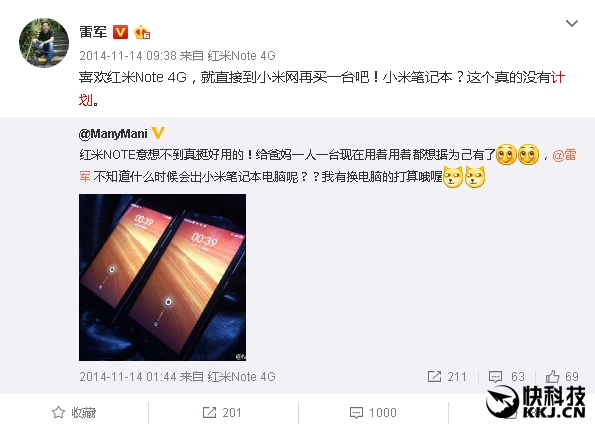
As early as 2013, there were rumors that Xiaomi would enter the notebook market, and the rumors became more and more true. Later, Lei Jun couldn’t hold the inquiries of enthusiastic fans and personally denied Xiaomi’s plan to get out of the notebook.

The same exquisite and different 7-generation Core! New Xiaomi Notebook Air Experience Evaluation

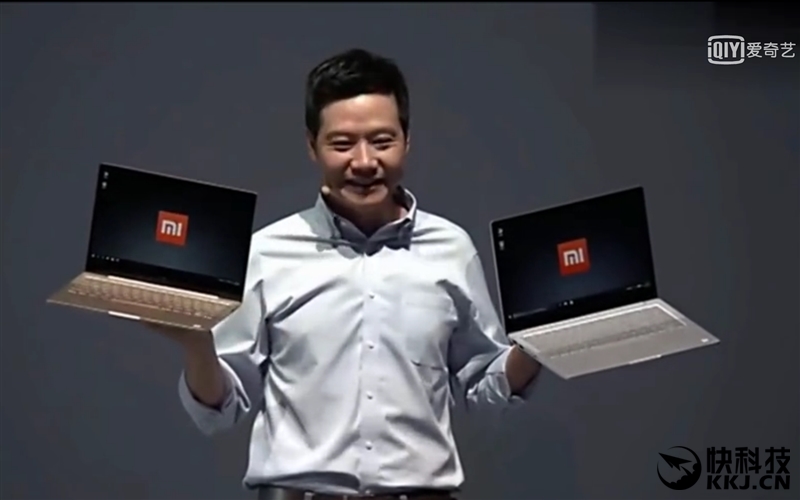
Of course, everyone knows what happened later. On July 27, 2016, Xiaomi fulfilled his wish of rice noodles, not only released notebooks, but also two models, a 13.3-inch ultra-thin performance book and a 12.5-inch ultra-thin book, which sold 220,000 units in three months.

The same exquisite and different 7-generation Core! New Xiaomi Notebook Air Experience Evaluation

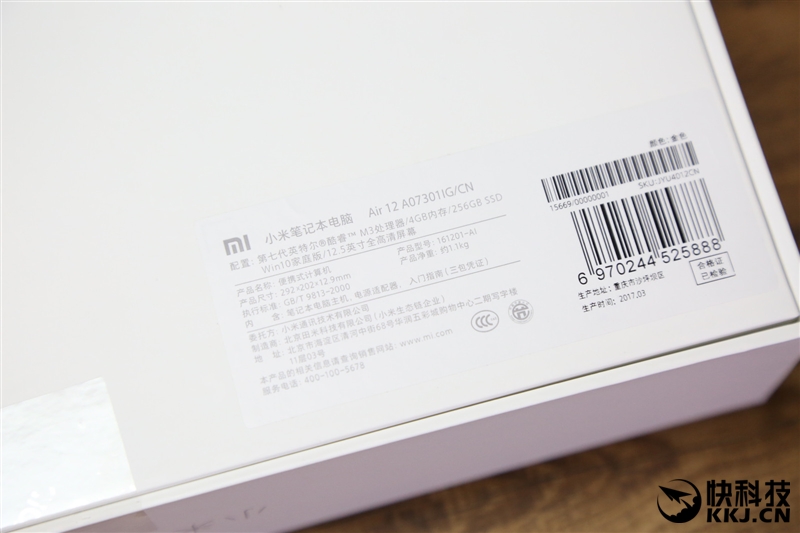
Recently, with the advent of the 2017 Rice Noodle Festival, two notebooks that have been released for more than half a year have finally ushered in an upgrade. Today, what we are going to experience is the new millet notebook Air 12.5 inch, which has just updated the 7th generation Core. How does it perform?

Appearance: Exquisite and concentrated in a small body with great texture.

The same exquisite and different 7-generation Core! New Xiaomi Notebook Air Experience Evaluation
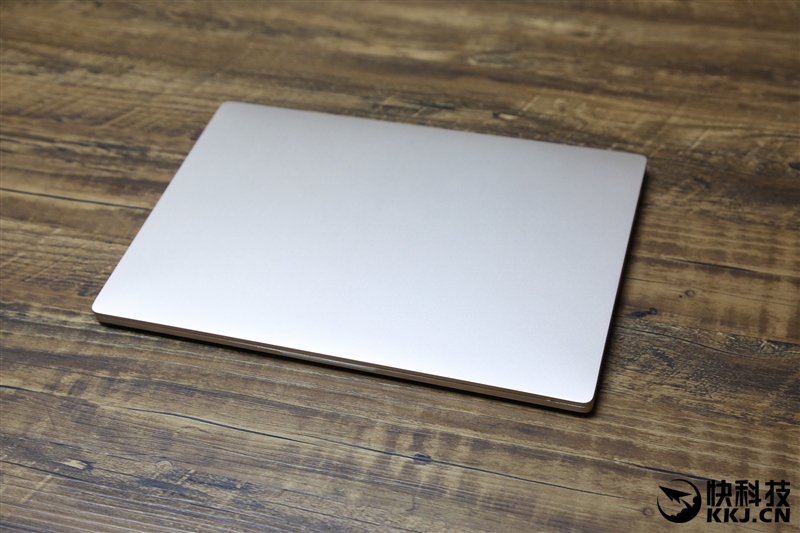
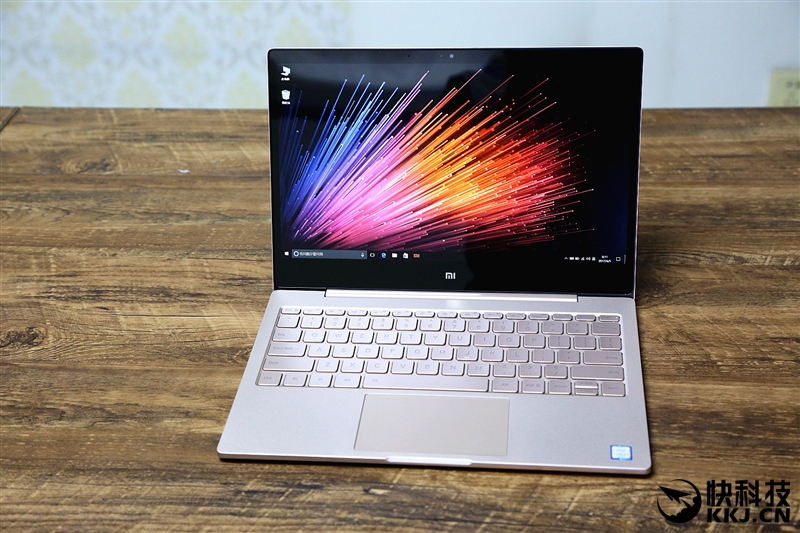
↑ ↑ ↑ The author holds a new version of Xiaomi notebook Air 12.5 inch 4G+256G gold version.

The same exquisite and different 7-generation Core! New Xiaomi Notebook Air Experience Evaluation

↑ ↑ ↑ The appearance of the upgraded Xiaomi notebook has not changed, and there is still no Logo on the A side. The advantage is that Xiaomi officially provides many stickers to decorate. More importantly, in the use environment where the brand is determined, it avoids being asked "Why not buy apples".

The same exquisite and different 7-generation Core! New Xiaomi Notebook Air Experience Evaluation
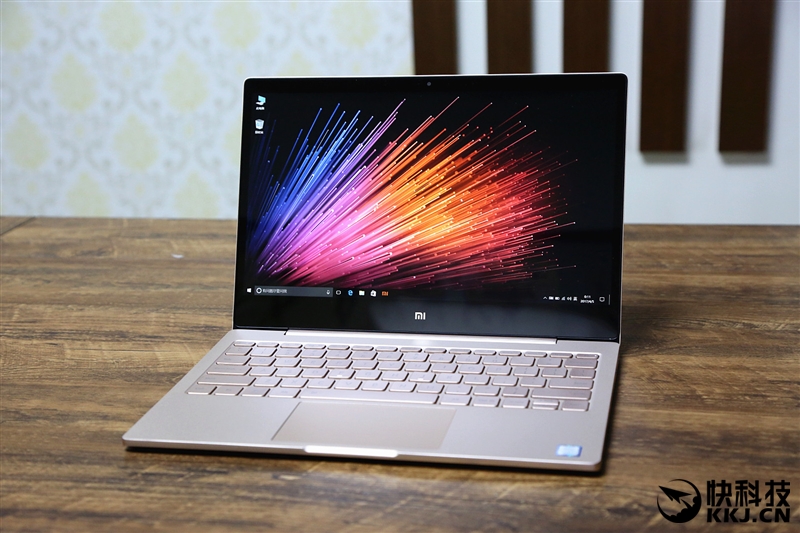
↑ ↑ ↑ Front of fuselage

Xiaomi notebook adopts all-glass cover and full fit, which means that the B side of the whole notebook is a whole piece of glass, and the sense of integration is excellent. In addition, the ultra-narrow frame of 5.71 mm on the left and right, although the screen is only 12.5 inches, still brings a very shocking impression. The display effect of IPS wide-angle hard screen with 300 nits brightness is also excellent.

All-glass cover, full mirror fit, interest screen aesthetics, the screen of Xiaomi notebook completely continues the look and feel experience of mobile phone screen. It can be said that it is difficult to find a notebook B side that is more pleasant than Xiaomi notebook in the same price product.

The same exquisite and different 7-generation Core! New Xiaomi Notebook Air Experience Evaluation
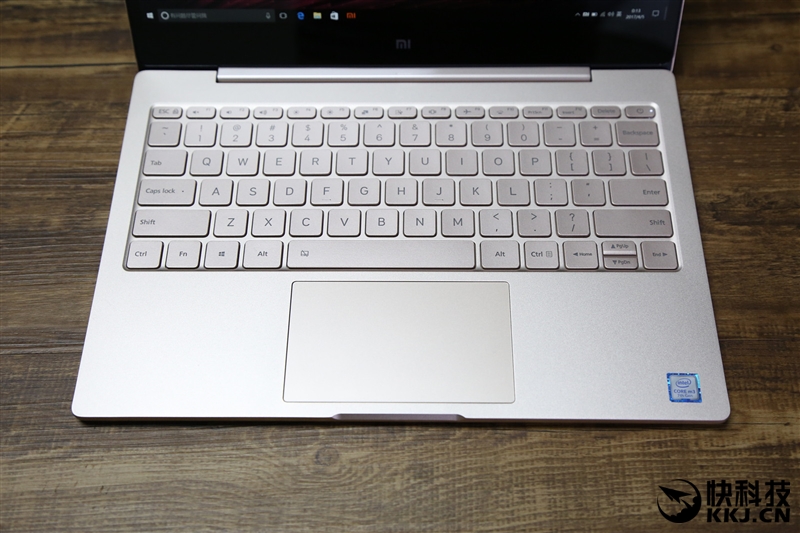
↑ ↑ ↑ The full-size keyboard of Xiaomi notebook has a slightly shorter 1.3 mm keystroke, moderate rebound feel and soft impact, but after all, it is ultra-thin and acceptable.

In addition, the key width of Xiaomi notebook is wide, which is not easy to be typed by mistake, and the stress is very uniform. There will be no inclination of the key cap. Generally speaking, the performance is acceptable, and it is a keyboard that can be assured that the words will not make people crazy.

In addition, it is worth mentioning that the C side of the notebook except the keyboard is sandblasted, and the large-area metal matte feel brings a sense of exquisiteness that is difficult to express in words. The integrated glass touchpad embedded in it brings a smooth touch and a better pressing feel.

The same exquisite and different 7-generation Core! New Xiaomi Notebook Air Experience Evaluation
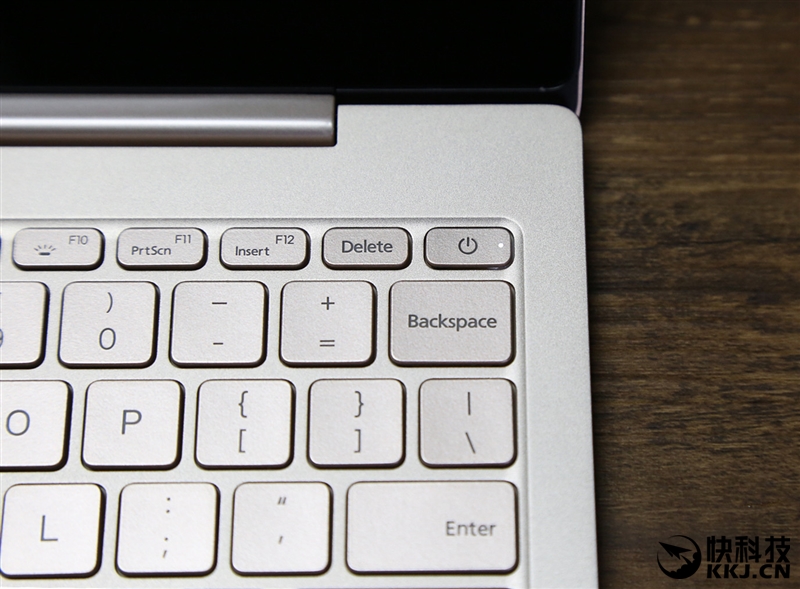
↑ ↑ ↑ The power button is in the upper right corner of the keyboard.

The same exquisite and different 7-generation Core! New Xiaomi Notebook Air Experience Evaluation
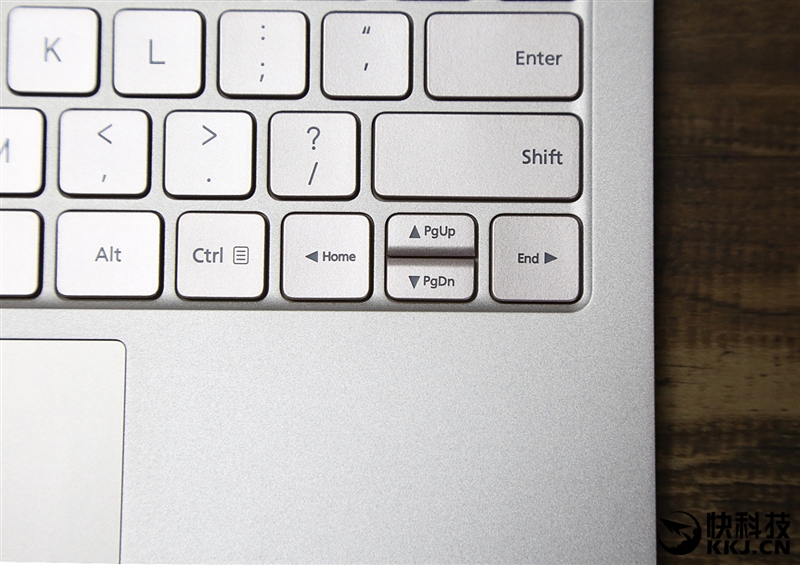
↑ ↑ ↑ The only shortcoming on the keyboard is that the direction keys are narrowed down.

The same exquisite and different 7-generation Core! New Xiaomi Notebook Air Experience Evaluation

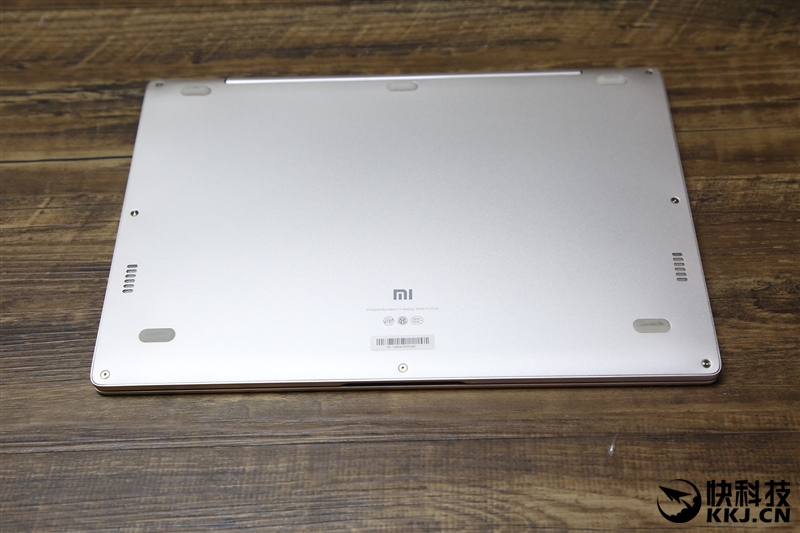
↑ ↑ ↑ At the bottom of the fuselage, there is an AKG speaker on the left and right. According to the actual measurement, the speakers on the left and right sides will not be blocked by the desktop, and the sound volume is large enough to be full. In addition, Xiaomi notebook has reserved SSD card slot, which can expand the hard disk capacity.

The same exquisite and different 7-generation Core! New Xiaomi Notebook Air Experience Evaluation
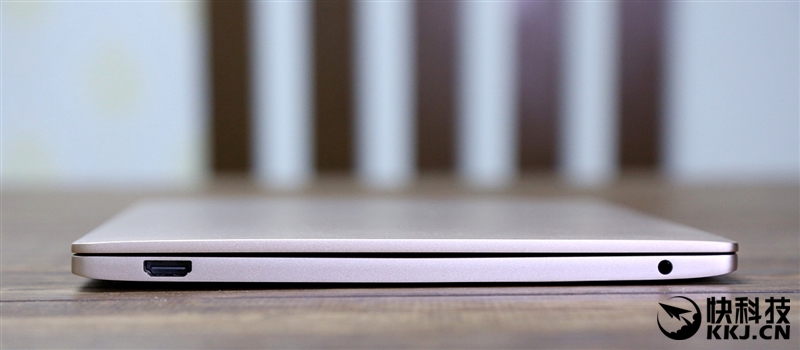
↑ ↑ ↑ On the left side of the fuselage is an HDMI interface and an earphone interface.

The same exquisite and different 7-generation Core! New Xiaomi Notebook Air Experience Evaluation
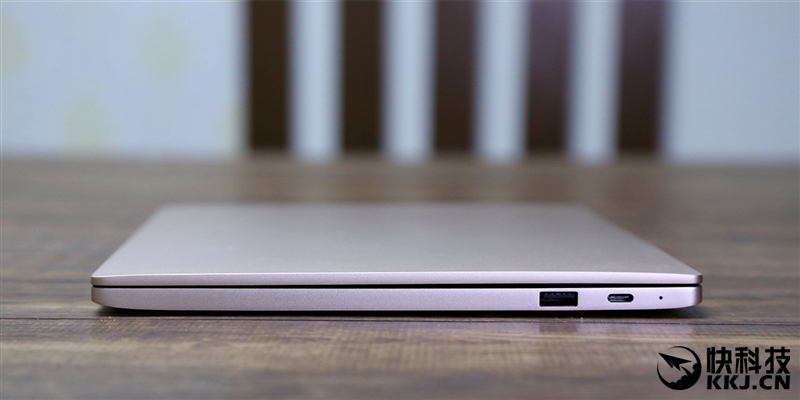
↑ ↑ ↑ On the right side of the fuselage are USB3.0 interface and Type-C interface.

The same exquisite and different 7-generation Core! New Xiaomi Notebook Air Experience Evaluation
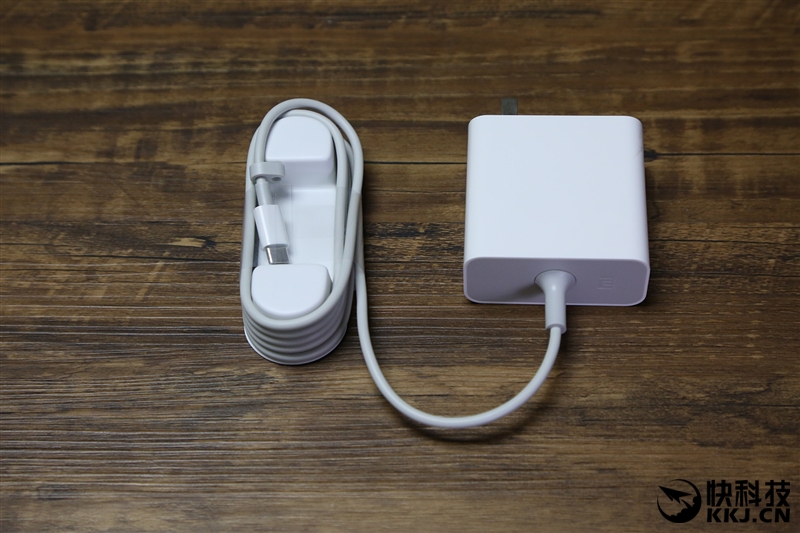
↑ ↑ ↑ Very mini charging head, up to 45W ultra-high power, officially claimed to charge half in half an hour.

Generally speaking, the A side of Xiaomi notebook without Logo brings more personalization possibilities, and the C side of the metal matte and the glass touchpad form a complete feel experience.

Excellent screen performance, fully covered and fully fitted glass and narrow bezel design are even more reminiscent of the experience of mobile phone screen.

Although the body of the 12.5-inch notebook is small, the texture concentrated in it does not fall at all. Small and exquisite are just the right adjectives for the Xiaomi notebook Air 12.5 inch.

Performance: 7th generation Core! The ultimate performance of M3-7Y30

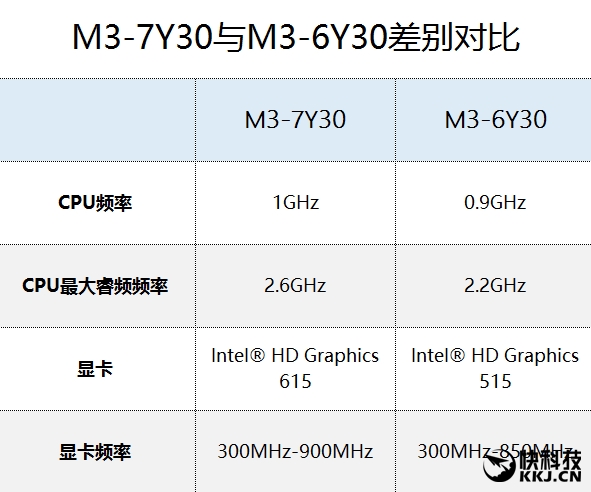
The biggest difference between the new version of Xiaomi notebook Air 12.5 "and the old version is that the processor has been updated, from the previous six-generation Core M3-6Y30 to the seven-generation Core M3-7Y30. What’s the difference between them?

In terms of parameters, the two processors are also dual-core four-thread, 14nm technology, belonging to Skylake and Kaby Lake families respectively. The biggest difference is that the core frequency and the core graphics card have been updated.

The same exquisite and different 7-generation Core! New Xiaomi Notebook Air Experience Evaluation

↑ ↑ ↑ It can be seen that M3-7Y30 has improved the minimum and maximum CPU frequency, and updated the core graphics card with higher frequency. So what is the performance of this 7th generation Core?

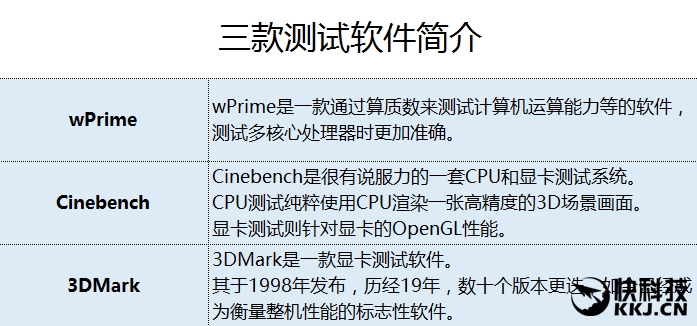
In this paper, the author selected three kinds of testing software: wPrime, Cinebench and 3DMark.

The same exquisite and different 7-generation Core! New Xiaomi Notebook Air Experience Evaluation

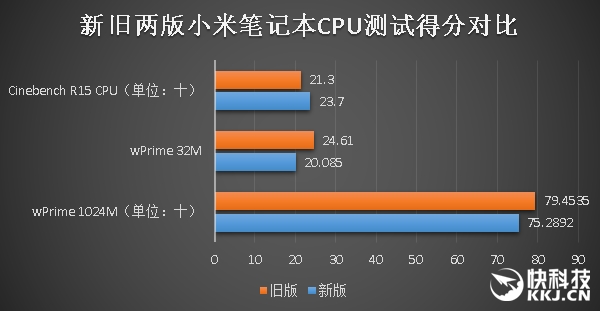
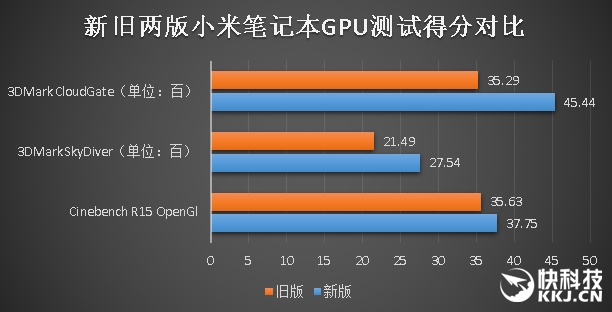
The test scores of Air 12.5 inch of the new and old Xiaomi notebooks are as follows (for the convenience of comparison, some test results have been changed in units, for example, unit 10 = 1/10 of the original value, and unit 100 = 1/100 of the original value):

The same exquisite and different 7-generation Core! New Xiaomi Notebook Air Experience Evaluation
↑ ↑ ↑ (wPrime, the lower the two items, the better) It can be seen that M3-7Y30 is about 5%-10% higher than M3-6Y30 respectively in these three tests.

The same exquisite and different 7-generation Core! New Xiaomi Notebook Air Experience Evaluation
↑ ↑ ↑ In the GPU test, M3-7Y30 scored about 5%-28% higher than M3-6Y30 respectively.

Judging from the performance of the test software, the overall performance of M3-7Y30 is much higher than that of M3-6Y30. Since M3-6Y30 is a processor with fairly balanced performance and power consumption, M3-7Y30 is undoubtedly a God U.

So what is the actual application performance?

The author selected Hearthstone (a card game) and League of Legends (one of the most popular MOBA games) to test.

The same exquisite and different 7-generation Core! New Xiaomi Notebook Air Experience Evaluation

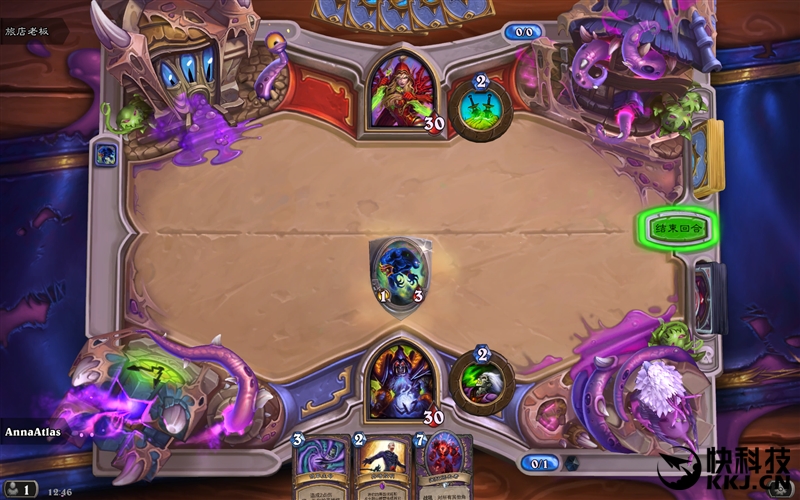
In the test, both the old and new models can run hearthstone in full frame at 1080P resolution and medium image quality.

While running League of Legends at 1080P resolution and medium image quality, the frame number of the old model is kept at around 40-50, and the new model can be kept at around 45-58, which is in line with expectations.

In the process of daily use, whether in Summoner Canyon, bilibili to watch the barrage, web page to brush Weibo, and table document processing, there is no jam, and the overall performance is very smooth, and the performance meets the daily needs.

Endurance: the workplace is heavy! All-weather office entertainment

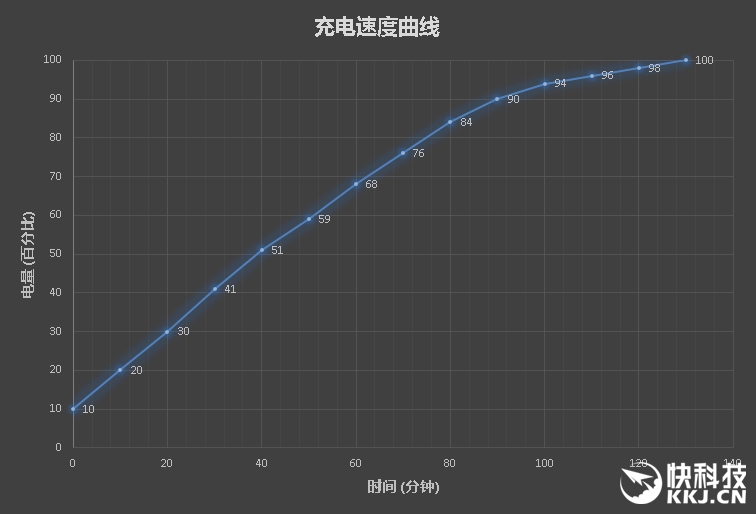
Xiaomi notebook Air 12.5-inch battery capacity is 37Wh, which supports 1C fast charging. The maximum power of the charger is 45W(15V/3A, 20V/2.25A) as standard, and it also supports USB PD and Qualcomm QC2.0 fast charging protocol. The charging test is as follows:

The same exquisite and different 7-generation Core! New Xiaomi Notebook Air Experience Evaluation
↑ ↑ ↑ From 10%, Wi-Fi link, after charging, the computer will automatically adjust to the highest brightness, and the screen will light up all the time (due to recording needs).

It can be seen that the 45W charger is really terrible. Even if the screen is bright at the highest brightness, the notebook basically keeps the speed of 10% to 90% in 10 minutes, and it takes 130 minutes to charge, which is much faster than some mobile phones called fast charge nowadays.

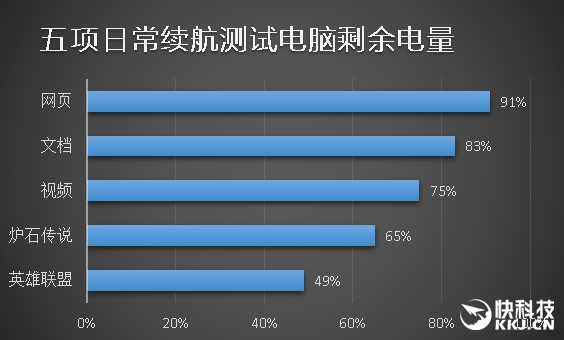
In the endurance test, the author selected five test items to simulate daily use: web browsing (native browser, 10 web pages backstage, unlimited Weibo brush), document processing (WPS three-piece full open), video (bilibili full-screen barrage video), Hearthstone Legend and League of Legends. The specific performance is as follows:

The same exquisite and different 7-generation Core! New Xiaomi Notebook Air Experience Evaluation
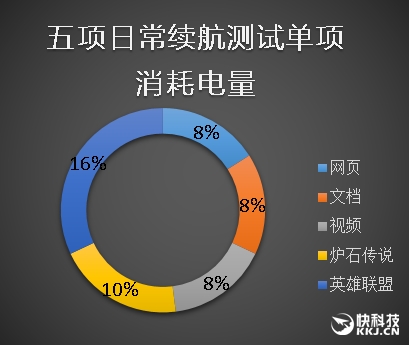
↑ ↑ ↑ Each of the five tests took half an hour, totaling 2 hours and 30 minutes, and finally 49% of the power remained.

The same exquisite and different 7-generation Core! New Xiaomi Notebook Air Experience Evaluation

↑ ↑ ↑ It can be seen that in the five tests, web pages, documents and videos also consumed 8% of electricity for half an hour, and League of Legends, a big power consumer, consumed 16% of electricity for half an hour.

If it is estimated in this way, the new version of Xiaomi notebook Air 12.5 inch can run continuously for more than 3 hours, and the legend of Hearthstone for more than 5 hours has no pressure for daily use.

Summary: Xiaomi notebook with exquisite external charm, which should not be missed.

The new version of Xiaomi notebook Air 12.5 inch still inherits the appearance of its predecessors. Under the compact body, it contains a pleasant full-coverage glass screen, narrow frame design, large-area metal matte palm rest, smooth and easy-to-use glass touchpad, and exquisite inside and outside the body, which reflects Xiaomi’s thinking about notebook design.

What’s even more surprising is that the addition of the 7th generation Core M3-7Y30 makes its internal force more profound, and it is comfortable for both daily life and entertainment. All-weather battery life and 45W super fast charge also prove that it is so reliable.

Although the price of the new millet notebook Air 12.5 "is higher than that of the old one, it is light, exquisite, surging and reliable, which still proves its unique advantage in the ultra-thin notebook at the same price.

The same exquisite and different 7-generation Core! New Xiaomi Notebook Air Experience Evaluation

Postscript: Why should Xiaomi open a "grocery store" when the rice cooker comes out of the computer tomorrow?

It seems that some mobile phone companies are "doing nothing" to do computers across borders. Normally, peers like OPPO and vivo do some mobile phone accessories at most, and rarely go out of the mobile phone circle, while Xiaomi ran directly to the next door and brought out two laptops.

The same exquisite and different 7-generation Core! New Xiaomi Notebook Air Experience Evaluation
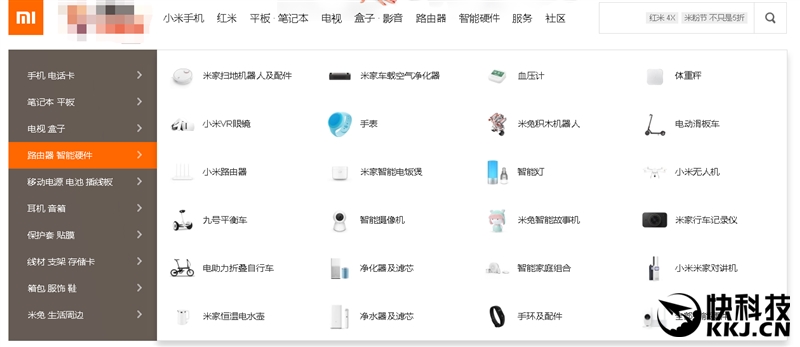
↑ ↑ ↑ Xiaomi. com is full of goods.

It’s not just notebooks, toys, towels, pillows, walkie-talkies, Xiaomi TVs ranging from 9999 yuan to Xiaomi magazines in 0.2 yuan. Only you can’t think of it, and you can’t do it without Xiaomi.

In fact, there are more than 103 kinds of goods on Xiaomi’s online, and Xiaomi’s super "grocery store" is well deserved, but it is reasonable to say that this job is so profitable. Why is Xiaomi the only one doing "grocery store" now?

The same exquisite and different 7-generation Core! New Xiaomi Notebook Air Experience Evaluation
↑ ↑ ↑ Every object that once burned all over the streets.

Because opportunities are also accompanied by risks, do you remember Vanke, who was once valued at $3 billion and had 13,000 people? It is because of the blind expansion of sales categories that inventory backlog and supply chain crisis eventually reduced to only 180 employees.

In other words, just because you have it doesn’t mean you can sell it.

So how does Xiaomi do it?

1. Enter the market to incubate challengers

Except for a few products made by Xiaomi himself, Xiaomi generally chooses entrepreneurial teams/small companies to cooperate (that is, Xiaomi eco-chain enterprises).

For example, Huami Technology behind mi band is a joint venture between Huaheng Technology and Xiaomi, while Zimi Technology behind Xiaomi’s mobile power supply is an entrepreneurial team that Xiaomi has been incubating since 2012.

The same exquisite and different 7-generation Core! New Xiaomi Notebook Air Experience Evaluation
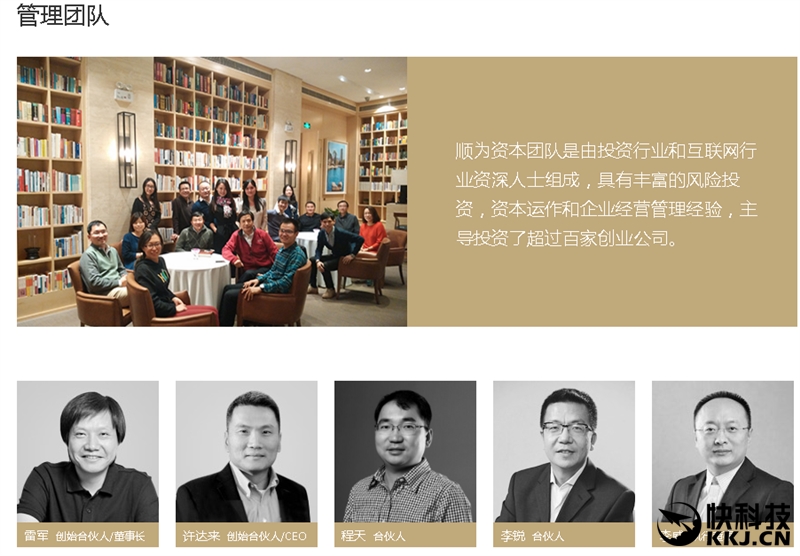
↑ ↑ ↑ In addition to Xiaomi, Leijun’s Shunwei Capital also often invests in eco-chain enterprises.

Xiaomi, who has an investment team (Leijun’s Shunwei Capital) and experience, will provide financing for the partners and solve the most difficult financial problem of the small team very generously. How generous? The vice president of Xiaomi Ecological Chain once said: "Money is not a problem".

After selecting some non-monopoly/hot-spot/low-Internet industries, Xiaomi supported eco-chain enterprises to launch products and directly challenged the big brother of the industry.

2, the price butcher cost performance is king.

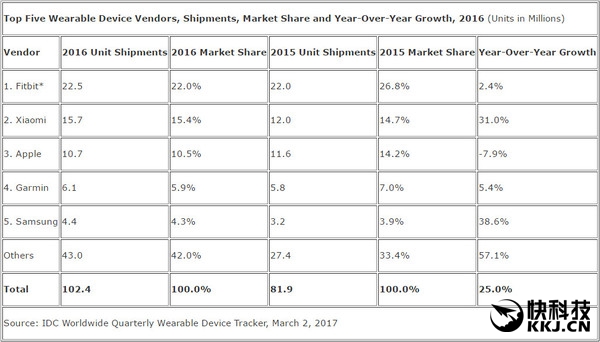
Remember the horror dominated by Xiaomi’s price/performance ratio? In 2014, when the price of smart bracelets was higher than that of 300 yuan, mi band, which sells 79 yuan, released it, and then swept the market all the way. In 2015, it sold 12 million pieces, and Huami Technology also became the second wearable device company in the world.

The same exquisite and different 7-generation Core! New Xiaomi Notebook Air Experience Evaluation
↑ ↑ ↑ In 2016, Xiaomi still ranked second in the wearable device market share, accounting for 15% of the global market share, according to IDC statistics.

It makes sense that new players can’t get the lowest price and production quota of the supply chain because of their size and risk, but Xiaomi relies on his own right to speak in the supply chain to lower the cost for his younger brother and ensure the output (usually millions).

The huge amount ensures the rapid decline of marginal costs, and enterprises can cover costs and even profits as soon as possible, which leads to a very terrible result. Ecological chain enterprises can make big money even at very low prices.

For example, mi band, who just mentioned selling 79 yuan, revealed at the end of 2015 only one year later: "We have a net profit of tens of millions every quarter."

The same exquisite and different 7-generation Core! New Xiaomi Notebook Air Experience Evaluation
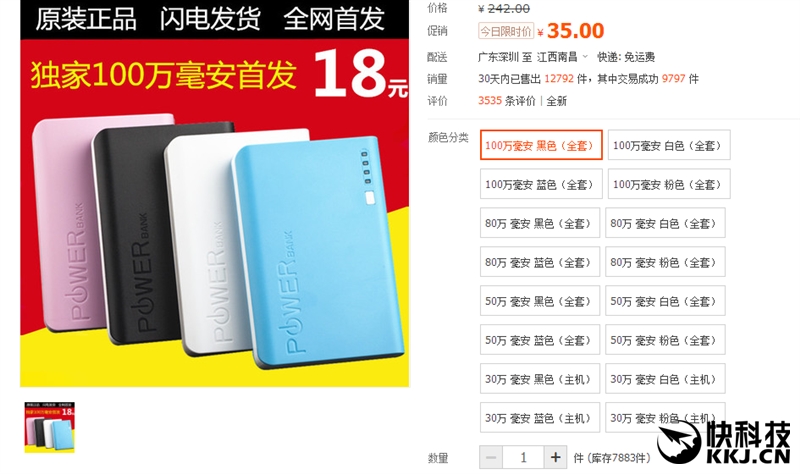
↑ ↑ ↑ Virtual standard to 1 million mA charging treasure

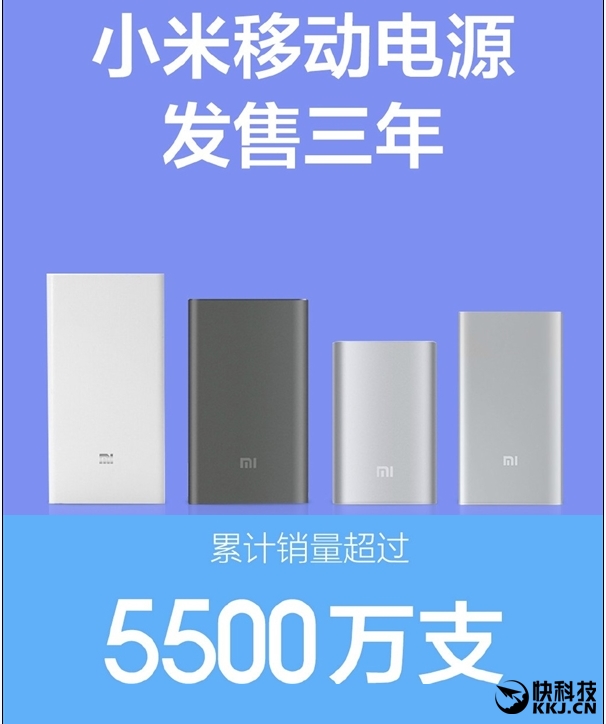
More importantly, Xiaomi does not simply pursue low prices, and Xiaomi also pursues quality at low prices. The most outstanding representative should be Xiaomi mobile power supply. In the case of virtual standard, cottage and fraud prevailing in the whole industry (in 2014, 32 batches of products were all unqualified by CCTV), the first generation of Xiaomi mobile power supply relied on solid materials such as Deyi chips and LG batteries to reshape the whole market by itself, and finally occupied 80% of the domestic market share.

The same exquisite and different 7-generation Core! New Xiaomi Notebook Air Experience Evaluation
↑ ↑ ↑ In October 2016, Xiaomi officially announced the sales of mobile power.

Of course, because of different industries, the characteristics of different Xiaomi eco-chain products are different, but compared with competing products at the same price, most Xiaomi products generally have better performance or quality, which is one of the reasons why Xiaomi eco-chain products are prosperous.

3, traffic is king +15 artifact Xiaomi net

With the product, the price and the output, how can we sell the product next?

This may be a problem for other enterprises, but it is not difficult for Xiaomi. Why pinch it? Because Xiaomi has a +15 artifact in his hand — — Xiaomi net.

The same exquisite and different 7-generation Core! New Xiaomi Notebook Air Experience Evaluation
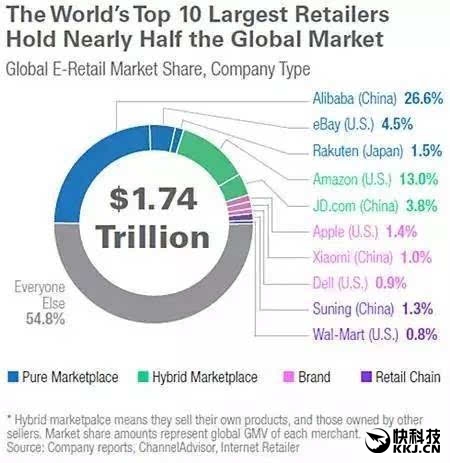
↑ ↑ ↑ Xiaomi. com has become the eighth largest e-commerce company in the world, from Internet Retailer’s Global 1000 Report: Innovation of Global E-commerce Retail.

As a website that only sells Xiaomi mobile phones at the beginning, Xiaomi.com has become the eighth largest e-commerce website in the world (the third largest in China) after several years of development. What is the concept of selling things on Xiaomi.com?

Take a chestnut as an example. You can imagine that there is only one brand of rice cooker under the classification of JD.COM rice cookers.

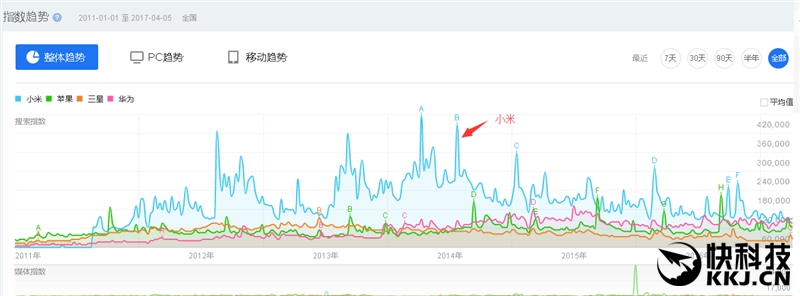
Moreover, not only the traffic of Xiaomi. com, but also the word Xiaomi alone represents the traffic. In the past two years, when Xiaomi was the hottest, any news, events and advertisements related to Xiaomi could get a lot of exposure (it declined in the past two years).

The same exquisite and different 7-generation Core! New Xiaomi Notebook Air Experience Evaluation
↑ ↑ ↑ From 2012 to 2015, Xiaomi’s Baidu index was almost the sum of Apple, Samsung and Huawei.

Thanks to Xiaomi trademark (now Mijia) and Xiaomi. com, eco-chain products are always displayed under huge traffic, which directly contributes to the achievement that 16 of Xiaomi eco-chain companies have an annual income of over 100 million yuan, 3 have an annual income of over 1 billion yuan, and 4 have a valuation of over 1 billion US dollars.

All in all, from the investment and incubation of start-ups and teams to the final product being put on Xiaomi. com, Xiaomi’s "grocery store" has formed a set of effective processes and mechanisms, and the dazzling variety of "groceries" has also become an important supplement to Xiaomi’s mobile phone and condensed into an important moat of Xiaomi.

The same exquisite and different 7-generation Core! New Xiaomi Notebook Air Experience Evaluation
↑ ↑ ↑ Xiaomi Home’s dazzling array of eco-chain products

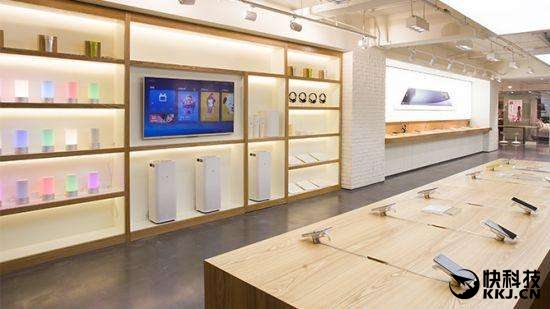
Although Xiaomi has been hit by the recovery of offline market in recent years, Xiaomi has developed a distinctive "new retail" model — — That is, the mode of moving the "grocery store" to the offline Xiaomi home, and the "groceries" of eco-chain enterprises have naturally become the vanguard of Xiaomi to move towards and stand firm offline.

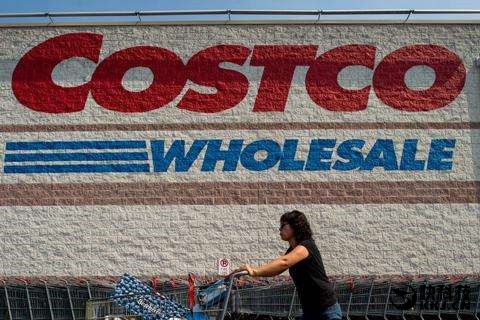
Lei Jun has always admired an American supermarket — — Costco, Costco’s most famous features are low prices and fine products, which will limit the profit of selling goods to no more than 14%. In addition, the goods it sells are a small number of carefully selected products. Relying on low prices and fine products, Costco finally became the second largest retailer in the world after Wal-Mart.

The same exquisite and different 7-generation Core! New Xiaomi Notebook Air Experience Evaluation

There is no doubt that the thriving Xiaomi "grocery store" is the Costco in Xiaomi’s heart.

The world is selling 90 billion dollars. How can Pikachu become the first IP?

Text | Jiang Yuqi

Editor | Shi Yedong

Who is the number one IP in the world?

If it comes to the influence of film works, the phenomenal IP "reconnection" in recent years may be well deserved; If you compare the loyalty and madness of fans, then "Star Wars" may be difficult to find opponents; However, if "gold-absorbing ability" is taken as the judging standard, Pokémon (officially translated as Pokémon, also translated as Pokemon, Petelf and Poké mon) led by Pikachu really deserves it. 

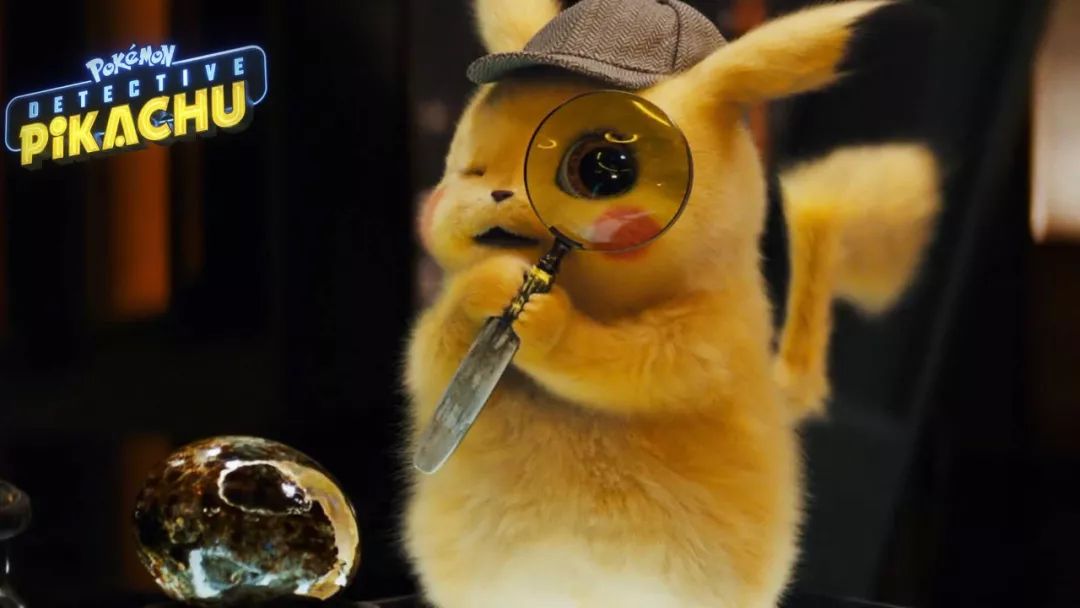
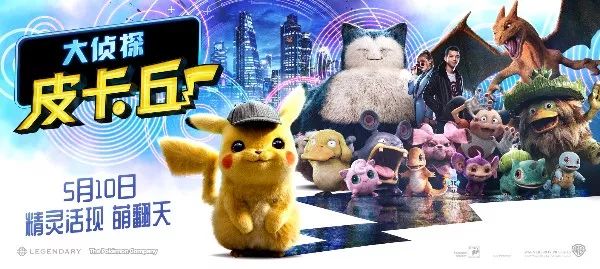
Pokémon’s first live-action film Pokémon Detective Pikachu

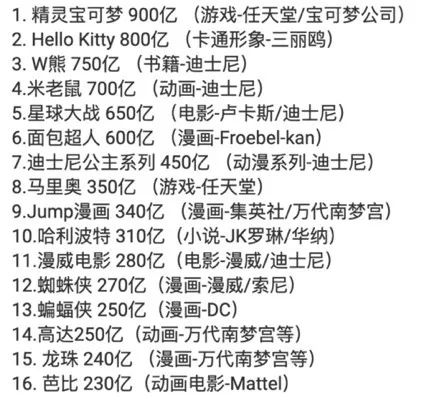
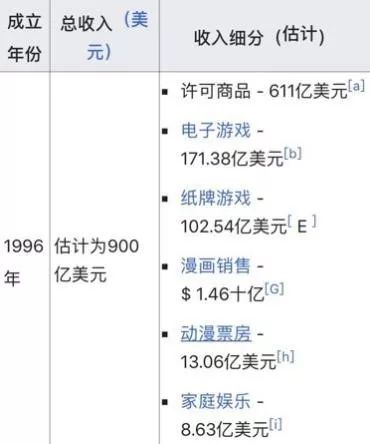
ID: Youhaoxifilm found in Wikipedia’s "List of Highest-Grossing Media Franchises" (hereinafter referred to as the "list") that in the past twenty years, the copyright owners of Pokémon’s products have made accumulated profits of more than 90 billion US dollars through product sales and derivative licenses, ranking first in the IP category of major film and television animation games. This figure is higher than Disney’s Mickey Mouse ($70 billion) and Star Wars ($65 billion), and more than three times that of Marvel Comics movies ($28 billion).

Statistics as of March 2019, unit: USD.

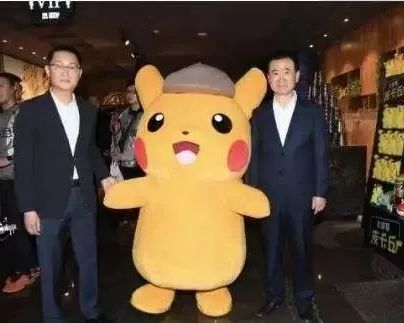
Today, Pokémon’s derivative film, Pokémon Detective Pikachu, which is also the first live-action version of the IP, officially landed in the mainland cinema. As of poison eye’s press release, the film’s arrangement ratio has reached 38% today. In the past few days, the WeChat index of Pikachu has also increased by more than 30% every day, and it has surpassed The Avengers on the 8th. In order to create momentum for the film, the film even invited two business leaders, Wang Jianlin and Ma Huateng, to give the "Pikaqiu" platform, which can be described as quite a row.

How can a small Pikachu have such great market value and influence?

The birth of "the first IP": how "Pikachu" became popular all over the world

In 1989, Nintendo, a Japanese company, one of the three largest video game giants in the world, launched the epoch-making product GameBoy (hereinafter referred to as GB). Driven by the famous game Tetris, GB gained wide acclaim as soon as it came out, among which Tetris alone won tens of millions of sales within two months after its launch.

At the same time, Tian Kaozhi, a "game enthusiast", set up a game development club, GameFreak, trying to make some action games. In Tian Kaozhi’s view, the most distinctive feature of GB is not the lightness and thinness of the company’s main promotion, but its "wired communication function", which reminds him of catching insects and interacting with insects with friends as a child, and thus the idea of developing a game of cultivating and exchanging "insects" came into being-Pokemon took shape.

Tian Kaozhi, founder of GameFreak

As it happens, in 1994, due to the appearance of 32 hosts such as 3DO, SS and PS, the sales volume of GB, which is not dominant in capacity and image quality, began to decline. The annual sales volume in Japan plummeted from more than 3 million to 1.81 million, and the sales volume of software also dropped from nearly 18 million to 10.3 million. In order to get rid of the crisis, Nintendo began to focus on finding new selling points of GB, and Pokemon, which was developed by GameFreak and emphasized the brand-new concept of communication warfare, received attention.

In 1996, the first generation Pokemon games, Pokemon Red and Pokemon Green, were officially launched. Unfortunately, at that time, GB was no longer the most popular handheld device on the market, so Pokemon didn’t make much waves in the early days, and only sold 200,000 copies in one month.

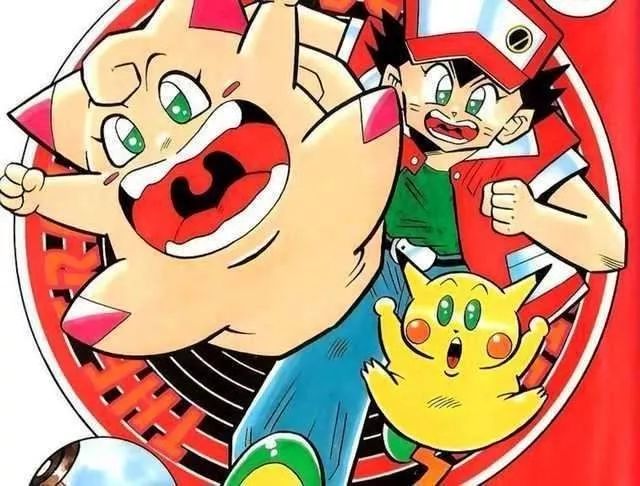
However, at the same time that the first generation of Pokemon was launched, a comic book called Pippi Biography based on the characters in the game began to be serialized. In this cartoon, Pikachu only appeared as a supporting role, and the real protagonist was another Pockmarked Pippi, and the painting style and storyline were also quite meaningless, which was very different from the series of works known to the public later, but it was welcomed by many readers at that time. 

When Nintendo saw this, it started marketing with the biography of Pippi as the position. For example, readers who bought the biography of Pippi had the opportunity to participate in related activities and win the limited edition dream of Baokemeng. Because the number of "dreams" is only 100, relying on hunger marketing and the high popularity of Pippi Biography, it instantly attracted a large number of users to participate, which suddenly boosted the popularity of Pokemon. 

By March 1997, Pokemon had jumped to the TOP30 of Japanese software sales list. With the participation of more users, the interactive and battle functions of Pokemon have also been displayed, and the game experience has been greatly increased. In the following two years, Nintendo revised the game and launched Pokemon Blue and other versions. The sales of the first generation of Pokemon also increased year by year, and eventually sold 45 million sets, becoming one of the most popular games in Nintendo’s history, and successfully revitalizing the company’s business.

Nintendo, who wants to pursue victory, constantly updates its handheld devices, and successively introduces new products such as GameBoy Color(GBC) and GameBoy Advance(GBA) with better picture quality and lighter weight, and at the same time continues to launch new Pokemon games in conjunction with GameFreak. After 1999, Pokemon series successively launched Poké mon Gold and Silver, including seven generations (the eighth generation was released this winter) of handheld games and a large number of derivative games and console games, which reached more than 70 models, sold more than 300 million sets worldwide, and won eight related world records issued by Guinness World Records, laying the foundation for the worldwide popularity of this IP.

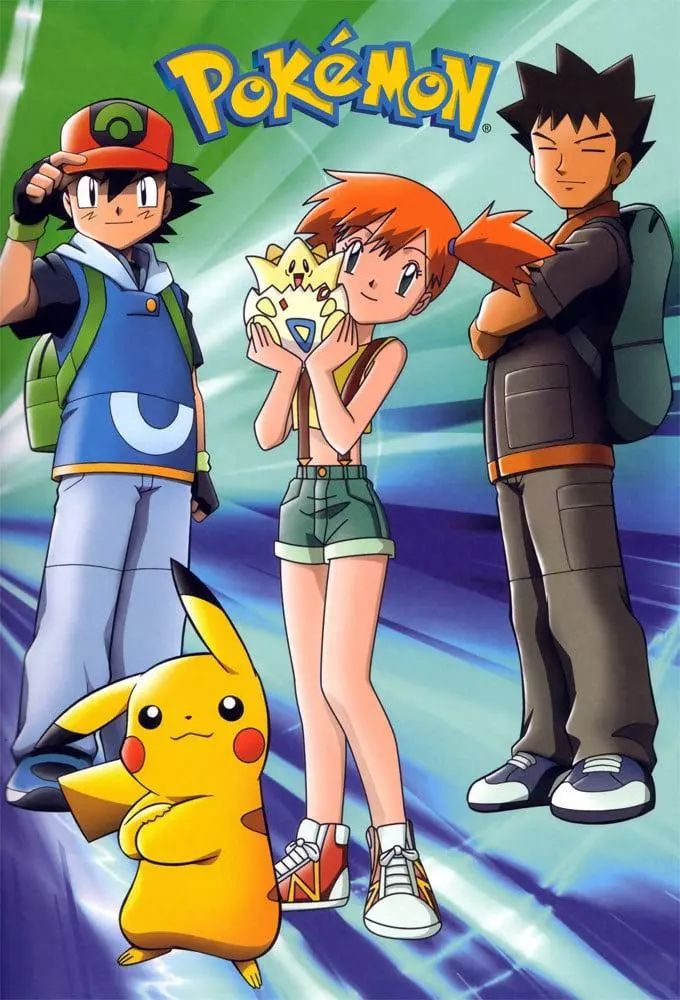
However, due to the limited ability to develop and update early Game Freak games, Nintendo, who was worried about the decline of Pokemon, found the primary school of Japan’s largest publishing group and worked together to create derivative cartoons and animations of the IP to gain time for game development. In 1997, while Pokemon became more and more popular, the first Pokémon animation was officially launched. In this series, Pikachu, who has a high popularity in the game, replaced Pippi as the protagonist and suddenly became the spokesperson of Pokémon, an IP.

"Pokémon" animated poster

Facts have proved that the animation of Pokémon is an extremely correct choice. Compared with games with a certain threshold (requiring equipment), with the help of TV and the rising Internet, animation has become a better communication carrier for Pokémon.

During the first generation of Pokémon (1997-2002) broadcast in Japan, the average audience rating reached more than 10% (the average audience rating exceeded 15% in some late Shi Ying League), and almost every episode ranked in the top ten in the same period; The theme song of the animation "The Goal is the Master of Pockmarked Dreams" also captured 1.85 million album sales in Japan; Up to now, 80% of the more than 1,000 episodes of Pokémon in six seasons are ranked in the top ten in the same period.

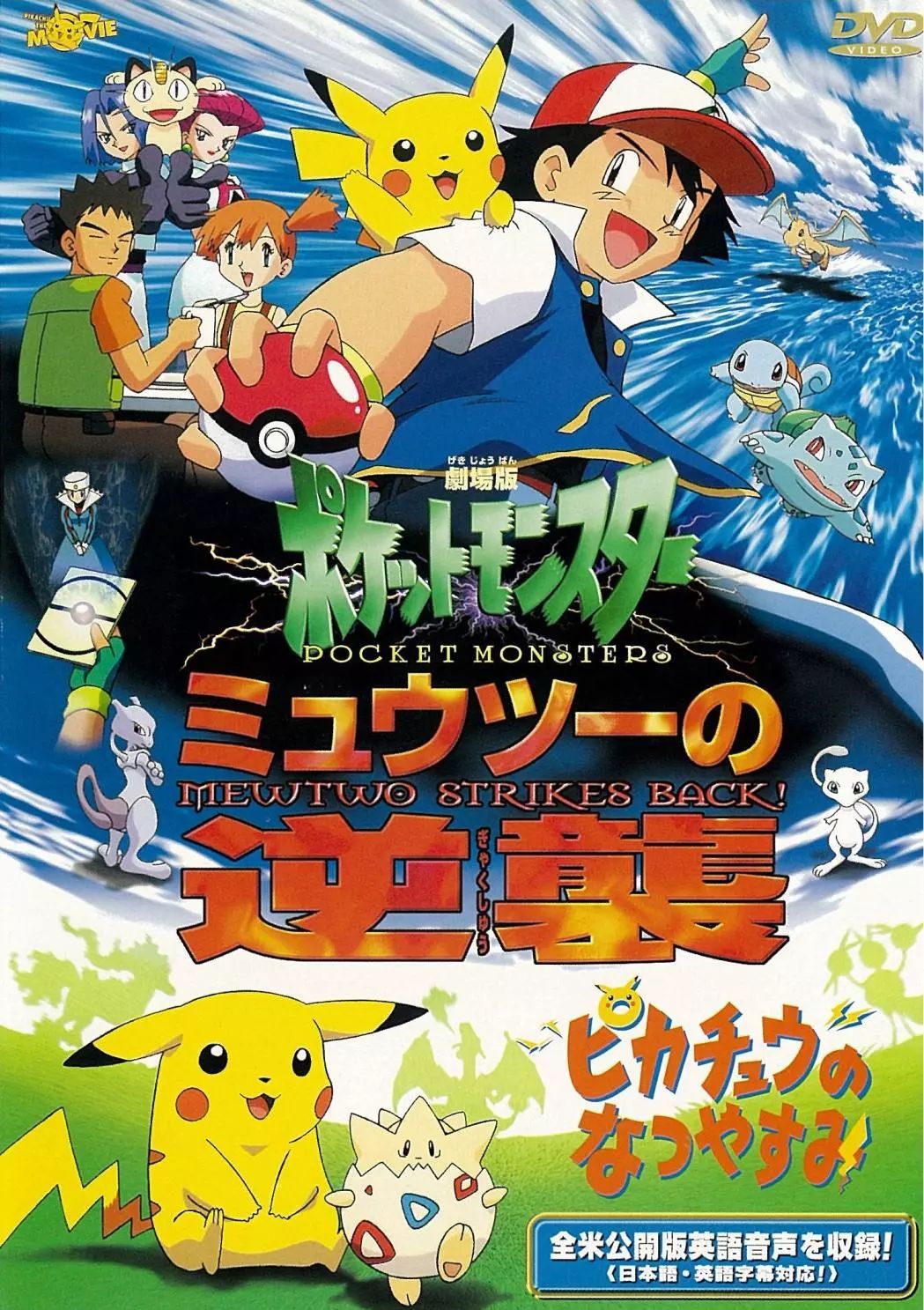
While the influence of Pokémon is gradually increasing in Japan, IP operators are constantly pushing it to the world. In the United States, companies such as Pokémon and Disney have had in-depth cooperation. In 2000 alone, more than 25 million animated DVDs and VCD; were sold. Statistics from India show that this series was once the animation with the largest number of users among audiences aged 4-14. Up to now, Pokémon has been broadcast in 124 countries. Even in 2016, Netflix revealed that Pokémon is one of the most popular series on Netflix.

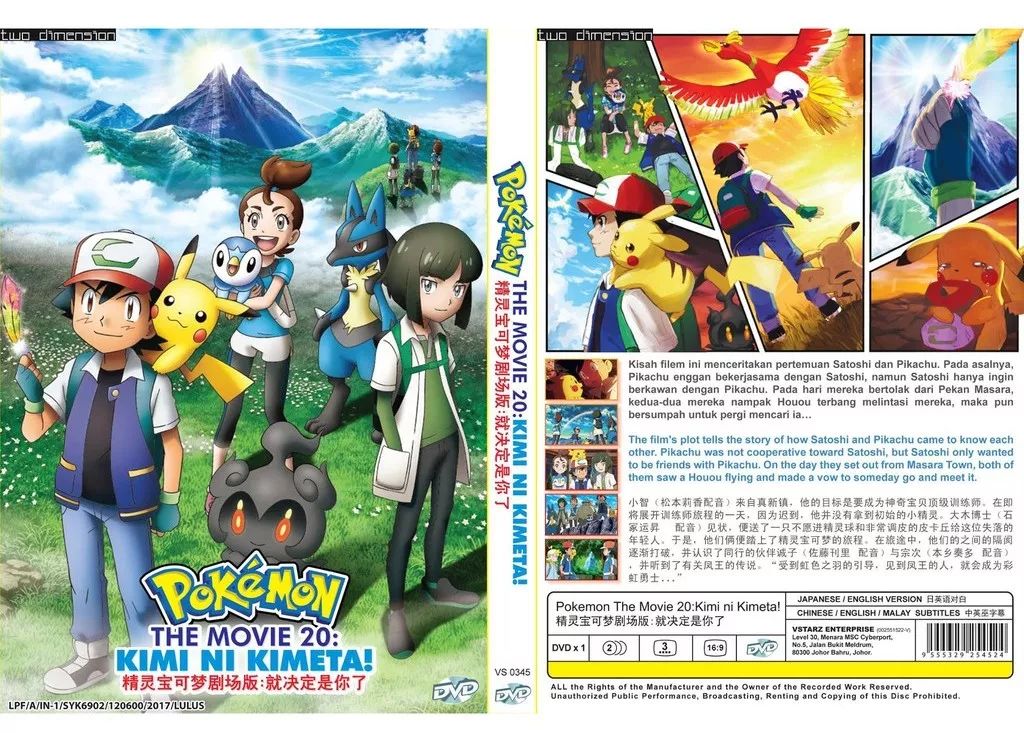
The best-selling DVD of Pokémon.

With the popularity of Pokémon and the expansion of Pokemon’s global influence, Poké mon has gradually occupied an increasingly important position in the hearts of users all over the world. In 1999, Pokémon appeared on the cover of Time magazine, and Pikachu was named the second most influential person of the year by Time magazine, calling him "the most popular animated character after Hello Kitty".

In recent years, Pokémon’s influence has a tendency to surpass the pure entertainment field and gradually become a cultural symbol. In the United States, during the election, Hillary Clinton and other politicians even went to the gathering of American Pokémon fans to canvass this huge audience. In Japan, Pikachu is regarded as a "national symbol". When Japan played in the World Cup in 2014, Pikachu defeated Doraemon, etc., and joined hands with more than ten other Pockmarked Dreams to become the mascot of the Japanese team.

 How do Pikachu earn 90 billion dollars?

Such a large global influence naturally makes the market value of Pokémon IP rise.

As early as 1998, Nintendo and Game Freak jointly established The Pokémon Company for brand licensing and derivative product development, and successively set up subsidiaries in the United States and South Korea for different markets. By 2003, the image of Pikachu alone could earn $800 million a year, and it was even selected as "the most profitable virtual character of the year" by Forbes. Today, Pokémon has created a total income of 90 billion dollars for all partners, which is even more difficult for Marvel Comics.

So what did the "Pikachu" rely on to earn this $90 billion? According to the public information, Poison Eye has sorted out the public realization modes of Pokémon on the Internet, and divided them into the following categories: authorization and sale of peripheral derivatives, sales of electronic games, sales of card games, animation and movie income. The specific division is as follows-

The form is from Wikipedia.

1. Authorization and sale of peripheral derivatives

The authorization and sale of peripheral derivatives is one of the most profitable businesses related to Pokémon at present. According to the "list" data, the related income has accumulated to more than 60 billion US dollars in the past two decades. At present, Disney, an entertainment giant in Japan and China and the overlord of derivatives, can earn $45 billion a year from derivatives, but this is the result of the joint efforts of many phenomenal IPS such as Mickey Mouse, Marvel Comics and Star Wars, and Pokémon can sell an average of $23 billion a year, which shows its influence.

In 2004, one year after Pokémon was launched in India, the total sales of related licensed goods exceeded 10 billion rupees, equivalent to 22.1 million US dollars. In Europe, Pokémon-related toys are called "dominant" by the local media. The British Toy Industry Association has awarded the annual toy awards to related products many times. Until 2017, in Britain, Italy and other places, the annual sales of Pokémon toys still increased by more than 50%.

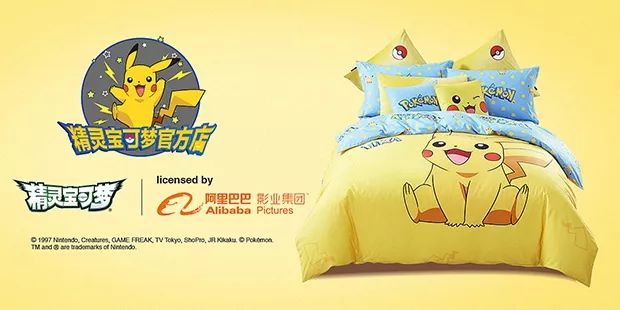
In 2017, Alibaba Pictures and The Pokémon Company reached a strategic cooperation, obtained the development and marketing authorization of Pokémon’s peripheral products in China, and began to promote related products on Tmall and other platforms. According to the data disclosed by Alibaba Pictures, in the first three days of the launch of related products, the transaction volume was nearly 20 million yuan, and the UV was 2.5 times that of the same order of magnitude in daily life, while the daily sales of Pokémon-related derivatives was 30 million yuan.

In 2017, the daily sales volume of Double Eleven Pokémon derivatives reached 30 million yuan.

According to incomplete statistics, there are thousands of genuine Pokémon derivatives around Pikachu at this stage, involving daily necessities, clothing and snacks. In addition to authorized goods, ThePokémon Company has opened more than ten "Baokemeng Centers", nearly 30 "Baokemeng Specialty Stores" and several regional online stores around the world.

2. Video game sales

Video game sales is the oldest and most traditional cash channel of Pokémon, and it is the most popular game IP on almost every Nintendo handheld after GB. Up to now, Pokémon’s various derivative games have sold more than $17 billion and more than 300 million sets worldwide, ranking second in the history of video games in terms of sales volume, second only to Mario produced by Nintendo, and also the best-selling role-playing game in history.

If the handheld computer was one of the thresholds for the maximum popularity of Pokémon games in the past, then the arrival of the mobile game era has solved this problem well. In 2016, Pokémon GO was launched overseas, and accumulated 75 million downloads in half a year. By the end of 2018, Pokémon GO had attracted players to spend as much as 2.2 billion US dollars, including 795 million US dollars in revenue in 2018, up 35% year-on-year. Niantic, its game developer, has also received $200 million in financing and a valuation of $4 billion.

Such a huge income was created when the China market was not fully opened. Although Pokemon has been popular all over the world twenty years ago, mainland players are almost always exposed to pirated and cracked versions. In 2014, even mainland Pokemon fans wrote a petition to Nintendo, hoping to promote genuine Chinese works. Not long ago, Tencent got the agency right of Nintendo’s hottest handheld NS in the mainland, which means that some Pokemon games supporting NS will have the opportunity to gain more space in the mainland in the future.

It is worth mentioning that games are also creating new income possibilities for derivatives and film and television products, and many mature games themselves have gradually formed influential IP, which has the possibility and space for fission. The movie Pokémon Detective Pikachu is a film adapted from the enhanced version of Nintendo’s game The Birth of Detective Pikachu’s New Partner. Thanks to the popularity of this film, the film also opened the "Detective Pikachu Theme Entertainment Exhibition" and a series of pop-up shop in China, which provided a channel for offline consumption of derivatives and continued to increase the income of products around them.

3. Card game sales 

Card game sales are one of the most easily underestimated channels for realizing Pokémon, but in fact, these seemingly insignificant pieces of paper have accumulated more than 10 billion US dollars in revenue. The official name of this card game is "PokémonTrading Card Game" (PTCG), which is an officially authorized card game with the theme of Pokémon.

According to the data disclosed on the official website of Pokémon, as of March 2018, PTCG has sold more than 25.7 billion copies worldwide; According to the statistics of NPD Group, an authoritative survey company in the United States, in 2017, PTCG occupied more than 80% of the market share in the European strategic card market, and the annual sales in many countries in that year increased by more than 400% year-on-year; According to the survey of License Global, as early as 2016, PTCG has surpassed the "Game King" to become the best-selling strategic card game.
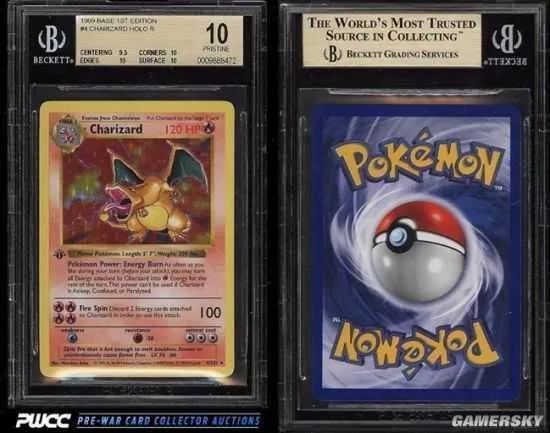
Like video games, PTCG has not entered the domestic market due to copyright, policy and market restrictions. However, in Japan, Europe, America and Hong Kong, China, PTCG is promoted by big agents (for example, in North America, the agent of PTCG is the parent company of magic the gathering), and it has a good popularity in the local area, and even has special tournaments. Not only that, in the eyes of many collectors, PTCG also has a very high collection value, and the price of some rare cards can even reach hundreds of thousands of dollars. 

4. Animation and movie revenue

Animation and film revenue mainly includes the copyright income of comics and animation, as well as the box office income of theatrical films, and the global cumulative income has reached billions of dollars. Although this income is almost negligible compared with other incomes, movies and comics, as an important carrier of Pokémon to maintain its popularity and popularity, are still highly valued by Nintendo, elementary school and other interested parties.

In addition to the nearly 1,000 episodes of animation and related cartoons mentioned above, Pokémon has released 1-2 theatrical works every year since 1998. After the first theatrical version of Pokémon: The Counter-attack of Super Dream was released in 1998, it first achieved 7.3 billion yen in Japan (the second in the whole year); Later, when the film was released in North America and other places, it also accumulated more than 160 million US dollars at the box office, setting a box office record for Japanese films in many countries and regions.

Pokémon: The Counter-attack of Super Dream

Counting Pokémon, which will be released in July this year, 23 theatrical versions of Poké mon have been released in the past twenty years, including five in North China and one in mainland (Poké mon: Volcanion and Magearna with a box office of 25 million in 2017). Although the follow-up works failed to continue the glory of the first work, they can still harvest 2-4 billion yen at the local box office every year, ranking among the top 20 in the annual box office list.

The contingency and inevitability behind Pokémon’s popularity.

Thanks to many business lines covering all fields of cultural consumption, the popularity of Pokémon has been growing stronger with the diversification of media forms and entertainment channels since its birth 23 years ago, so that many practitioners talk about Pokémon with admiration and envy. Newell, the boss behind steam, the hottest game platform, has repeatedly lamented the greatness of Pokémon, saying that its developers have made this series better than any other series, and this IP is also the most valuable IP in history, stronger than any product of V Society.

Judging from the development history of Pokémon, there are too many accidental factors that cannot be copied in its success.

The expression of "Big Detective Bikachu" released today is cute.

For example, Pikachu is like this because the designer Nishida Dunzi happened to be raising squirrels at that time. The dream of Pokemon, which helped Pokemon come back to life, was originally a setting to be deleted, but the designer secretly left it behind. Before choosing Pikachu, Nintendo and the Academy actually considered other protagonists, Pippi and another treasure dream Ibu were both taken into consideration … If history is allowed once, any deviation in details may make this IP miss its status today.

But in addition to all these accidents, there are some inevitable factors.

In fact, Nishida Dunzi was not in the design team at first, and the initial design of Pokemon was mainly undertaken by another male designer, Shanshan Jian. Although he also created classic images such as Snorlax, he bluntly said that he always designed images with male thinking, and couldn’t think of any way to create some lovely treasures that female players would also like to participate in the collection. So Shanshan Jian took the initiative to find a female designer, Nishida Dunzi, and created the original Pikachu with the help of the latter. The reason why this "electric squirrel" is called "Pikachu" is also because the name is cute and fits the pronunciation habits of western users.

The earliest Pikachu

The selection of Pikachu as the protagonist of Pokémon is also the result of the team’s consideration in many aspects: First, Pippi in Pippi Biography is too serious to be the protagonist of an all-age animation; Secondly, Pippi’s color is pink, while Pikachu’s is yellow. In the aesthetics of oriental audiences, yellow is more neutral than pink, so it won’t lose male users. In addition, yellow is more recognizable and impactful than other colors, and it is easier to stand out in derivatives.

As for the popularity of Pokémon, it’s not just luck.

Masaichi Kubao, director of the Academy and known as "the father of Pikachu", revealed that Pokémon would do a lot of research before entering any overseas market. "Especially when we push animation to a big market like China, we often look at some works that are very popular in China, or some works that are hot in China but can’t achieve such good results in Japan, and then analyze the reasons. This is the way we use to learn the market differences in different countries. When we brought Pikachu to China, we also did a lot of investigations, including still doing so today. "

It can be seen that although the game of Pokemon and the animation of Pokémon are full of many unknowns in the creative stage, the team is sufficiently forward-looking, and the acceptance, derivative sales and audience characteristics are all included in the planning of the producers, giving them full attention and preparation. And the attention to every little detail has finally made this IP.

On the contrary, before, China derivatives industry practitioners told Poison Eye that one of the important reasons why China film and television derivatives can’t make achievements is that many companies are not forward-looking enough (click here to read: The Wandering Earth derivatives are hot, why didn’t anyone dare to do it before the screening? ), in the creative stage, the elements suitable for derivative development were not selected in advance, and they often waited until the eve of going online to cram for the last minute and make some shoddy products, which further delayed the breakthrough of derivatives in China.

Whether it’s Pokémon, which has remained strong for 20 years, or Marvel Comics, which has accumulated a lot of money and spent ten years building the strongest IP on the screen, these successful IPS are undoubtedly telling the same truth: the success of a good IP was not built in a day. On this road, there are still many places to be cultivated slowly in China’s film and television industry and even the entire entertainment industry.

References:

[1] List of Hester-Grossing Media Franchises Wikipedia

[2] "Tian Kaozhi, the man who created Pokemon" was published by Tailang Gong and Ota Tian Kaozhi in 2004.

(The sales volume and sales data involved in this article are all from Wikipedia statistics unless otherwise specified.)