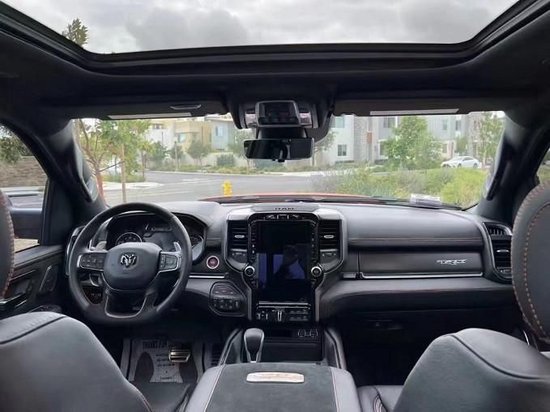
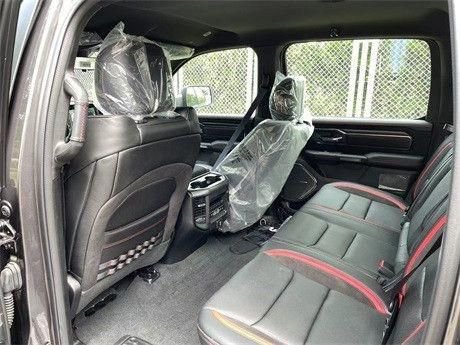
Dodge Ram Tyrannosaurus Rex Dodge Tyrannosaurus Rex seats are independent, equipped with comfortable functions such as heating, and each seat is independently equipped with a control handle, and each function is controlled by the occupant himself. All seats of Dodge Ram pickup truck are wrapped in leather, and the front row is also equipped with very practical sports seats. Tianjin Guardian luxury car Hui new Ram TRX, also known as Tyrannosaurus Rex, has a second performance. Tianjin Guardian luxury car Hui Xian has arrived in Hong Kong for customs declaration. It is an off-road high-performance pickup truck equipped with a 6.2L V8 supercharged engine with a maximum power of 702 HP. Looks very domineering.
The new car has further strengthened its image of high-performance version in the interior, and the TRX logo everywhere in the center console and seats is the best example. At the same time, as the flagship model of the Dodge family, the new car is also equipped with a 12-inch vertical central control screen. In addition to supporting common functions such as Bluetooth, navigation and car Wi-Fi, it also supports Apple CarPlay and Android Auto mobile phone mapping.
In the power part, the new car is equipped with a 6.2L Hemi V8 supercharged engine with a maximum power of 702 HP and a peak torque of 881 Nm. The transmission system is matched with ZF 8AT gearbox. Thanks to the powerful power, the new car can accelerate from standstill to 60 mph (about 96 km/h) in 4.5 seconds, from standstill to 100 mph (about 161 km/h) in 10.5 seconds, and it takes only 12.9 seconds to complete the quarter mile (about 402 m) sprint, with a top speed of 190 km/h.
In addition, as a high-performance pickup truck focusing on off-road, the chassis has also been greatly upgraded. The chassis is made of a large number of high-strength steel to improve the rigidity of the frame. At the same time, the suspension system is also equipped with an adaptive shock absorber from Bilstein, which can reduce the vibration during high-speed desert driving and off-road, and improve driving performance and durability.
Model: 22 American version of Dodge Tyrannosaurus Rex TRX limited edition color: orange outside and black inside
Many consumers will feel a little shocking when they hear this name. This car is directly named Apocalypse Warlord, which is a rather domineering name. The 22 Dodge Ram Tyrannosaurus Rex has a height and width of 2,387mm and a length of 6,706mm. This car will also choose the serial axle technology, and the telephone number is 13269115555 Manager Zhang (WeChat with the same number), so the powerful horsepower can be evenly distributed on different axles. In addition, this car will also be equipped with 37-inch mud tires. After effectively combining 20-inch wheels, it will have good results in the running process.
The 22 Dodge Ram Tyrannosaurus Rex has a strong sense of impact and a forward-leaning front. Compared with the well-behaved family design, it is undoubtedly a little more invasive to the road. Tel: 13269115555 Manager Zhang (with the same number WeChat) does not reveal a trace of lively charm in his eyes. The only thing that shows is fierceness. The front bumper is an iron front bumper with a drag hook, which exudes this metallic atmosphere and is calm and atmospheric. As the best-selling model, it has a very aggressive front face.
The 22 Dodge Ram Tyrannosaurus Rex is equipped with a 6.2-liter V8 supercharged engine. Although its weight will be 3 tons, the telephone number is 13269115555 Manager Zhang (the same name as WeChat), but this scary power output can still accelerate this big guy from 0 to 100 kilometers per hour in 4.5 seconds.
The workmanship of 22 Dodge Ram Tyrannosaurus Rex completely got rid of the American roughness, and the edges and seams were carefully handled. The leather seats were independent and equipped with comfortable functions such as heating and massage. Each seat was equipped with a joystick independently, and each function was controlled by the occupant himself. All seats of Dodge Ram pickup truck are wrapped in leather, and the front row is also equipped with very practical sports seats.
22 Dodge Tyrannosaurus Rex sandblasting limited edition in Tianjin Port Free Trade Zone. Recently, a large number of cars of Tianjin Jiade famous car arrived in Hong Kong, and the price dropped sharply. Some riders who like pickup trucks don’t have to wait for the bus to book a car to buy. Best pickup truck Dodge Tyrannosaurus Rex sandblasting limited edition.
National Sales Hotline 13269115555 Manager Zhang (same as WeChat)
Disclaimer: The above car purchase preferential information is provided by the comprehensive dealers of this website, and the price fluctuates greatly due to market factors, which is only for car purchase reference; The distributor is responsible for its authenticity, accuracy and legality, and this website does not provide any guarantee or assume any legal responsibility.
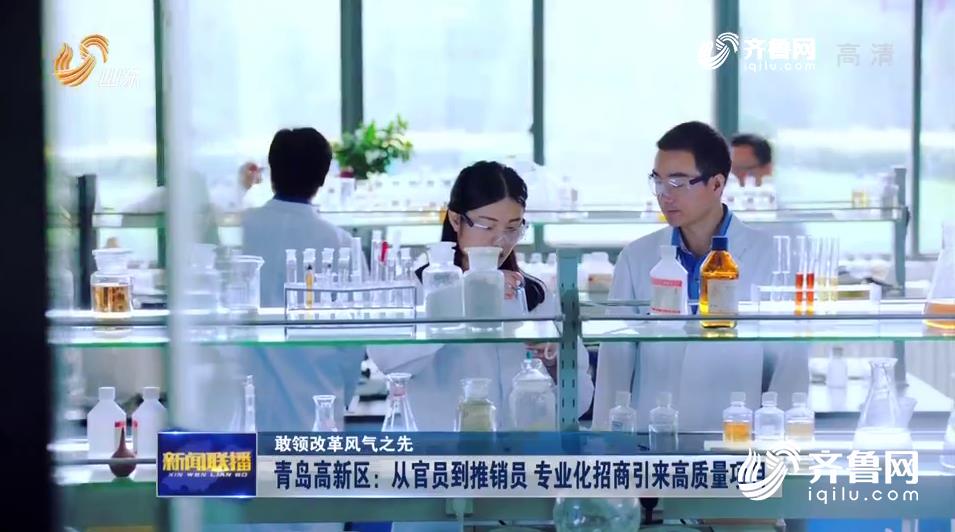
Qilu. com October 12 th Through the reform of investment promotion system, Qingdao High-tech Zone has made investment promotion professional and accurate, and improved the quality and efficiency of investment promotion.
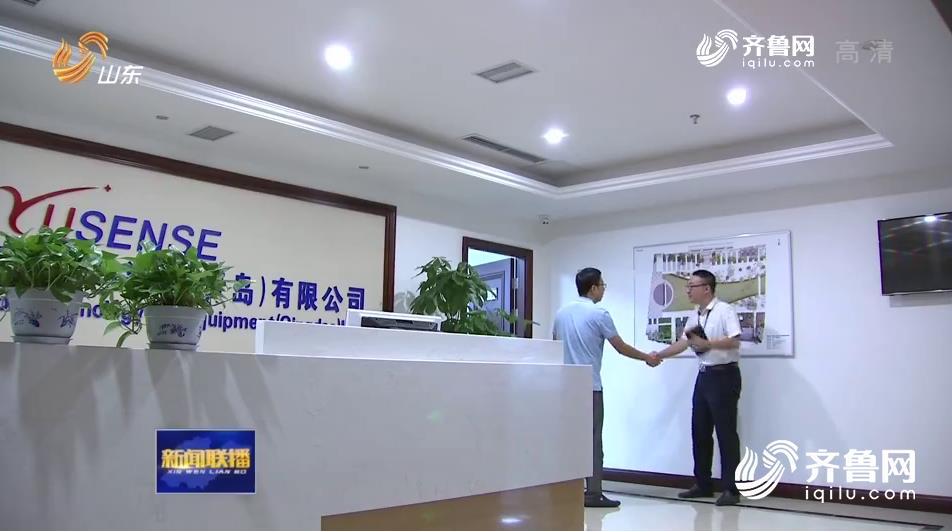
Although it was the weekend, Chi Ming, who was in charge of investment promotion in Qingdao High-tech Zone, took the initiative to come to the door because of a phone call from the enterprises in the park. This photoelectric equipment enterprise, led by Chi Ming, has been running for more than a year now.
Chi Ming, deputy director of comprehensive service division of scientific research institutes in Qingdao National Hi-tech Industrial Development Zone, told reporters, "What we are asking now is that we should follow up every introduced project with a lifelong responsibility attitude, from initial contact and negotiation, to landing transformation, and even to subsequent overall operation".
This attitude comes from the reform of investment promotion system in Qingdao High-tech Zone. Two years ago, according to the direction of industrial development, the local government transferred personnel from various departments to set up 10 investment promotion departments. Their files were sealed and their administrative levels were broken, so that special people were allowed to do special things. The objectives and tasks are also more detailed, and the assessment of each business department includes dozens of requirements in different categories, such as the number and quality of imported projects and high-level talents.
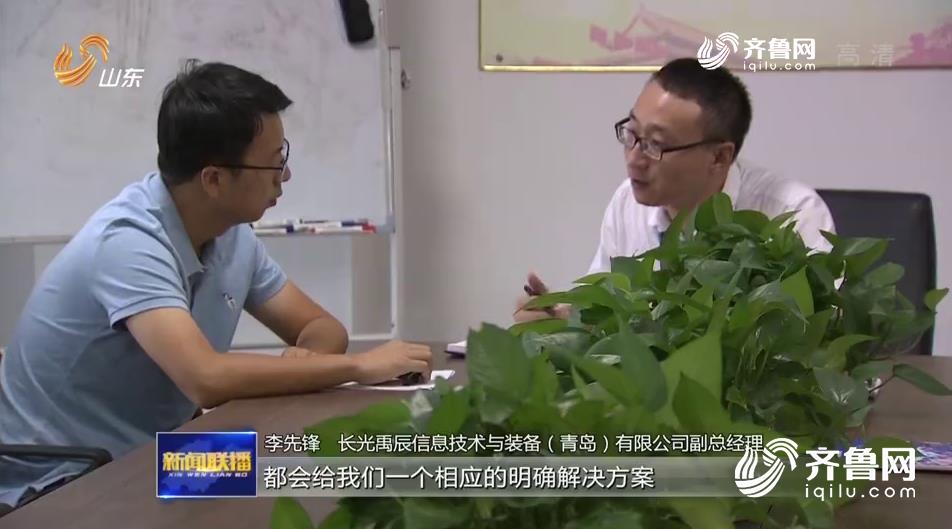
Li Xianfeng, deputy general manager of Changguang Yuchen Information Technology and Equipment (Qingdao) Co., Ltd. said: "Once we have some ideas or problems, we will communicate and consult with them in time and give us a corresponding clear solution, which is really a nanny service."
The reform of investment promotion system has enabled Qingdao High-tech Zone not only to recruit but also to retain enterprises. Last month alone, 86 projects with a total investment of 61.8 billion chose to settle here. At present, Qingdao High-tech Zone has introduced 177 key projects of emerging industries in the world, including one Fortune 500 company and six top 50 domestic enterprises.
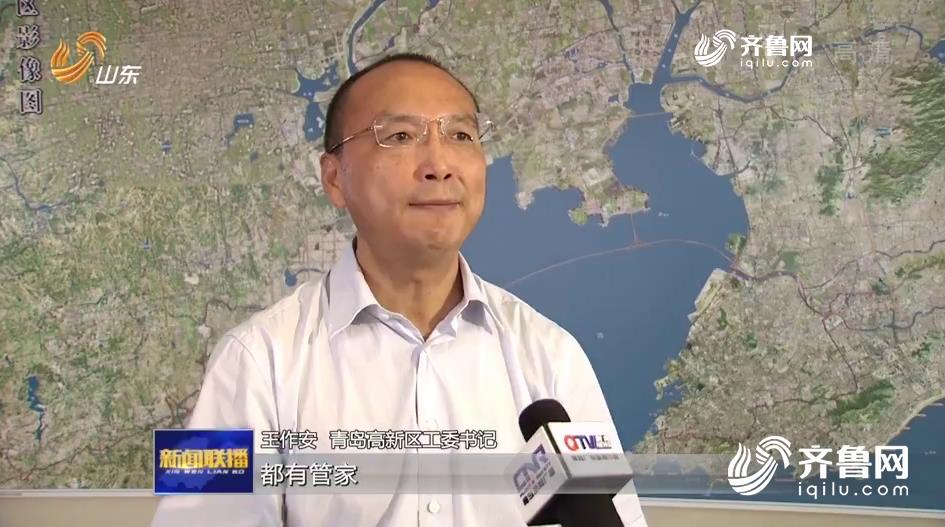
Wang Zuoan, secretary of the Working Committee of Qingdao High-tech Zone, said: "We have changed from’ signature and seal’ in the past to’ nanny service’, so that every project that landed in Qingdao High-tech Zone has a’ housekeeper’ to help enterprises actively connect with the market, capital and technology. At the same time, let the administrative examination and approval be the simplest procedure and the best service, and the time limit for enterprise start-up will be reduced to less than 3 days. "
Lightning journalist Wei Bo Linyi Taiwan Xu Qi correspondent Fu Yu
[Click to view the high-definition atlas]The red carpet is charming and backless, and LEE JOON GI sells Meng、 Backstage Laure Shang wears wig for the elderly.
On April 7th, the 19th Oriental Billboard Awards Ceremony was held in Shanghai. On the red carpet, stars such as Chris Lee, BiBi Zhou, Wang Feng, Chen Chusheng, Twins, Pin Guan, Tanya Chua, Tiger Hu, Dingdang, Stephy, Xu Song, Li Zhunji, Jiang Yingrong, Liu Xijun, Fu Xinbo, Wang Xiaokun, Xue Zhiqian, Supreme Lihe, and Fruity VC appeared in costumes. This year is the 19th birthday of the Oriental Billboard. On that day, every artist brought his 19-year-old souvenirs to share with fans. Among them, the most eye-catching thing is that all the stars put on their 19-year-old youth costumes and made their debut.
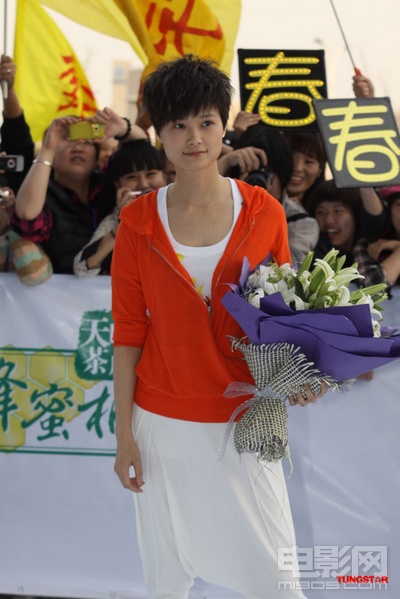
The biggest number of fans on the red carpet is Chris Lee, and the "corn" fans are holding high yellow flags and waving flags for their idols. Chris Lee, who appeared in orange sportswear with white slacks, really brought a lot of surprises to fans, and she won the All-round Artist Award in one fell swoop that night, which attracted much attention.
It is worth mentioning that the appearance of Korean artist LEE JOON GI attracted screams from fans, and LEE JOON GI cordially shook hands with the fans to thank them. As a guest performer, he made his first show in Asia after his retirement that night.
Laure Shang crossed to the age of 91, with white hair and wrinkles.
BiBi Zhou
Laure Shang, who has always shown people with exaggerated modeling, crossed the age of "91 years old" with white hair and a wrinkled face, once again making Laure Shang the focus of everyone’s attention. BiBi Zhou took off her trademark black-rimmed glasses and wore a blue suit with high heels, which was elegant and handsome. She also won the album of the year award for Akira Kurosawa that night.
Jiang Yingrong
TWINS
Jiang Yingrong, who appeared with a huge beige flower on her head, was not only eye-catching, but also won the Best Style Breakthrough Award that night. In the end, the appearance of Twins earned the attention of fans, and the combination of black and yellow instantly murdered countless films on the scene.
Reporter | Lin Yuyao Chen Zixuan Hong Yidong Xu Leijie
Xu Leijie
On November 18, 2019, Professor Zhou Guanghong from the National Meat Center of Nanjing Agricultural University led a team to use the sixth generation of pig muscle stem cells to obtain artificial pork weighing 5 grams after 20 days of culture. This is the first artificial meat made from animal stem cells in China.
A week later, a vegetable protein artificial meat of OmniPork’s new pork was officially launched on Tmall platform, with a price of 230g per serving in 28 yuan. As a result, artificial meat is stepping on the table of Chinese people step by step. While feeling novel, many people are also worried about this kind of unnatural "fake meat".
What exactly is artificial meat? According to Wikipedia, artificial meat is usually divided into two categories: plant meat and cultivated meat. Plant meat refers to food products made from plant raw materials, which imitate the taste, taste or appearance of animal meat. The OmniPork new pork mentioned above is such artificial meat.
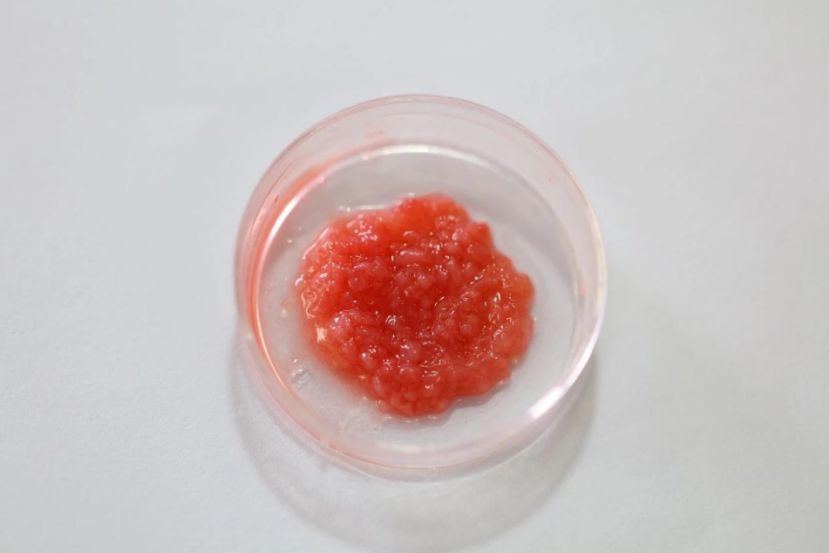
Cultured meat refers to the meat made by cultivating animal muscle cells through bioengineering, and what Professor Zhou Guanghong’s team cultivated is cell cultured meat.
Qianjiang evening news published the report "Artificial Meat, Is It Really Unacceptable?" on November 26th, 2019, saying that artificial meat was produced to fill the gap between supply and demand of natural meat, and at the same time it may be healthier and more environmentally friendly.
(Original qianjiang evening news)
Is the supply and demand of natural meat unable to meet people’s needs? Does natural meat cause environmental pollution and resource consumption? Is artificial meat more nutritious than natural meat? Artificial meat does not contain antibiotics and can artificially control nutrients? After checking the above questions, the reporter of the nuclear record came to the conclusion:
1. China’s domestic natural pork market is in short supply and demand;
2. The production and consumption of natural meat pollutes the environment and consumes a lot of resources;
3. At present, the calories, fat and cholesterol of artificial meat on the market are lower than those of real pork, but the content of protein is not as good as that of real pork;
4. Vegetable protein artificial meat does not contain traditional animal antibiotics, but only the cell-cultured meat in the laboratory can artificially control the nutritional components.
Checkpoint 1: Is China’s natural pork unable to meet the market demand?
A: At this stage, the domestic pork market is tight in supply and demand, and the import volume has increased significantly.
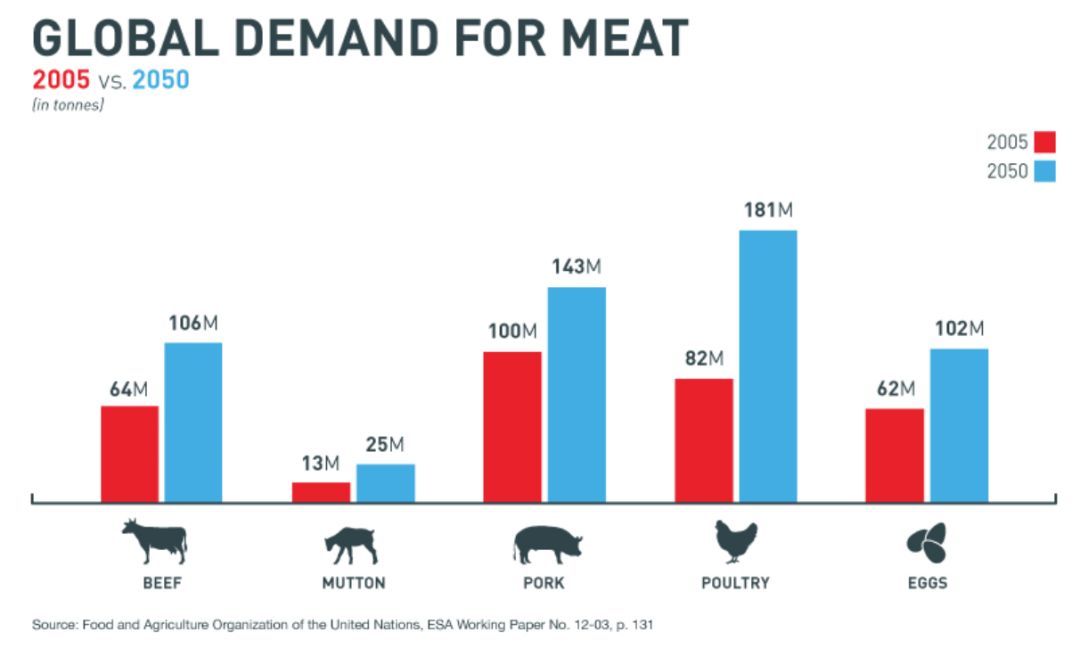
(Source: The Food and Agriculture Organization of the United Nations is taken from Bill Gates’ blog)
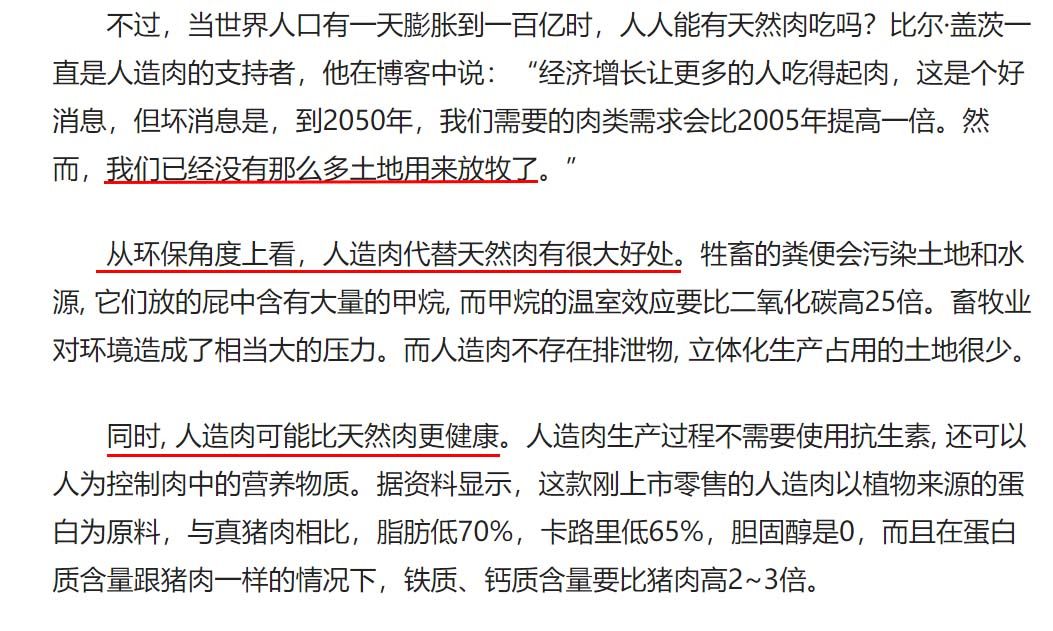
Bill Gates is a supporter of artificial meat. He has invested in many artificial meat producers such as Impossible Foods, Beyond Meat. Qianjiang evening news quoted a quote from Bill Gates’ blog: "It’s good news that economic growth has made meat affordable for more people, but the bad news is that by 2050, the demand for meat we need will double that of 2005. However, we don’t have that much land for grazing. "
Is the emergence of artificial meat because the market supply of natural meat can’t match the market demand? In view of the demand of natural meat in China market, the reporter took pork as an example and made a verification.
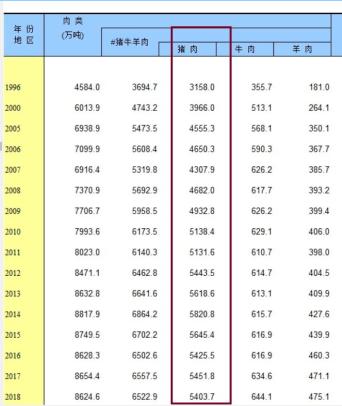
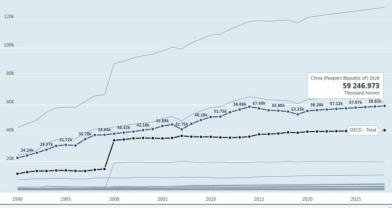
The reporter found the Statistical Yearbook of China from 1999 to 2019 on the website of the National Bureau of Statistics, which counted the pork production in China in the past 20 years. According to the data of the National Bureau of Statistics, the pork production in China increased from 31.58 million tons in 1996 to 54.03 million tons in 2018, which nearly tripled in 22 years. According to the data of the OECD database (https://stats.oecd.org/), the pork consumption in China increased from 31,365,200 tons in 1996 to 55,218,900 tons in 2018.
(Source: National Bureau of Statistics)
(OECD network: pork consumption in China)
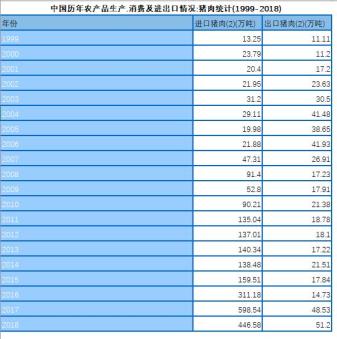
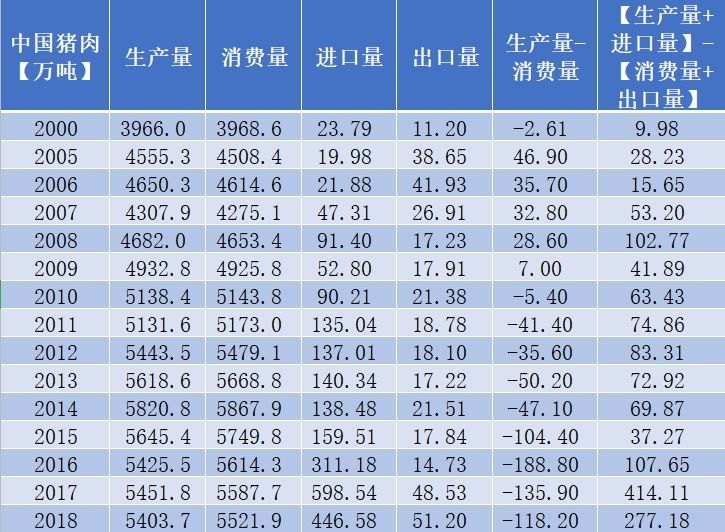
As for the import and export volume, according to the data of China Agricultural Industry Development Report 2019, the pork import volume in China has started to increase significantly since 2010.
(Source: China Agricultural Industry Development Report 2019)
We calculated by the formulas of [pork production-pork consumption] and [(pork production+pork import)-(pork consumption+pork export)], and got the following results respectively:
(The author calculated according to the data of China Agricultural Industry Development Report 2019, OECD Network and National Bureau of Statistics)
It can be seen that although China’s pork market maintains a balance between supply and demand under the compensation of imports, the annual production has been less than the annual consumption since 2010, and the gap has been expanding. Correspondingly, the import volume of pork increased by 17.77% from 2000 to 2018, and the supply and demand of domestic pork market tended to be tight.
In 2019, due to African swine fever, a series of prevention and control policies and changes in slaughter, the domestic slaughter of pigs decreased significantly, and the production capacity of pigs and fertile sows continued to decline. The effect of tight supply in the pork market was concentrated during this period, leading to a sharp rise in domestic pork prices.
Based on the above materials, the demand for pork products in China is increasing, and the shortage of supply and demand in the domestic natural pork market will become increasingly prominent.
Checkpoint 2: Does the production and consumption of natural meat cause environmental pollution and massive consumption of resources?
A: The production and consumption of natural meat will pollute the atmosphere and require a lot of land and water resources.
"qianjiang evening news" reported that "livestock manure will pollute land and water sources, and their farts contain a lot of methane, and the greenhouse effect of methane is 25 times higher than that of carbon dioxide. Animal husbandry has caused considerable pressure on the environment. There is no excreta in artificial meat, and three-dimensional production takes up very little land. "
According to the greenhouse gas emissions of pig breeding, the reporter consulted the article "Development of China’s Pork Industry and Estimation of Greenhouse Gas Emissions" published in China Pig Industry in October 2015. By calculating the emissions of methane in pig intestines, methane in feces and nitrous oxide in feces (methane and nitrous oxide are listed as greenhouse gases by intergovernmental climate change organizations), it is concluded that in 2012, only 112 million tons of greenhouse gases were emitted during pig breeding (excluding other processes).
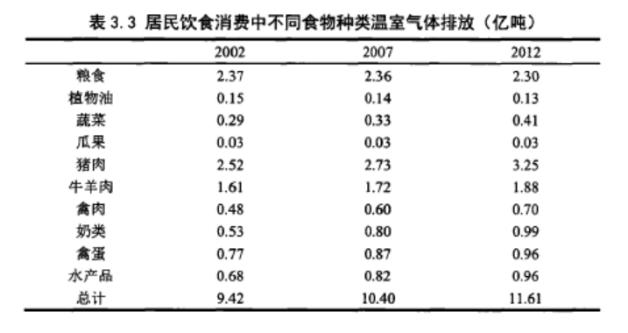
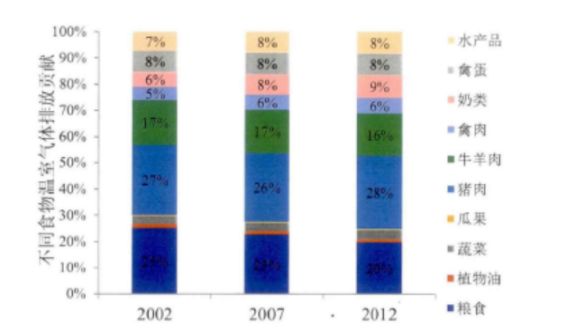
Not only that, Xu Wenchuan, School of Environment, Nanjing University, published his master’s degree thesis "Analysis of Greenhouse Gas Emissions from China Residents’ Dietary Consumption" in May 2018, pointing out that the greenhouse gas emissions from pork in China’s dietary consumption (including the whole process of breeding) have been increasing from 252 million tons in 2002 to 325 million tons in 2012 (Figure 1), and the proportion has also been rising, from 27% to 28% (Figure 2 Compared with the 7.954 billion tons of national greenhouse gas emissions in 2012 pointed out by China Carbon Emissions Trading Network, this number accounts for about 4.1% of China’s total greenhouse gas emissions.
(Figure 1 Source: "Analysis on the Changes of Greenhouse Gas Emissions of China Residents’ Dietary Consumption")
(Figure 2 Source: "Analysis on the Changes of Greenhouse Gas Emissions of China Residents’ Dietary Consumption")
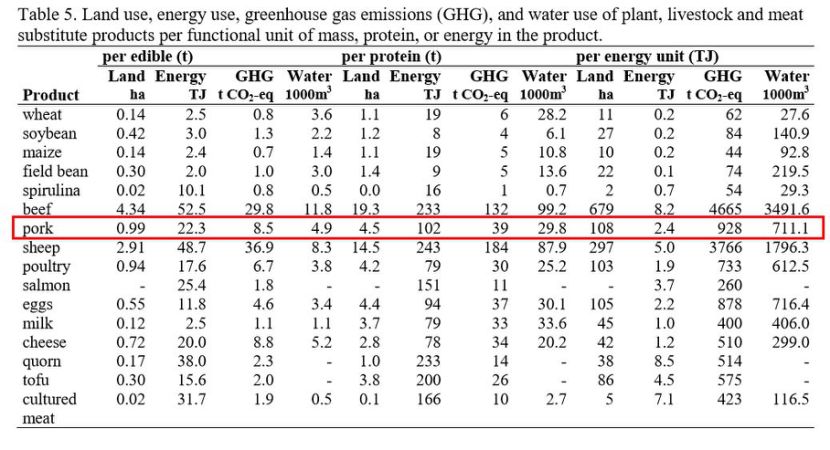
Regarding the consumption of land and water resources in pork production, the reporter looked through the data of the 8th LCA International Conference on Agricultural Food held in Rennes, France in October 2012. According to the statistics of the organization in charge of the conference, the output of each ton of edible pork needs 4.9m3 of water resources (see the figure below), and beef, mutton and other meats consume more.
(Source: Report of the 8 th LCA International Conference on Agricultural Food)
According to the data of the first verification point, the domestic consumption of pork in China in 2018 is about 55.22 million tons, which requires about 270.5 billion cubic meters of water resources according to the above-mentioned meeting data. According to the "China Water Resources Bulletin 2018" published by the Ministry of Water Resources of People’s Republic of China (PRC), the total domestic water consumption in 2018 is only 85.99 billion cubic meters, so the water consumption used only for pork production in that year can supply the daily life of the people of the whole country for at least three years, and if other meats are added, it will be more.
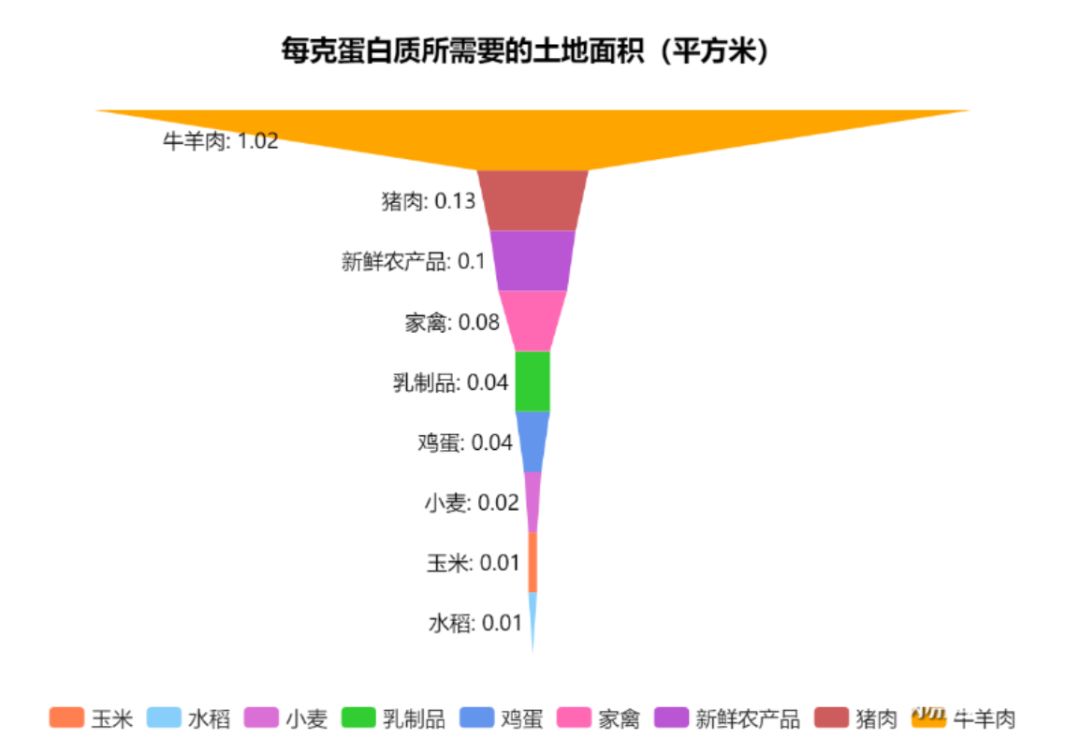
At the same time, meat production based on animal husbandry consumes a lot of land resources. According to the comparative analysis of environmental impacts of agricultural production systems published by Clark & Tilman in the journal Environmental Research Letters, According to the data in the article "Agricultural input efficiency, and food choice", the production of pork in protein requires 0.13 square meters of land, while that of beef and mutton in protein requires 1.02 square meters.
(source: comparative analysis of environmental impacts of agricultural production systems, agricultural input efficiency, and food choice)
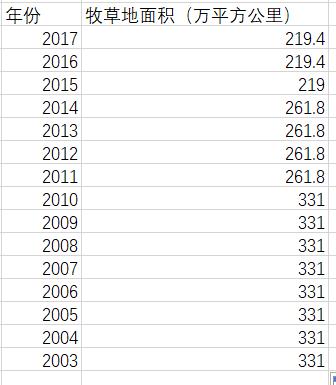
However, the data of the National Bureau of Statistics show that the available grassland area in China is decreasing year by year. From 2003 to 2018, the available grassland in China decreased from 3.31 million square kilometers to 2.194 million square kilometers. The reduction of grassland area limits the development space of animal husbandry, and also confirms the worry that "there is no more land for grazing" in Bill Gates’ blog.
(Data source of grassland area change in China: Statistical Yearbook of National Bureau of Statistics)
Based on the above information, the production and consumption of natural meat have indeed caused the problems of environmental pollution and massive consumption of resources.
Checkpoint 3: Artificial meat is low in calories, fat and cholesterol, and has higher nutritional value?
A: Compared with real pork, OminPork artificial meat currently on the market in China has lower calorie and fat content and zero cholesterol, but its protein content is also slightly lower.
Qianjiang evening news reported that "artificial meat may be healthier than natural meat. Artificial meat production process does not need to use antibiotics, but also can artificially control the nutrients in the meat. According to the data, this artificial meat (which was reported to be listed on the e-commerce platform on November 25th, 2019) has just been marketed and retailed with plant-derived protein as raw material. Compared with real pork, the fat is 70% lower, the calorie is 65% lower, and the cholesterol is 0. Moreover, in the case of the same protein content as pork, the iron and calcium contents are 2-3 times higher than pork. "
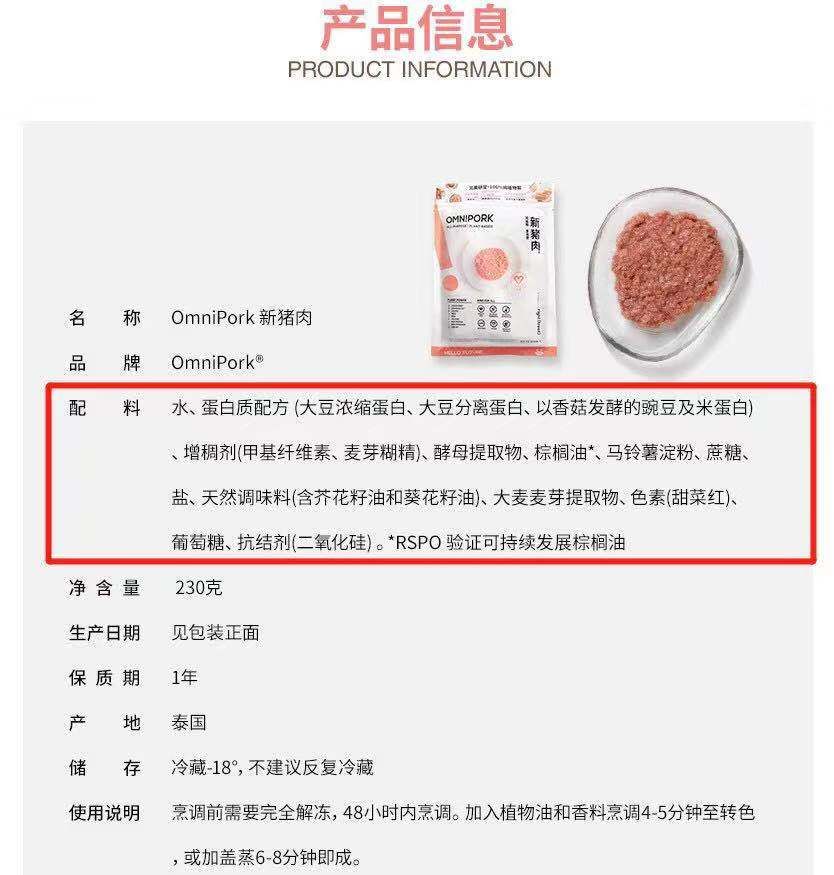
The reporter inquired that the artificial pork currently listed in China is only OminPork new pork, which is taken as a representative for verification. This artificial meat is a future meat product developed by Right Treat, a food research company of Hong Kong Green Monday Company, and sold through the Green Common Tmall international platform. This is a kind of vegetable protein meat, the main ingredients are water and plant protein concentrate such as soybean, mushroom and rice.
(Chinese version of ingredient list provided by Tmall International)
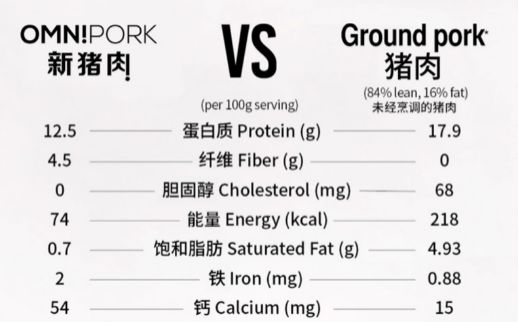
The ingredient list displayed in the official flagship store of Green Common shows that the artificial meat has an energy of 74 kilocalories per 100g, a fat content of 1.5g and a cholesterol content of 0. If we compare the composition of this artificial meat with that of real pork with 84% lean meat and 16% fat meat, then this artificial meat is 66% lower in calories and 68% lower in saturated fat than real pork.
(ingredient list in the official flagship store of Green Common)
There are differences between the above product data and the data mentioned in the report of qianjiang evening news: the data expression of fat, energy and cholesterol are basically the same; However, it is worth noting that the protein content of this artificial meat is 12.5g, which is slightly lower than that of real pork (17.9g), which contradicts the reported "protein content is the same". At the same time, this artificial meat has 2.6 times the calcium and 1.27 times the iron content of ordinary pork, rather than the vague "2-3 times" in the report.
In addition, the report doesn’t mention the fat-lean ratio of real pork (lean meat: fat meat ≈ 84: 16), and different fat-lean ratios will lead to different nutritional components of pork, which may further affect readers’ understanding of the nutritional value of artificial meat.
Checkpoint 4: Artificial meat does not need antibiotics, and can the nutrients in the meat be artificially controlled?
A: Vegetable protein meat does not need antibiotics, but only cell-cultured meat can artificially control nutrients.
The article "Characteristics of Plant Extracts and Their Application in Sow Production" published in Journal of Animal Nutrition in 2017 indicates that the abuse of antibiotics in large-scale pig farms is very serious, which will not only lead to antibiotic residues in meat products, but also lead to the emergence of drug-resistant bacteria, which seriously threatens human health. It can be seen that farmers add antibiotics to feed, and antibiotics remain in pigs, so there is a saying that "natural meat contains antibiotics".
In contrast, the ingredient list of OminPork mentioned above shows "no added antibiotics".
(ingredient list in the official flagship store of Green Common)
As for the idea that "nutrients can be artificially controlled" in qianjiang evening news, the reporter of the Nuclear Record found through investigation that this is mainly aimed at cultivating meat.
According to Wikipedia’s definition, the principle of cultivating meat is to extract stem cells from animals, then put them in test tubes or Petri dishes to divide and grow, and finally produce muscle tissue, in which the nutrients can be controlled.
As early as 2005, the team of Jason Masini, Ph.D., who studied agricultural economy and public health at the University of Maryland, put forward two technologies with large-scale meat production potential in the scientific journal Tissue Engineering. In response to these two methods, Masini said: "You can even control nutrition. For example, most meat has high omega-6 fatty acids, and artificial meat can be replaced by omega-3, which is a healthy fat."
(Artificial meat cultivated by Professor Zhou Guanghong led the team. Source: "National Meat Center" WeChat official account)
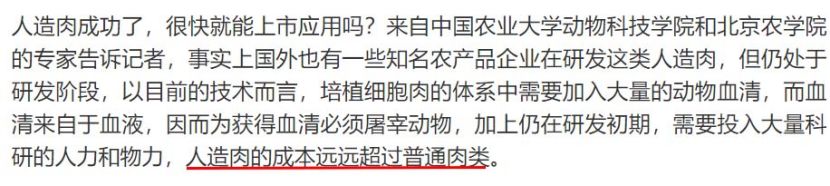
However, as mentioned above, the argument that artificial meat can artificially control nutrients is limited to cell culture of meat in vitro, and it is unlikely that this technology will be popularized to the market on a large scale. According to the report of "Global Network" on November 25th, 2019, "When did China artificial meat come to the people’s table? Expert: Lobster with Super Price, experts from College of Animal Science and Technology of China Agricultural University and Beijing Agricultural College think: "(China) is still in the research and development stage. With the current technology, a large amount of animal serum needs to be added to the system of cultivating cell meat, and the serum comes from blood, so animals must be slaughtered in order to obtain serum. In addition, it is still in the early stage of research and development, and it needs to invest a lot of manpower and material resources. The cost of artificial meat far exceeds that of ordinary meat."
(The World Wide Web reported, "When did China artificial meat come to the people’s table? Expert: Super-priced Lobster)
To sum up, this report is suspected of confusing two types of artificial meat with each other. For vegetable protein artificial meat, because vegetable protein is used, animal antibiotics are not used. However, the so-called "artificial control of nutrients" is only used for cultivating meat in the laboratory, and it is unlikely that this technology will be popularized to the market at this stage.
summary
At present, the supply and demand of China’s meat market is relatively tight, and traditional animal husbandry has caused a lot of air pollution and occupied land and water resources. It is under such circumstances that artificial meat gradually enters people’s field of vision. As far as the ingredients of artificial meat are concerned, the only vegetable protein meat OmniPork sold in the domestic market at present is composed of pure plants, which is lower in calories, lower in fat and cholesterol, and does not contain animal antibiotics. However, the so-called "artificial control of nutrients" is only aimed at another kind of artificial meat-cell-cultured meat, and this technology is not suitable for market promotion in the short term.
With the constant turmoil of meat, can artificial meat, with its more environmentally-friendly concept and more artificial and safe raw materials, get out of the way of thinking of vegetarian consumers, occupy a place at the table of Chinese people, and successfully challenge the cognition of traditional pork and even meat? Let’s wait and see.
References:
1. qianjiang evening news’s artificial meat, is it really unacceptable? http://opinion.people.com.cn/n1/2019/1126/c1003-31474126.html.
2. World Wide Web "When did China artificial meat come to the people’s table? Expert: Super-priced Lobster
11. Jason Masini’s information for Tissue Engineering is quoted from Sanlian Weekly:
http://www.lifeweek.com.cn/2006/0213/14381.shtml
12. Clark & Tilman.Comparative analysis of environmental impacts of agricultural production systems, agricultural input efficiency, and food choice. Environmental Research Letters.2017.12
13. Tao Hongjun, Wu Qiuping. Development of China’s pork industry and estimation of greenhouse gas emissions [J]. China Pig Industry, 2015,10(10):34-40.
14. Xu Wenchuan. Study on greenhouse gas emissions of China residents’ dietary consumption [D]. Nanjing University, 2018.
15. Wang Hao, yu long, Deng Baichuan, Deng Jinping, Tan Chengquan. Characteristics of plant extracts and their application in sow production [J]. Acta Animal Nutrition, 2017,29(11):3852-3862.
The content of this article was first published in NJU Nuclear Record.
Please contact Ben WeChat official account for reprinting.
Welcome to forward to friends circle.
Original title: "Verification | Artificial synthetic" fake meat ",do you dare to eat? 》
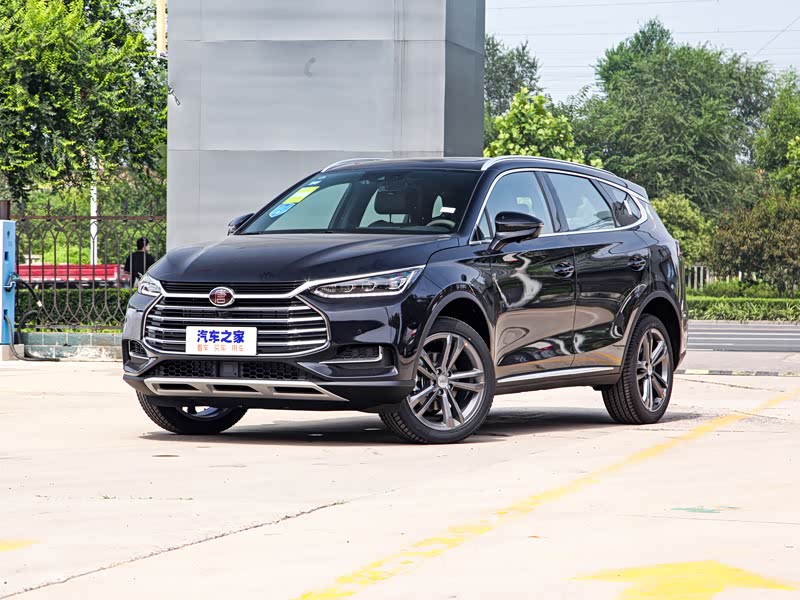
Although there are rumors circulating on the Internet that BYD X-dream has a 1000-kilometer battery life and 800V ultra-high voltage flash charging, at present, BYD officials have not launched a production model with such endurance.
As a concept car, X-dream’s actual cruising range after mass production is still difficult to determine. Therefore, the current purchase of BYD cars has not yet been able to enjoy the driving experience of more than 1000 kilometers of pure battery life.
BYD Tang Family:
As a modified model, BYD Tang EV has demonstrated its strength in the market with a pure battery life of 730 kilometers. Although it has not reached the milestone of 1000 kilometers, it still has obvious advantages compared with similar competing products. Although the plug-in hybrid version of "BYD Tang DM-i" has a pure battery life of only 252 kilometers, its comprehensive battery life can reach 1200 kilometers when it is fully charged with oil, meeting the needs of long-distance travel.
Byd Han family:
Han EV’s 715km pure battery life makes it competitive in BYD pure electric vehicles. Han family’s plug-in hybrid models are equally excellent, with a maximum pure battery life of 242 kilometers and a comprehensive battery life of 1300 kilometers when full of oil and electricity, with excellent performance.
BYD Song Family:
Song PLUSDM-i provides 51/110 kilometers of pure battery life, and the comprehensive battery life of long-life models can reach 1200 kilometers. Song ProDM-i and Song MAXDM-i also performed well, taking into account endurance and fuel economy.
BYD Qin Family:
Qin PLUSDM-i and Qin PLUSEV have endurance of 55/120 km and 420/510/610 km respectively. Qin PLUSEV shows reliable endurance performance with its lightweight design and low wind resistance.
Summary:
Although BYD has not officially launched a model with a pure battery life of more than 1,000 kilometers, its existing product lineup has been considerable in terms of cruising range, and the comprehensive endurance of plug-in hybrid models is also worth looking forward to. When choosing BYD cars, users should consider the endurance performance according to their own needs and driving habits, as well as the actual working condition endurance data of the vehicles.
Cctv news: On July 14th, Beijing Municipal Bureau of Human Resources and Social Security released the adjustment plan of relevant social security treatment standards in 2022. According to the national requirements, since January 1, 2022, Beijing has continued to adjust the basic pension for retirees of enterprises, institutions and institutions (including retired and retired personnel).
This year’s adjustment will continue to be carried out in accordance with the combination of quota adjustment, linked adjustment and appropriate inclination, and continue to maintain the adjustment method of increasing inclination to retirees with early retirement time, continuous service and long payment period, so that they can enjoy the fruits of social development more.
This adjustment is aimed at retirees who have gone through retirement formalities before December 31, 2021 (inclusive). It is estimated that more than 3.18 million retirees from enterprises, institutions and institutions will be benefited, and pensions will be reissued from January this year, of which enterprise retirees and reissued pensions will be paid in place on July 15. The specific adjustment measures are as follows:
(A) the quota adjustment of basic pension
For each retiree, 36 yuan will be increased each month.
(B) linked to adjust the basic pension
1. Linked to the payment period
This year, we will continue to implement the method of generally increasing the basic pension linked to the payment period. Among them, for retirees who have paid for 10 years or more, the 3 yuan will be increased every month for every 1 year; For the remaining months less than the whole year, the monthly increase is 0.25 yuan. If the payment period is less than 10 years (excluding retirees who transfer from land acquisition to work), the 30 yuan will be increased per person per month; Retirees whose payment period is less than 15 years will receive an increase of 45 yuan per person per month.
2. Linked to the pension level
According to the monthly basic pension level of retirees before the end of 2021, the per capita disposable income level of residents in this city in 2021 (6250 yuan) is used as the baseline to divide into two grades, and each person with more than 6250 yuan will increase 20 yuan per month, and each person with less than 6250 yuan will increase 50 yuan per month.
At the same time, in order to give consideration to fairness, for retirees whose monthly pension level was above 6,250 yuan before adjustment, if it is still below 6,300 yuan after adjustment linked to the pension level, it will be replenished to 6,300 yuan. [See Chart 1]
Chart 1
For example: Uncle Wang, 64 years old, with a payment period of 37 years and a basic pension of 6,255 yuan/month. According to the corresponding standards, 20 yuan should be raised to 6275 yuan when added to the original pension. However, in December 2021, when people with pensions below 6,250 yuan rose to 50 yuan, some people would reach 6,300 yuan (6,250+50), which was higher than Uncle Wang’s 6,275 yuan. Therefore, Uncle Wang was given a higher 25 yuan to make him reach 6,300 yuan. In the adjustment linked to the pension level, Uncle Wang actually increased 45 yuan every month.
This year’s adjustment, Uncle Wang increased by 192 yuan per month, and the basic pension after adjustment was 6447 yuan/month.
(3) Appropriate tilt to senior retirees
For retirees who retire early and are older, in order to further improve their basic living standards, we will continue to give preferential treatment to senior retirees this year. For senior retirees who have reached the age of 65 or above before December 31, 2021, after adjustment according to the above measures, they will once again enjoy the preferential policy of four grades from 40 yuan to 70 yuan. That is, retirees aged 65 to 69 will increase their 40 yuan every month; 70 to 74 years old, each person will increase 50 yuan every month; Each person aged 75 to 79 will add 60 yuan every month; 70 yuan will be increased every month for each person over 80 years old.
On this basis, for retirees over 65 who have paid for 30 years, the 5 yuan will be increased every month, so as to reflect the further preference for retirees with early retirement time, continuous service and long payment period. [See Chart 2]
Chart 2
For example: Aunt Zhao, 68 years old, with a payment period of 33 years, has a basic pension of 4,500 yuan/month.
This year’s adjustment, Aunt Zhao added a total of 230 yuan every month, and the basic pension after adjustment was 4,730 yuan/month.
For example: Uncle Liu, 80 years old, with a payment period of 40 years and a basic pension of 5,700 yuan/month.
This year’s adjustment, Uncle Liu increased by 281 yuan per month, and the basic pension after adjustment was 5981 yuan/month.
(D) Two special adjustment methods
First, continue to adjust the retirement benefits of old workers who participated in revolutionary work before the founding of the people’s Republic of China. This adjustment will still be made according to the previous year’s method, that is, those who participated in the revolutionary work from July 7, 1937 to September 2, 1945 will receive an increase of 335 yuan per person per month; Those who took part in revolutionary work from September 3, 1945 to September 30, 1949 received an increase of 305 yuan per person per month. On the basis of the adjustment of the above two standards, they also enjoy the preferential policy for senior retirees. This adjustment will generally increase by 375 yuan/month to 405 yuan/month.
The second is to ensure that the retired military cadres of enterprises and the former industrial and commercial personnel are not lower than the average pension level of enterprise retirees in the city after adjustment. After increasing the basic pension according to the quota and payment period and increasing the basic pension according to the absolute amount, if the basic pension of enterprise retired military cadres and former industrial and commercial workers is lower than the adjusted average pension level of enterprise retirees in the city, it will be replenished to the average level. At the same time, senior retirees who have reached the age of 65 or above before December 31, 2021 (inclusive) also enjoy the preferential policy for senior retirees.
The pensions adjusted by the retirees before December 31, 2021 (inclusive) of the municipal institutions and institutions will also be paid in place before the end of July.
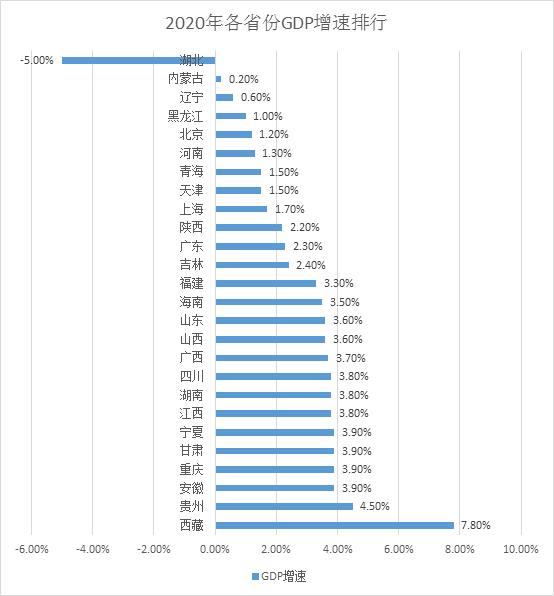
As of January 25th, except Jiangsu, Zhejiang, Hebei, Yunnan, and Xinjiang, 26 provinces in China have handed in the 2020 economic answer sheet.
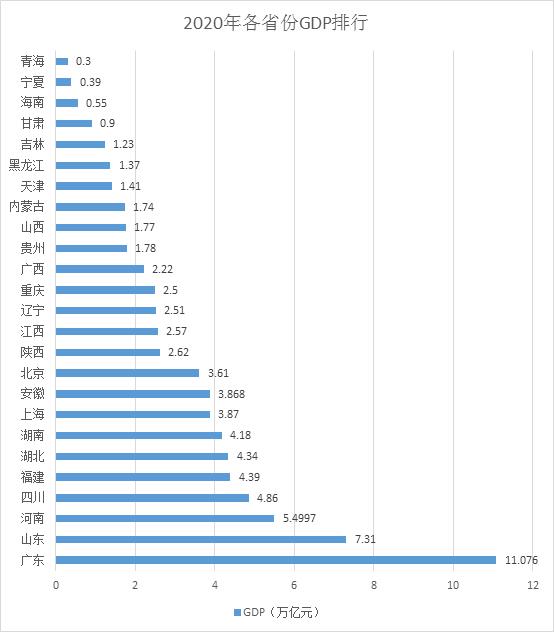
Judging from the total economic output in 2020, among the 26 provinces, the total economic output of 21 provinces exceeds 1 trillion yuan. Guangdong has been ranked first in the country for 32 consecutive years. Last year, the total economic output exceeded the 11 trillion yuan mark for the first time. According to the data of the World Bank, this data also surpassed the total economic output of Russia and South Korea in 2019, followed by Canada.
Judging from the economic growth rate in 2020, among the 26 provinces, the economic growth rate of 16 provinces exceeds or is equal to the national performance. The central and western regions remain in the lead. In 2020, Tibet’s GDP growth rate will lead the whole country, with an annual economic growth of 7.8%.
In 2020, the regional GDP of Hubei Province was 4.34 trillion yuan, down 5.0% from the previous year, and the decline was 34.2 percentage points narrower than that in the first quarter. From "pressing the pause" in the first quarter to "restarting the recovery" in the second quarter, and then "accelerating the overall recovery" in the second half of the year, Hubei withstood the huge impact of the "pause" for 76 days, and the economy recovered and developed well in the face of enormous difficulties and challenges throughout the year.
Guangdong’s total output exceeds 11 trillion yuan, ranking first in the country for 32 consecutive years.
From the perspective of the economic aggregate in 2020, Guangdong has no suspense to reach the top of the list again. The annual economic aggregate exceeded 11 trillion yuan, ranking first in the country for 32 consecutive years. The total amount even exceeds the GDP of Russia and South Korea in 2019. Considering the impact of the epidemic, China is the only major economy that has achieved positive economic growth, which means that Guangdong’s GDP will definitely exceed that of Russia and South Korea in 2020.
In 2020, the regional GDP of Guangdong Province was 11.076 trillion yuan, a year-on-year increase of 2.3%. This economic volume can be described as "extremely rich". At present, Guangdong’s GDP in 2020 is equivalent to 1.7101 trillion US dollars.
According to the World Bank’s data on the economic aggregate of Russia and South Korea in 2019, Russia’s GDP in 2019 was 1.6999 trillion US dollars, ranking 11 th in the world; South Korea’s GDP in 2019 was 1. 6467 trillion US dollars, ranking 12th in the world. In 2020, Guangdong’s total economic output will steadily surpass that of Canada. Jiangsu, whose economic aggregate has followed Guangdong all the year round, has not yet announced its GDP in 2020. However, in 2019, the total economic output of Jiangsu approached 10 trillion yuan, and the regional GDP reached 9.96 trillion yuan, an increase of 6.1% over the previous year.
Jiangsu will undoubtedly become the second province in China with GDP exceeding 10 trillion yuan. Judging from the performance in 2020, Jiangsu’s GDP in the first quarter of last year fell by 5% year-on-year; The first half of the year increased by 0.9% year-on-year; The first three quarters increased by 2.5% year-on-year, and many indicators reached or exceeded the same period last year.
Shandong’s GDP in 2020 was 7.31 trillion yuan, a year-on-year increase of 3.6%. Followed by Henan, the GDP last year was 5.4997 trillion yuan, a year-on-year increase of 1.3%.
In 2020, there are four provinces with GDP in the "4 trillion yuan club", namely Sichuan (4.86 trillion yuan), Fujian (4.39 trillion yuan), Hubei (4.34 trillion yuan) and Hunan (4.18 trillion yuan). Among them, Hunan’s regional GDP exceeded 4 trillion yuan for the first time last year, up 3.8% year-on-year, up 2.5 percentage points from the first half of the year.
The GDP of Shanghai, Anhui and Beijing exceeded 3 trillion yuan in 2020, and the GDP of Shaanxi, Jiangxi, Liaoning, Chongqing and Guangxi was in the array of 2 trillion yuan last year. Last year, GDP exceeded 1 trillion yuan, including Guizhou, Shanxi, Inner Mongolia, Tianjin, Heilongjiang and Jilin provinces.
The economic growth rate of 16 provinces surpassed or equaled the national results.
According to preliminary accounting, in 2020, China’s GDP will be 101,598.6 billion yuan, an increase of 2.3% over the previous year at comparable prices. Quarterly, it decreased by 6.8% in the first quarter, increased by 3.2% in the second quarter, increased by 4.9% in the third quarter and increased by 6.5% in the fourth quarter.
Among the 26 provinces, the economic growth rate of Tibet, Guizhou, Anhui, Chongqing, Gansu, Ningxia, Jiangxi, Hunan, Sichuan, Guangxi, Shanxi, Shandong, Hainan, Fujian, Jilin and Guangdong in 2020 exceeded or was equal to the national achievement. The central and western regions remain in the lead. In 2020, Tibet’s GDP growth rate will lead the country. Last year, the gross domestic product of Tibet exceeded 190 billion yuan, and the annual economic growth was 7.8%.
Guizhou followed closely, with GDP of 1.78 trillion yuan in 2020, up 4.5% year-on-year, and the growth rate was 2.2 percentage points higher than that of the whole country, ranking among the top in the country for 10 consecutive years.
The GDP growth rates of Anhui, Chongqing, Gansu and Ningxia were all 3.9% last year, while those of Jiangxi, Hunan and Sichuan were all 3.8%. Last year, Guangxi, Shanxi, Shandong, Hainan and Fujian also had economic growth rates exceeding 3%.
The GDP growth rates of Liaoning, Inner Mongolia and Hubei provinces are temporarily ranked at the bottom. Among them, Liaoning’s GDP last year was 2.51 trillion yuan, a year-on-year increase of 0.6%; Inner Mongolia’s total economic output last year was 1.74 trillion yuan, a year-on-year increase of 0.2%.
In 2020, the regional GDP of Hubei Province was 4.34 trillion yuan, which was 5.0% lower than the previous year at comparable prices, and the decline rate was 34.2 percentage points narrower than that in the first quarter.
It is particularly noteworthy that in the first three quarters of this year, Hubei’s GDP was surpassed by Hunan all the way, but the annual economic aggregate of Hubei surpassed Hunan by 166.197 billion yuan.
From "pressing the pause" in the first quarter to "restarting the recovery" in the second quarter, and then "accelerating the overall recovery" in the second half of the year, Hubei withstood the huge impact of the "pause" for 76 days, and the economy recovered and developed well in the face of enormous difficulties and challenges throughout the year.
"Under the great epidemic, we have stabilized the basic economic disk, firmly grasped the bottom line of people’s livelihood, nurtured development opportunities, and made painstaking efforts." Hubei Provincial Bureau of Statistics said that Hubei handed over a better-than-expected and precious heroic answer sheet.
Today (June 7) morning, the 2021 national college entrance examination language ended.
The topic of composition is the focus of Chinese exams over the years. This year, there are 8 sets of papers in the national college entrance examination language, and 4 sets are ordered by the examination center of the Ministry of Education, namelyNational Volume A, National Volume B, New College Entrance Examination Volume I and New College Entrance Examination Volume II, and 4 sets of autonomous systems in Beijing, Tianjin, Shanghai and Zhejiang.
At present, this year’s college entrance examination composition topic has been hot. What are the topics? Come and see ↓ ↓
National jiajuan
Test content:
The Communist Party of China (CPC) has gone through a hundred years. Revolutionary culture and advanced socialist culture nurtured in the great struggle led by the party’s unity have been deeply integrated into our blood and soul. We have celebrated festivals such as May 4th, July 1st, August 1st and November 11th, sang songs such as March of the Volunteers’s "No communist party, No New China", read works such as Serving the People, Spring Snow in Qinyuan, Lotus Lake and Red Rock, admired revolutionary martyrs such as Li Dazhao, Xia Minghan, Fang Zhimin and Yang Jingyu, and learned from Lei Feng. There is sunshine in our hearts and strength under our feet. Our future will be integrated into the new journey of the great rejuvenation of the Chinese nation, and we are in a promising era … …
Please write an article with the theme of "what can be done and what can be done" in combination with the materials.
Requirements: select the right angle, determine the concept, clarify the style, and draw up the title; Do not copy or copy; Do not disclose personal information; Not less than 800 words.
National volume b
Test content:
Read the following materials and write as required. (60 points)
The ancients often used metaphors to illustrate the pursuit of ideals, involving foundations, methods, paths, goals and their relationships. For example, in the Han Dynasty, Yang Xiong used archery as a metaphor. He said, "Cultivate one’s morality as a bow, correct one’s thinking as a vector, establish one’s righteousness as a thought, make a drink and then make a hair, and your hair will surely hit the target." The general idea is that as long as we constantly strengthen our self-cultivation, correct our thinking, take "righteousness" as a definite goal, and then put it into action, we can realize our ideals.
The above materials can give inspiration to the contemporary youth who pursue their ideals. Please write an article in combination with your thoughts on their own development.
Requirements: select the right angle, determine the concept, clarify the style, and draw up the title; Do not copy or copy; Do not disclose personal information; Not less than 800 words.
National New College Entrance Examination Volume I
Test content:
Read the following materials and write as required. (60 points)
In April, 1917, Mao Zedong published the article "Research on Sports" in New Youth, in which he pointed out that the human body will change every day when it comes to "the effect of sports". If the eyes are unclear, you can see clearly, but if the ears are not clever, you can be clever. If the strong are born and abuse their strength, even if they are strong, they may eventually become weak; If the weak exercise diligently, they will gain what they can’t, and they will become stronger over time. Therefore, "the strong need not be complacent when they are born, and the weak need not feel sorry for themselves when they are born." I was born weak, or the lure of heaven made me strong, and I don’t know. "
The above discussion is instructive. Please write an article combining the materials to reflect your feelings and thoughts.
Requirements: select the right angle, determine the concept, clarify the style, and draw up the title; Do not copy or copy; Do not disclose personal information; Not less than 800 words.
National New College Entrance Examination Volume Ⅱ
Test content:
Read the following materials and write as required. (60 points)
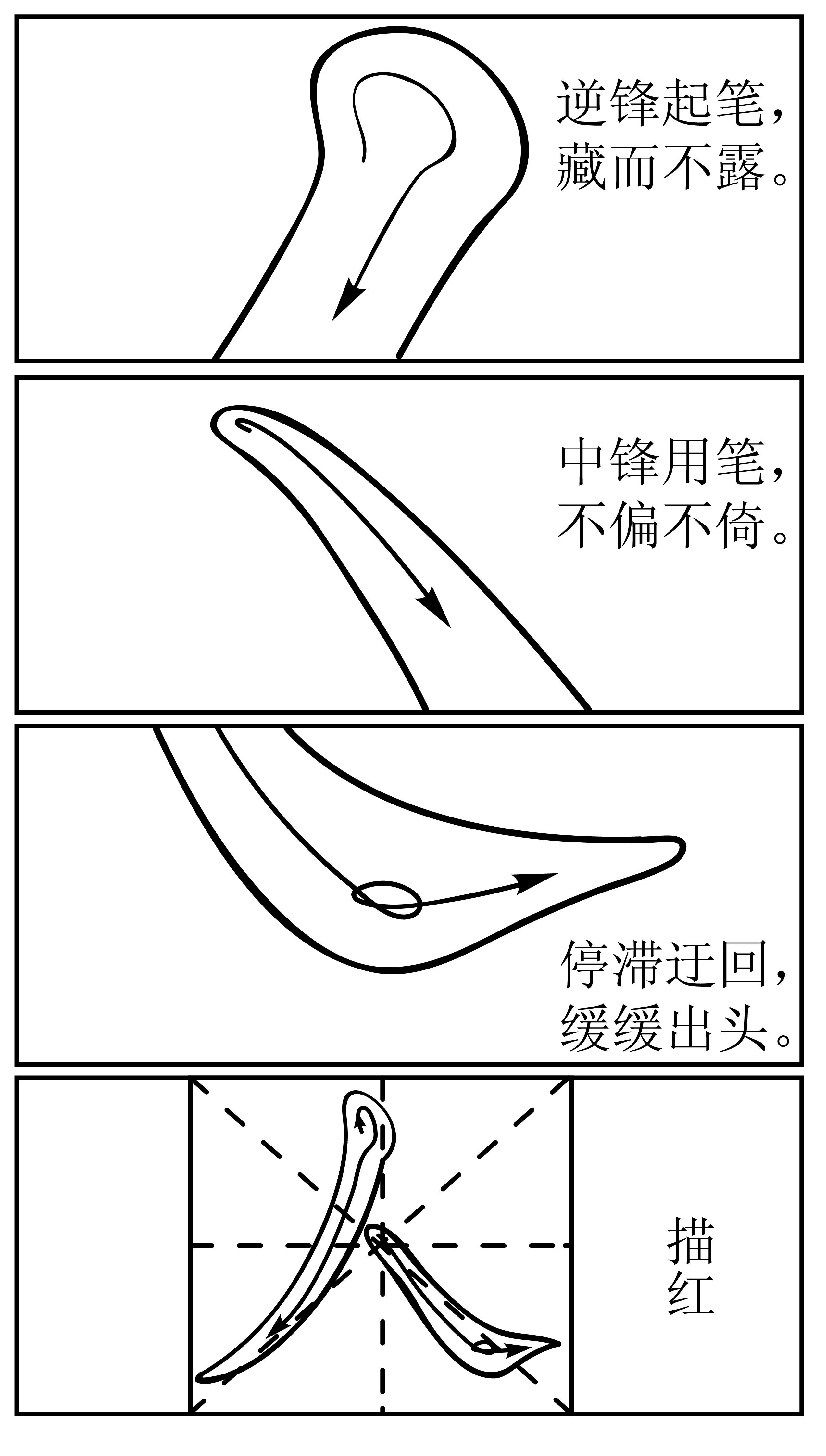
(Tang Guangyu’s comic works, with changes)
[Note] Red tracing: Use a brush dipped in ink to trace and write on the red mold.
Please write an article to reflect your understanding and evaluation, identification and choice, and reflect the thinking of young people in the new era.
Requirements: choose a good angle, determine the concept, clarify the style, and draw up the title yourself; Do not copy or copy; Do not disclose personal information; Not less than 800 words.
Beijing volume
Test content:
Choose one of the following two questions and answer as required. No less than 700 words. Copy the questions on the answer sheet.
(1) Everyone lives in a specific era, and everyone’s life path in a specific era is different. At the same time, some people lament that life is ill-timed, some people just want to be quiet at any time, and some people deeply feel that life is at the right time and time waits for no one … …
Please write an argumentative essay on the topic of "On Being Born at the Right Time".
Requirements: the argument is clear, the argument is substantial and the argument is reasonable; Fluent language and clear writing.
(2) The melons are ripe and full of wings, which is the mature appearance of plants, birds and beasts; But for us, real maturity does not just mean the growth of the body … …
Please write a narrative on the topic of "This is the mature appearance".
Requirements: mental health; The content is substantial and detailed; Fluent language and clear writing.
Tianjin Juan
Test content:
Read the following materials and write as required. (60 points)
If time is a one-way street, then the memorial day is the most eye-catching road sign on both sides of the road, which tells us how to get from yesterday to today. Time never stops, and the anniversary will not disappear. Remembering it can make simple numbers on the calendar become heavy footnotes of the years, and it also constantly reminds us to rush forward with our initial heart.
How do you understand and feel about this passage? Please write an article based on your own experience.
Requirements:
(1) choose your own angle and make your own title;
② The style is not limited (except poetry), with obvious stylistic features;
(3) not less than 800 words;
(4) shall not be copied, not interplanting.
Gaokao Examination Paper for Shanghai
Test content:
Some people say that after the precipitation of time, the value of things can be recognized by people; Others think that this is not the case. What do you think? Please write an article and talk about your thoughts.
Requirements: (1) self-made topics; (2) Not less than 800 words.
Zhejiang Juan
Test content:
Some people regard gains and losses as the end point, some people regard them as the starting point, and some people regard them as the process.
How do you experience and think about this? Write an article and talk about your own views.
[Note] ① The angle is self-selected, the idea is self-determined, and the topic is self-drawn. (2) clear style, shall not be written as poetry. ③ No less than 800 words. (4) shall not be copied, interplanting.
Promotion date: April 14th, 2021 to May 31st, 2021.
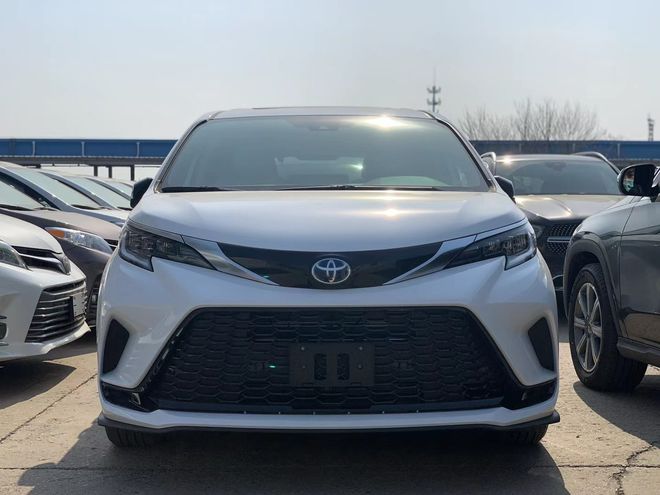
Compared with the old Senna, 21 models with a new generation of 2.5-oil mixture have not only been upgraded in appearance, space, comfort, high-tech configuration and power, but also their fuel consumption has been reduced by almost half. Therefore, in the ranking of many commercial vehicles, it has undoubtedly become a leader.
↓ ↓ ↓ ↓ ↓ [The 24-hour VIP contact number is at the end of the article] ↓ ↓ ↓ ↓ ↓
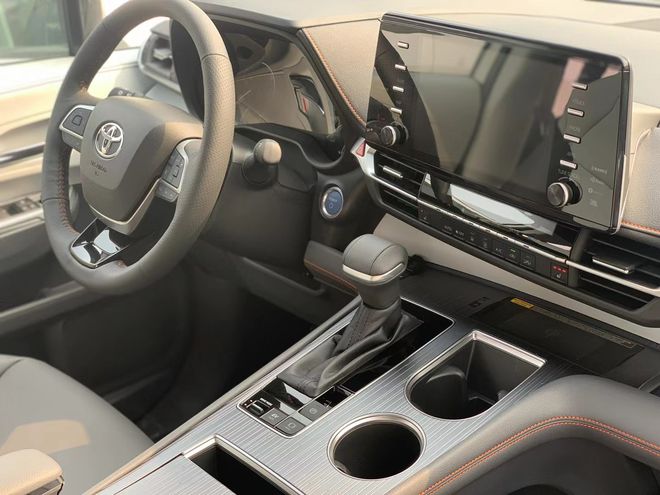
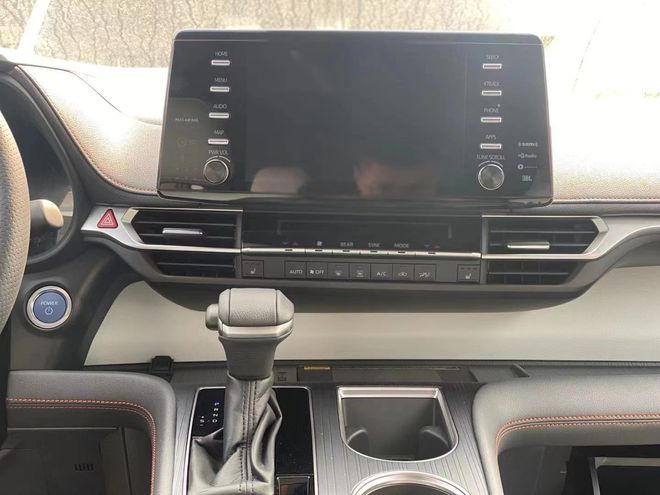
The interior of 21 Toyota Senna also adopts the asymmetric center console design of Toyota family, and the steering wheel is also designed in three positions. The steering wheel is partially decorated with chrome, and there are many technology buttons on it, which is highly intelligent. At the same time, the steering wheel is wrapped in leather, which is particularly textured. The new car is still equipped with an all-LCD instrument panel design, with a lot of driving information on the instrument panel, and the whole interior is full of science and technology.
The 21 Toyota Senna models are super functional, with front seat heating, steering wheel heating, and double-sided electric side sliding doors. The electric tailgate has become standard, and the high-equipped models will also adopt the design of inductive electric double-sided doors and tailgates, which will increase convenience. Except for the lowest equipped LE with 3-zone air conditioner, the other configurations are all equipped with 4-zone air conditioner, and the highest equipped models are also equipped with front seat ventilation with memory function and rear seat heating, which makes up for the shortcomings of the old models with simple configuration.
The reason why MPV model is so popular is mainly because it is very practical, that is, it can cope with home travel and business travel, and the most representative one is Toyota Senna. Brand-new 21 2.5 Senna stylish appearance, spacious internal space, a sense of luxury and technology, can be called the second generation of daddy artifacts.
21 2.5 hybrid Toyota Senna can be said to be a brand-new wide-body home 7-seat MPV. The interior space of the new car is quite spacious. According to the strict ergonomic design of many top designers, the seat hardness and inclination angle are very comfortable. The spacious three rows of seats have sufficient front and rear space, and both the second and third rows have privacy sun shades. The third row of seats can also be completely put down in the trunk, which doubles the space of the trunk and meets all the needs of the occupants.
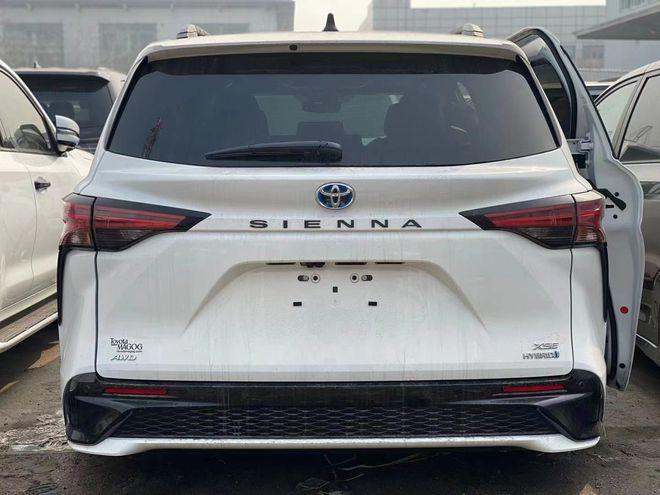
The design of the new 21 Toyota Senna tail is also very fashionable. The red LED taillights are the biggest design highlight of the whole tail. Not only is the shape full of movement, but the lighting effect is particularly excellent. The blue Toyota Iogo indicates the identity of the new Senna hybrid model.
The above article is only a brief introduction of the car model. Friends who need a deeper understanding can add their own WeChat. WeChat friends circle updates a large number of imported cars and new cars every day, including configuration, quotation, pictures and market conditions. If you have any questions, I will answer them for you at the first time. You can buy a car by stages all over the country, without any handling fees and other compulsory fees. You can go through all the formalities on the same day when you go to the store to see and pick up the car, and check the goods in person, so as to avoid your worries, serve every consumer wholeheartedly and honest merchants, and create a better reputation with 10 years of experience. Look forward to your arrival!
(For more details of vehicle price configuration, please call the contact information at the bottom of the article.)
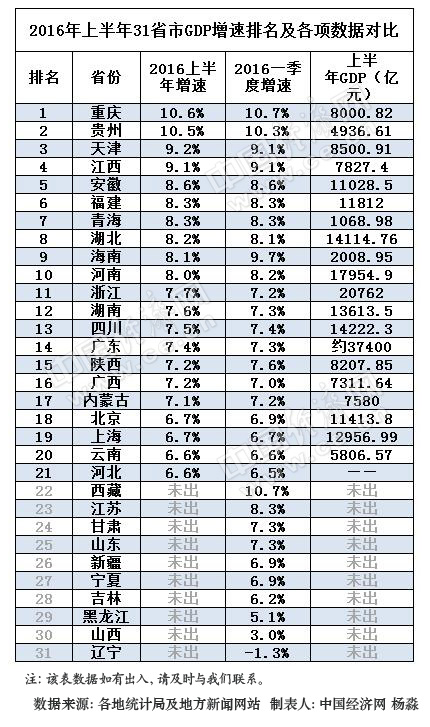
China Economic Net, Beijing, July 22 (Reporter Yang Miao) With the release of the national GDP data for the first half of 2016, as of July 21st, 21 provinces and cities have released their own GDP data for the first half of 2016.
According to the statistics of China Economic Net reporter, among the 21 provinces and cities that have published data, the GDP growth rate of Beijing and Shanghai is the same as that of the whole country, while that of Yunnan and Hebei is slightly lower than that of the whole country, and the GDP growth rate of the remaining 17 provinces is higher than that of the whole country. At present, Chongqing has the best performance, with a growth rate of 10.6% in the first half of the year, which is 3.9 percentage points higher than the national level.
China’s GDP increased by 6.7% in the first half of the year.
The national economy is generally stable.
The National Bureau of Statistics recently released the national economic data for the first half of the year. It is understood that the GDP in the first half of the year was 34,063.7 billion yuan, with a year-on-year increase of 6.7%, and the growth in the second quarter was 6.7%, which was the same as that in the first quarter. On the whole, the national economy has maintained a generally stable, steady and progressive development trend.
Among them, the added value of the primary industry was 2,209.7 billion yuan, a year-on-year increase of 3.1%; The added value of the secondary industry was 13,425 billion yuan, up by 6.1%; The added value of the tertiary industry was 18,429 billion yuan, up by 7.5%.
Experts said that in the context of the continued slowdown in world economic growth, it is really hard-won for China’s economy to achieve 6.7% growth.
The GDP growth rate of 17 provinces in the first half of the year was higher than that of the whole country.
Chongqing’s growth rate for 10 consecutive quarters is "among the best"
According to the statistics of China Economic Net, judging from the ranking of GDP growth rate of 21 provinces and cities at present, the growth rates of 17 provinces and cities such as Chongqing, Guizhou, Tianjin, Jiangxi, Anhui, Fujian, Qinghai, Hubei, Hainan, Henan, Zhejiang, Hunan, Sichuan, Guangdong, Shaanxi, Guangxi and Inner Mongolia all exceeded the national level, and the year-on-year growth rates all exceeded 7%.
The transcripts of Chongqing and Guizhou in the first half of the year are still bright. At present, the GDP growth rate in the announced provinces ranks in the top two, with an increase of more than 10%.
According to China Economic Net, Chongqing has maintained its economic growth rate in the forefront of the country for ten quarters under the great downward pressure. Zhang Fumin, deputy director and spokesman of Chongqing Municipal Bureau of Statistics, said that it is not easy for Chongqing to maintain such a high growth trend. He believed that the rapid development of five functional regions, industrial transformation and upgrading, structural adjustment, accelerated formation of new impetus and new economy worked together to support the beautiful economic landscape of Chongqing in the first half of the year.
In addition, Guizhou’s performance has been excellent in recent years. Luo Guanghua, a professor at the Party School of Guizhou Provincial Party Committee, pointed out that Guizhou’s rapid economic development is mainly due to the small total GDP, which is relatively fast.
The GDP growth rate of the six provinces in the first half of the year declined compared with the first quarter.
Hainan has the largest decline.
According to the statistics of China Economic Net, as can be seen from the table, compared with the GDP growth rate in the first quarter, the GDP growth rate of Chongqing, Hainan, Henan, Shaanxi, Inner Mongolia and Beijing declined in the first half of the year. The GDP growth rate of Jiangxi, Anhui, Fujian, Qinghai, Shanghai and Yunnan was the same as that of the first quarter. The GDP growth rate of the other nine provinces has increased compared with the first quarter.
Among them, the GDP of Zhejiang Province increased by 7.7% in the first half of the year, 0.5 percentage points faster than the 7.2% in the first quarter.
According to China Economic Net, the business income of information transmission, software and information technology services in Zhejiang increased by 37.9% in the first half of this year, higher than the growth rate of 29.1% in the first quarter. It can be seen that the tertiary industry in Zhejiang has played a key role in economic growth. In addition, the reporter also noticed that the new economy in Zhejiang, especially in Hangzhou, has nurtured many influential enterprises, such as Alibaba, and encouraged the development of the Internet industry in many ways. These factors have directly affected the performance of Zhejiang’s economic data in the first half of the year.
Compared with the first quarter, Hainan’s GDP growth rate in the first half of the year dropped by 1.6 percentage points, but Hainan’s overall economy is still improving, with a growth rate of 8.1%, exceeding the national growth rate by 1.4 percentage points.