
Looking at the "Gindelberg Trap" in the "G-0" era from the "Top Ten Risks in the World in 2022" of Eurasia Group

As a well-known consulting organization in the United States, Eurasia Group publishes its annual top ten global risk report at the beginning of each year, which has become a brand activity of the group and a recognized authoritative report. It has attracted more and more attention because of its vivid language, sharp views and deep and wide analysis.

At the beginning of January 2022, Eurasia Group released its "Top Ten Risks in the World in 2022" forecast report, which was as exciting and eye-catching as ever. The report put forward a new concept (perhaps not initiated by the group): "G-0" era. We are all familiar with G20 and G2.But what is "G-0"? That is to say, in the era of intensified disputes between big countries, the current big countries have been unable to assume global leadership and become weak; However, the new big country has not risen, and it is difficult to assume its due responsibility as a big country, leading to a "power vacuum" in the world. In fact, this is the Kindleberger’s Trap proposed by charles king Delberg, a professor at MIT.

Without further ado, the following is the "Top Ten Risks in the World in 2022" briefly compiled and compiled by Qingquan, and presented to you in reverse order (the original English report is 26 pages long, which is arranged in positive order).

No.10: Turkey

(Turkey)

In 2022, Turkish President Recep Tayyip Erdogan will drag Turkey’s economy and international prestige to a new low. He tried to reverse his declining public opinion support rate before the 2023 general election.

The support rate of Erdogan and his ruling Justice and Development Party among Turkish voters is lower than ever. The reasons are obvious: high unemployment, soaring inflation, weak lira and greater volatility. Erdogan hopes to build an export economy driven by a weak currency in the 1990s. The price is that people become poorer and more angry.

Erdogan’s goal is 2023, but the impact of these policies will be felt this year. He will try to appease families and resume credit expansion, but the risk supports more dollarization. The new measures announced at the end of December will ease the economic pressure in the short term, but will aggravate the financial and inflation risks, which may lead to accelerated economic disintegration.

Even if Washington chooses a more limited response, these developments will trigger Erdogan’s subconscious reaction. His unstable choice will also aggravate people’s concerns about the risk of Turkey’s major over-expansion in Syria and the risk of conflict with Greece or Cyprus in disputed waters. The collapse of lira and runaway inflation weakened voters’ ability to make ends meet.

If the economic situation deteriorates faster, Erdogan may be forced to hold an early election this year, which will aggravate the above risks.

(Qingquan: In fact, the risks caused by Turkey and Erdogan have spread to Kazakhstan and other Central Asian regions. Turkey set up the "Turkic-speaking Countries Organization" in Central Asia last November. Behind it, a group of medium-sized powers began to go their own way and find another way in the game between big countries and the gap between eastern and western civilizations. )

No.9: The company lost in the cultural war.

(Corporates losing the culture wars)

The most famous brands in the world (Apple, Facebook, etc.) are making record profits. But they will have a more difficult year to control politics. Driven by the "abolition of culture" and social media, consumers and employees will put forward new requirements for multinational companies and the government that supervises multinational companies. Multinational companies will have to spend more time and money in environmental, cultural, social and political minefields.

The consumer-employee-company board is on the defensive. On the other hand, social media is more powerful, ubiquitous, and the threat of "cancellation"-in this case, consumers exclude or prevent companies from entering the market-is real. This year’s political and sports calendar means that activists have ready-made flashpoints to highlight separatist issues: the Beijing Winter Olympics (human rights), FIFA World Cup Qatar 2022 (ditto) and the mid-term elections in the United States (voting rights, abortion). The emergence of the COVID-19 pandemic, even if it is slow and stagnant, has provided influence to employees: "Resignation" means that the company needs to become more attractive to new employees, who are still more influential in changing the company from within.

What are the needs of consumers and employees? They want the company to take a stand on the issue of "culture war", such as workplace diversity, voting rights, forced labor and child labor, supply chain that respects the environment and human rights, free speeches and so on.

(Qingquan: With the intensification of ideological and civilized conflicts between the East and the West, those multinational companies with huge market share and important production and operation bases in the United States, Europe and China will face "double risks". They will become rats in the bellows, suffering from gas at both ends. )

No.8: global power vacuum

(Empty lands)

The United States is no longer interested in playing the role of "global police". And Beijing has no intention (or is not ready) to replace Washington.

No matter how many times Biden said "America is back", spending cuts are still the consensus of the two parties in the United States. To some extent, the United States has turned its eyes overseas, mainly focusing on confronting the rise of China.

Other big countries that are beneficial to global stability, such as the European Union, Britain and Japan, will exert greater influence without completely filling the global power vacuum.

No one can fill the global power vacuum, and many countries and regions will bear the consequences.

Afghanistan is the most obvious example. In the summer of 2021, the collapse of the Ghani government and the chaotic withdrawal of troops put Afghanistan in the hands of extremist, disorganized and inexperienced Taliban forces. Obviously, the Taliban can’t control most parts of Afghanistan, and they try to stop the local Islamic State branches from doing things, but armed terrorists from other parts of the world are hiding in the vast and unmanageable areas of the country. The intervention ability of the United States is very limited, and China is not interested in it. Afghanistan is returning to the global situation before 9/11 and becoming a magnet for international terrorism.

In addition, the risk of terrorism is also very serious in the Sahel region of Africa, where management is weak; The seven-year war between the Saudi-led alliance and the Iranian-backed Houthi rebels has also brought similar risks; Myanmar and Ethiopia are in the throes of civil war; During the Cold War, the poorly managed areas in Asia and Africa became the battlefields of proxy conflicts between Washington and Moscow.

Competition among great powers is global and zero-sum.

(Qingquan: The big countries in the world are unwilling to take responsibility and contribute public goods. This is the real scary place, which is the so-called "Gindelberg trap". The Gindelberg trap was put forward by charles king Delberg, a genius of Marshall Plan who taught at MIT after 1950s. He believed that the disaster in 1930s originated from the fact that the United States replaced Britain as the world’s largest power, but failed to assume the responsibility of providing global public goods like Britain, and continued to hitchhike in the global cooperation system (just like China is hitchhiking in the United States today). As a result, the global system collapsed and plunged into depression, genocide and world war. The problem now is that China is not showing its strength in the international arena, but showing weakness. If China continues to show weakness and the United States continues to "stand by", it is bound to fall into the Gindelberg trap. )

No.7: Climate problem, two steps forward and one step back

(Two steps greener, ones tep back)

This is a particularly destructive period in the global transition from fossil fuels to renewable energy. As a result, consumers are facing rising energy prices and the persistence of recent conflicts between policies and climate targets.

In 2022, the long-term decarbonization goal will conflict with the short-term energy demand. The pressure of rising costs will intensify in 2022, forcing the government to make an unpleasant choice: either appease anxious voters with policies to postpone climate targets, or stick to it in a hostile and unpredictable energy market environment.

This year’s energy demand, production and investment will remain out of sync, because the transition to a global economy driven by renewable energy will become more and more popular. In the short term, on the one hand, major economies are trying to squeeze the share of fossil fuels in their energy structure, on the other hand, they are not investing enough in renewable energy or backup solutions.

The economic impact will appear this year. The soaring retail and wholesale energy costs at the end of 2021 will destroy the economic growth prospects of most parts of Europe and Northeast Asia before 2022.

This year, there will be few coordinated global responses to energy shortages. The EU bases its economic and geopolitical agenda on long-term climate policy leadership, so it will not reverse the process in its efforts to decarbonize and set global green standards.

The long-term development direction is rapid decarbonization. But this year, moving towards the green goal and providing people with energy are out of sync. Energy transformation is taking place, but it will not be smooth sailing.

(Qingquan: The coexistence of energy transformation and energy shortage (crisis) will exist for a long time, and the direction of government policies will also become vacillating. The ultimate "problem solver" is still technological innovation and breakthrough. For example, once controlled nuclear fusion becomes safe, economical and effective, the scenario of global energy development and utilization will be completely overturned. )

No.6: Iran

(Iran)

The United States and Iran entered 2022 on the brink of crisis. With diplomacy deadlocked, Washington is looking for an alternative strategy to limit Tehran and appease Israel’s growing calls for radical action, but the Biden administration has limited options. Israel will increasingly take the initiative in its own hands-this has once again triggered Israel’s concern about attacking Iran’s nuclear facilities. These pressures will collide with each other in 2022, which will lead to increased oil price fluctuations and regional countries’ nervousness.

After Iran’s hardline President Ibrahim Lacey took office, he appointed a strong opponent of the nuclear agreement as his chief negotiator and was building an irreversible nuclear capability. Iran’s nuclear program is advancing rapidly and is not bound by the nuclear agreement.

With the diplomatic deadlock, the United States is exploring another strategy to limit Iran and appease the growing calls for radical action by Israel, but the Biden administration has limited options. Under the heavy pressure of existing sanctions, Iran’s economy will deteriorate, but the United States will not take any measures to push it to the edge (especially at present when energy prices are relatively high).

America’s indecision will convince Israel that Biden’s government lacks the political will to establish its military option, so Israel will act more and more on its own. This means that Israel will launch more destructive attacks, and may even launch direct military strikes against Iran’s main defense and civilian sites, which will trigger Iran’s retaliation, including retaliation from Syria and Lebanon, maritime and cyberspace.

As the tension intensifies, the oil market will feel the upward pressure. In view of the fragility of civil infrastructure, shadow war will frighten shippers, insurance companies, airlines and enterprises with physical presence in the Middle East.

(Qingquan: The biggest uncertainty in the Middle East in 2022 is the Iranian nuclear issue. If no results can be reached in a short period of time, the Iranian nuclear issue will inevitably become tense again in some form. Whether Iran moves towards a nuclear threshold country, whether the United States engages in Biden’s version of extreme pressure, or whether Israel and Iran are behind the scenes, or the game between the United States and Iran in Iraq may undermine the easing situation in the Middle East since 2021. )

No.5: Russia

(Russia)

The relationship between the United States and Russia is in danger. Last year, it began to send more troops near Ukraine, which has evolved into a broader demand from Russia to reorganize the European security architecture. Coupled with persistent concerns about election intervention and cyber actions, this means that Russia is on the verge of triggering an international crisis.

Russia began to gradually increase its troops near Ukraine last year, and now it has turned into a broader demand for restructuring the European security architecture. Russian President Vladimir Putin tried to force the West to resolve Russia’s opposition to NATO’s eastward expansion. If Putin does not get concessions from the United States-led West, he is likely to take dramatic action. Putin has other less dramatic options, which will also bring big problems to the transatlantic alliance.

Russia’s cyber actions will aggravate the overall tension in relations with the United States. It is difficult for policy makers and the media to distinguish between conventional espionage and more malicious behavior; The former will continue to increase, and the risk of the latter still exists.

What lingers in the background is the investigation of Havana syndrome. If Moscow is finally found to be responsible, the consequences will be serious. (Note: Many American embassies and consulates abroad claimed that they had symptoms such as hearing loss, dizziness, nausea, migraine and fatigue since 2016, and most of them were resident in Havana, the capital of Cuba. The government led by former US President Trump believes that this is caused by Cuba’s use of some kind of "secret weapon" and calls these symptoms consistent with mild traumatic brain injury "Havana syndrome". At present, the personnel of the US Embassy in Russia also have "Havana Syndrome")

Finally, the close relationship between Russia and China will increasingly arouse the concern of the United States. Putin is more confident that he has Beijing on his side; Moscow will expand its consistent policy of lashing out at the United States and confront the alliance between the Indo-Pacific region and other regions led by the United States. The deterioration of the current situation in Ukraine is likely to be accompanied by China’s support for Russia in the UN Security Council, and the same is true of Russia’s support for China on the South China Sea issue. A rogue Russia no longer operates in isolation.

No.4:中国挑战

(China at home)

US-China relations won’ t reach crisis levels this year, and domestic conditions with in China won’t undermine the country’s political stability—or derail bid for a historic term. But set against an increasingly burdensome zero-Covid policy(please see Risk #1), the charged political atmosphere leading up to the 20th Party Congress will hang over the Chinese economy.

Sino-US relations will not reach crisis level this year, and China’s domestic situation will not undermine stability.

However, China faces various challenges, including increasing resistance from the West, a tired growth model, a highly leveraged and unbalanced economy, and an aging population.

China’s private enterprises, their partners and investors will be under pressure to focus on "specialization and innovation" industries. Smaller companies will lack the motivation to expand their scale, which will damage their profitability and competitiveness, especially abroad.

Foreign companies will face an increasingly difficult environment in China. The "two-way political risks" of doing business in the United States and China-tasks that satisfy both the United States and China-will become more difficult to manage.

(Qingquan: It is expected that there will be no major waves in Sino-US relations in the first half of 2022. The United States was busy with the mid-term elections in the first half of the year, and China was busy with the Winter Olympics, the two sessions and preparations for the "Twentieth National Congress"; However, if Biden wins the election in the second half of the year, he will free up his hands to create new troubles for China; And if you lose the election, the Republican-led Congress may create more trouble for China. )

No.3: mid-term elections in the United States

(US midterms)

The mid-term election in 2022 will be one of the most important mid-term elections in American history. The vote will be held when both Democrats and Republicans are accused of fraud. They will arrange the presidential election in 2024. If Donald Trump runs, he will either win directly or try to steal it. This year’s vote itself will not trigger a crisis, but it represents a historic turning point.

It is a foregone conclusion that the Republican Party will win the mid-term elections. The cooperation between the two parties will soon be stifled, especially because the impeachment procedure for Biden will be the top agenda of the Republican Party. To make matters worse, public trust in American political institutions will be hit again.

This year’s vote itself will not trigger a crisis, but it represents a historic turning point.

But more importantly, what the mid-term elections mean for the 2024 presidential election.

Trump has hinted that he will run for president again. If Donald Trump stands for election, he will either win outright or try to steal it. If Trump loses the election, Trump will not give up without a fight. The United States may eventually hold a "broken" or "stolen" election, which will have a far-reaching impact at home and abroad.

No.2: monopoly of technology giants

(Technopolar world)

It’s 2022. Your personal information will be hacked. Algorithms with biased data will make destructive decisions and affect the lives, work and love of billions of people. Online thugs will create chaos, incite violence and trigger a run on the stock market. Tens of millions of people will be dragged into the rabbit hole of conspiracy theories. What all these realities have in common is that they all come from the digital space, in which a few large technology companies, rather than the government, are the main participants and executors.

Key parts of people’s daily lives, even some basic functions of the country, are increasingly in the digital world, and the future is being shaped by technology companies and decentralized blockchain projects. Countries will be unable to stop this trend. The largest technology companies are designing, building and managing a new geopolitical dimension. By 2022, individuals will spend more time in digital space, work and family. Most of the time will be spent on "Metauniverse", which is a new and more immersive network version, and all the problems of digital governance will be magnified.

This is not just a challenge for the United States or the West. This is also a problem for developing countries. In developing countries, the government is faced with a more severe trade-off, not only to obtain the digital services needed to seize economic opportunities in the 21st century, but also to face the risks brought by poor network security or viral false information. 

If the real world is a mess because no country is willing or able to play a global leadership role, then the governance of digital space is even worse. This is not to say that the technology giants have failed, but that their systems and governance capabilities have not yet caught up with their power and influence. The ineffective governance of science and technology giants will bring costs to society and enterprises.
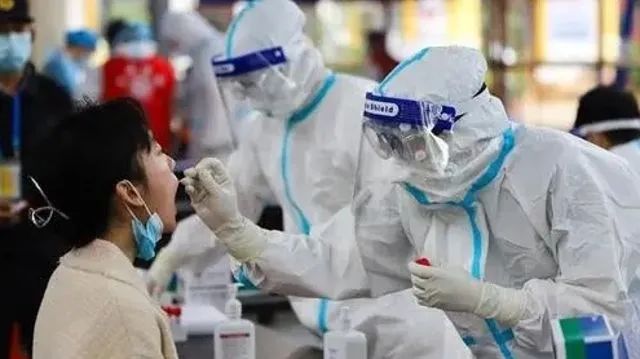
No.1: COVID-19’s "zero clearing" policy

(No zero Covid)

We have completed the pandemic. We haven’t finished yet. The finish line depends on where you live.

COVID-19’s "zero clearing" policy has brought huge supply chain advantages, but with the realization of group immunization under the coexistence mode, the zero clearing policy may bring huge risks, bring great uncertainty to the world economy, and aggravate the global supply chain crisis and inflationary pressure. 

For the world, this means more supply chain disruptions. Shipping restrictions, the outbreak of COVID-19 epidemic, and the shortage of personnel, raw materials and equipment will be aggravated by the failure of "clearing" in COVID-19, which will reduce the supply of goods. In addition, the high price of shipping will also hurt small and medium-sized enterprises, who have no resources to book containers, let alone ships. In 2022, supply restrictions will be reduced, but supply disruptions in many industries will continue. These supply chain problems will prompt the government to intervene, but state intervention may further distort the market and delay the adjustment incentives, thus making things worse.

At the same time, it also means more sustained inflation on a larger scale in the world. High inflation will breed inequality, aggravate economic insecurity and public dissatisfaction, and will continue to be a primary economic and political challenge. This will bring problems to central banks, who must strike a balance between promoting economic recovery and curbing price increases. Central banks in many emerging market countries have been forced to raise interest rates to curb rising inflation (and expectations of more inflation).

In 2022, emerging markets will continue to be hit by the COVID-19 epidemic. The demand for booster shots in rich countries will hinder the popularization of effective vaccines. The new epidemic will slow down the economic growth of emerging markets and make poorer governments bear more debts.

The above is a brief summary of the top ten global risk reports of Eurasia Group in 2022. It should be emphasized that this article, except for the remarks in brackets, is all the views in the report of Eurasia Group and does not represent the position of Qingquan. It must be said that some statements in the report are full of arrogance and prejudice of mainstream consulting think tanks in the United States and the West.

But overall, the report is full of professionalism, global vision and in-depth analysis. In fact, its core view is that the United States is the most powerful country in the world, but it is also the most divided, economically unequal and least vaccinated country among the G7 industrialized developed countries. China is the world’s second largest economy, but after 40 years of extraordinary growth, it is also facing enormous challenges, both to maintain growth and stability. Although the all-round game between China and the United States is intensifying and has reached the stage of "strategic stalemate", in the coming period, both sides will put more energy into the country, which reduces the possibility of conflict, but it also means less global leadership and coordination to meet the challenges of the world. The world will face a "G-0" era, and perhaps this is the biggest risk.

(The website of Eurasia Group’s report: Eurasia Group _ toprisks 2022.pdf. Part of this article refers to the statement in the "economic machine". This article was first published on WeChat WeChat official account "Qingquan Energy SpringEnergy", and is reproduced with authorization. This article only represents the author’s personal views, and has nothing to do with the position of Peking University Regional and National Research Institute. For quotation and reprinting, please contact "Qingquan Energy" WeChat WeChat official account. )   

False eyelashes hide real hidden dangers. Safety standards need to be strengthened behind the hot market.

"Sticking false eyelashes makes my eyes bigger." With the improvement of living standards, consumers’ pursuit of beauty is increasingly diversified and personalized, and the false eyelashes market has ushered in unprecedented development opportunities.

False eyelashes continue to be popular in the current beauty market with their rich style choices and styles that are updated quickly following the aesthetic trend. False eyelashes are favored by many female consumers because of their remarkable beautification effect, whether as an exquisite embellishment of daily makeup or as a finishing touch on important occasions. However, many consumers generally shed tears and smoke their eyes after making false eyelashes, which makes them worry about their eye health. So, will false eyelashes endanger the health of consumers? Are there relevant industry standards? The reporter conducted an investigation with these questions.

status

There is no mandatory national standard for false eyelashes.

Ruirui, a consumer, is a skilled makeup artist and usually likes to use disposable false eyelashes. She told reporters, "The choice of disposable false eyelashes is very flexible, so it can be easily replaced, and we can explore which style is more suitable for us, and we can make adjustments according to different makeup needs."

For the purchase channel of false eyelashes, another consumer Xiaowen suggested buying in a physical store as much as possible. "Buying false eyelashes in a physical store can visually see the price, and you can ask the staff for specific material information. Although it is convenient to buy online, the price difference is wide and there is a lack of physical reference, which always gives people a sense of uncertainty in opening a blind box. " Xiaowen said.

The reporter searched for false eyelashes on the shopping platform and found that the price range ranged from several yuan to more than one hundred yuan. The reporter noticed that almost all the glue-free false eyelashes in these products will be accompanied by a small eyelash glue, but the details page of some products did not clearly indicate their materials and production standards.

Are there any relevant standards to restrict false eyelashes? The reporter interviewed Dr. Feng Wen, a special expert of professional beauty course in Sichuan University. Feng Wen said: "False eyelashes have a recommended industry standard" False eyelashes for hair products "(QB/T 5774-2022), which regulates the production of false eyelashes from the aspects of appearance quality, material testing and microbial limit testing. In addition, the General Technical Specification for Hair Products (GB/T 41637-2022) outlines the quality and safety requirements of hair products, and specifies formaldehyde, pH value, odor, color fastness to rubbing, color fastness to perspiration and color fastness to water in view of the potential chemical and biological hazards such as heavy metals, sensitizing carcinogens, formaldehyde and pathogenic microorganisms that may exist in raw material acquisition, production and processing, and even wearing and using. However, this standard is also a recommended national standard and is not mandatory. "

So, does eyelash glue belong to cosmetics? Feng Wen said that false eyelash glue has not been included in the supervision scope of cosmetics, so there is no corresponding cosmetic standard to regulate its production and sales. Although there are no special laws or regulations to restrict the glue of false eyelashes and no mandatory standards, there are still some recommended standards to guide the production and quality control of false eyelashes.

"This does not mean that false eyelash glue is completely unregulated. According to the Regulations on the Supervision and Administration of Cosmetics, cosmetics refer to daily chemical industrial products that are applied to human surfaces such as skin, hair, nails and lips by rubbing, spraying or other similar methods for cleaning, protecting, beautifying and modifying. Although false eyelash glue does not constitute a specific category of cosmetics, it has become a part of eyelash cosmetics in the actual use process. Therefore, logically speaking, glue should be subject to safety standards and supervision similar to cosmetics. " Feng Wen said.

worry

Long-term use of false eyelashes poses health risks.

The reporter’s investigation found that at present, the choice of false eyelashes on the market is not limited to the traditional non-adhesive style, but also the non-adhesive and magnetic design false eyelashes have emerged. These new types of false eyelashes have greatly improved the convenience of wearing. Besides, going to grafting eyelash, a beauty salon, is also a convenient choice for many consumers.

"For a’ hand-disabled party’ like me, it is a good choice to pick up eyelashes. It is convenient and fast, and you don’t need to spend time posting it yourself. After completing an eyelash grafting, the effect can last for half a month to one month. Some stores will make up the fallen false eyelashes for consumers within a certain period of time, which is quite cost-effective. " In an interview with reporters, consumer Taotao said that eyelash receiving has become quite popular at present, and many friends around her are trying. In addition, there are various price levels in grafting eyelash, so consumers can choose the appropriate level according to their personal budget.

"The materials of false eyelashes are currently popular with collagen and feather softness." According to the introduction of a lasher in a lasher shop, the feather is softer and straighter, which is suitable for people with good eyelash support. If they are allergic or have soft eyelashes, it is recommended to choose collagen. This kind of false eyelashes is relatively low in allergenicity, and it is more convenient to have glue with the same brand.

The lasher said that the fake eyelashes and glue in the store are made by fixed and qualified manufacturers, and the price of fake eyelashes is determined according to the material and thickness. "Manufacturers basically produce according to the industry standard" False Eyelashes for Hair Products "(QB/T 5774-2022). As for the glue used to connect false eyelashes, there are many kinds. The glue on the market has a little smell. The better the glue, the lower the irritation. But no matter how much expensive the glue is, it is delicious to stick the false eyelashes. However, you don’t have to worry too much about formaldehyde. Except for a few merchants who buy cheap glue, there is generally no problem. " The eyeliner told the reporter.

However, some consumers said that in the process of attaching false eyelashes, the stimulation of glue easily leads to eye discomfort, and even after grafting, the eyes are still red and swollen with bloodshot, and they have doubts about the safety and health of frequently attaching eyelashes.

Is there any health risk of wearing false eyelashes for a long time or grafting false eyelashes frequently? How should consumers avoid these risks? The reporter interviewed Li Xiaofeng, head of the Ophthalmology Group of Aier Ophthalmology Sichuan Province. Li Xiaofeng said that wearing false eyelashes for a long time or grafting false eyelashes frequently is risky. "Wearing false eyelashes for a long time or grafting false eyelashes frequently will cause inflammatory stimulation, allergy and meibomian gland dysfunction. The meibomian gland secretes oil to protect tears and prevent tears from evaporating. If it is blocked by inflammation, it may cause dry eye with excessive evaporation, and the quality of life will also be affected. Therefore, consumers are advised to use false eyelashes as little as possible. If the eyes are not suitable after using false eyelashes, seek medical examination and treatment in time. "

point out

Pay attention to product identification when purchasing false eyelashes.

Everyone loves beauty. What problems should consumers pay attention to when choosing false eyelashes and grafting false eyelashes? Zhang Xiaomei, invited vice president of Sichuan Cosmetics Chamber of Commerce, said that consumers should first pay attention to whether there are relevant quality certification marks on the packaging of products when buying false eyelashes, such as ISO certification and quality inspection qualified marks, which can be used as a reference for selecting products. "In addition, in order to ensure product quality and consumer safety, manufacturers are advised to conduct quality inspection and obtain relevant quality inspection reports."

At the same time, Zhang Xiaomei made six tips for the purchase of false eyelashes-

Choose formal channels. Consumers should go to formal shopping malls and beauty nail shops to buy false eyelashes to avoid buying "three noes" products.

Pay attention to product identification. Pay attention to check whether the product identification is complete, including information such as production standards and manufacturers.

Choose famous brands. Although there is no well-known brand of false eyelashes on the market at present, choosing products of well-known brands can guarantee the product quality relatively.

Consider the material of false eyelashes. False eyelashes are made of animal hair such as mink hair and rabbit hair, but most of them are artificial fiber hair in the market. Consumers should understand the characteristics of different materials and choose products that suit them.

Check the product packaging. It is recommended to purchase plastic-sealed independent packaging products to minimize the probability of microbial contamination.

Price and quality. Although the price range of false eyelashes is quite different, the quality of products with too low price may not be guaranteed. Consumers should weigh the price and quality and choose products with high cost performance. (Yi Wang Consumer Quality News All Media Reporter Wang Wei)

British authorities report: China has become a global supply chain center.

  A report released by the British market research organization Marquette recently pointed out that China, while continuing to be a purchasing destination, "is no longer the target country for low-cost outsourcing business", but "has become the center of global supply chain". This has changed the long-standing impression of China as a "world factory".

  China, which controls a larger part of the global supply chain, is transforming the global trade model.

  "As the world’s second economy after the United States, China imported a large number of raw materials and parts from aluminum to microchips, and processed them into finished products such as Apple mobile phones and george foreman baking ovens for sale to the world." The American Wall Street Journal reported that over the years, this kind of import and export has promoted the prosperity and development of global trade, making China one of the most important export destinations. Today, China, which controls a larger part of the global supply chain, is transforming the global trade pattern.

  The report named "Global Purchasing Survey Trends" by Marquette Company is an annual survey for global purchasing activities and purchasing supervisors, aiming at evaluating the global risk environment and purchasing trends, which is highly authoritative, convincing and practical in the industry. The report points out that China’s role in the global supply chain continues to grow, and it has surpassed the "traditional role" of low-cost suppliers.

  The Independent commented that when people talk about China for a long time, it always seems that representative pictures such as "the factory of the world" come to mind. In fact, people can draw a conclusion from the report of Market Company that such a connection is "no longer correct and appropriate".

  For many reasons such as cost, for many years, large global enterprises have been increasing the share of manufacturing business in China, making use of China’s competitive labor price advantage to earn greater commercial value and seek more value-added space. However, with the continuous rise of China’s comprehensive national strength and the continuous improvement of people’s living standards, China’s labor wage level continues to rise, which objectively reduces China’s original attraction to cost-sensitive enterprises, and China’s traditional advantage of low labor cost is becoming weaker and weaker.

  According to the data released by the International Labour Organization, the average wage of China residents has doubled compared with 2006. Qi Wenli, head of global theme research at Standard Chartered Bank, regards the rising wage level of manufacturing labor in China as a "subversive trend".

  Roberts, a professor in the Department of International Trade at Westminster Business School in Britain, "fully recognized" the report of Marquette Company. In an interview with this reporter, he said that the outside world should re-evaluate China, correct the old concept of China formed before, and re-evaluate and examine China’s role orientation and important role in the global supply chain and industrial chain. According to Roberts, China, once a "world factory", is moving forward in the global supply chain and industrial chain.

  The transformation and upgrading of traditional industries in China provide new market opportunities for domestic and foreign investors.

  According to the report of Market Company, in fact, the supporting evidence of China as a low-cost procurement destination is decreasing. Paul robinson, an economist at Marquette, pointed out that the proportion of respondents who thought China was a low-cost purchasing destination was below 50% for the first time in 2016, which was significantly lower than 70% in 2012.

  The Financial Times reported that intermediate products and services from different places enter the finished product production through the global supply chain, which accounts for nearly 80% of global trade, including about $12 trillion in intermediate products and services trade. "It has begun to change the world". A study previously published by Standard Chartered Bank said that in the next 10 years, the change in the nature of global supply chain will reshape the global trade pattern. As the largest source of global supply chain, China will divest a large part of low-cost manufacturing.

  In Qi Wenli’s view, ASEAN and India are likely to benefit from this low-cost manufacturing migration, and Bangladesh and Africa will also get a share. China has regained the space for infrastructure construction, and at the same time, it has become a supplier of equipment and equipment for ASEAN and other economies. Qi Wenli believes that this transformation will obviously enhance the position of emerging market economies such as China in the global supply chain of manufacturing and service industries and consolidate their export strength. In fact, the share of emerging market economies such as China in global exports is already higher than that of developed economies.

  China has top-class infrastructure, skilled labor force and factories that thrive on technological innovation. All along, they have been deeply embedded in the huge supply chain of "Asian factory", which can smoothly assemble parts and raw materials from all over the world and make rapid adjustments according to the unpredictable tastes of global consumers. Blanchard, a senior researcher at the Peterson Institute for International Economics in the United States, made no secret that the global supply chain is mainly concentrated in China. If an American factory withdraws from China, it may lead to the collapse of the whole supply chain, which will be disastrous for American enterprises.

  Now, China is implementing an innovation-driven development strategy to promote mass entrepreneurship and innovation. The development of the new economy has brought new hopes, opportunities and vitality, created a large number of jobs, revitalized some excess capacity and idle assets, transformed and upgraded traditional industries, and provided new market opportunities for domestic and foreign investors. In a report released in 2016, the Boston Consulting Group analyzed that China, as the manufacturing center of the world, the new technology of Industry 4.0, represented by cloud computing, big data and artificial intelligence, will become the key to improve the efficiency of manufacturing industry.

  (Newspaper, London, February 9 th, our correspondent in the UK, Huang Peizhao)

Wuhan area Xingtu Lanyue price reduction information, discount 18,000! Today’s great discount

Welcome to the Autohome Wuhan Promotion Channel, here to bring you the latest and exciting news. This high-profile SUV model is on an unprecedented promotion in Wuhan. At present, consumers can enjoy a car purchase subsidy of up to 18,000 yuan, which has reduced the minimum starting price of Xingtu Lanyue to 175,900 yuan. This is a great opportunity not to be missed. Friends who want to know more about the current discount details and strive for higher discounts, don’t miss the "Check the car price" link in the quotation form. Let’s seize the perfect opportunity to buy a car together.

武汉地区星途揽月降价信息,优惠1.8万!今日钜惠

Xingtu Lanyue has attracted a lot of attention with its unique exterior design. The front face design adopts the family language, showing the combination of strength and refinement, and the air intake grille is decorated with a large area of chrome, which not only enhances the visual impact, but also highlights the sense of luxury. The overall style is tough and atmospheric, with smooth lines, giving a stable and luxurious visual experience, whether it is on the urban street or in the rural wilderness, it can become the focus of attention.

The side lines of Xingtu Luoyue are smooth and powerful. The body size is 4970mm x 1940mm x 1792mm, and the wheelbase is up to 2900mm. This dimensional design makes the body spacious and the driving stability can be improved. The front and rear wheel tracks are 1644mm, ensuring the balance of the vehicle during driving. The tire size adopts 245/50 R20, and it is matched with a delicate wheel design, which not only enhances the visual impact of the vehicle, but also provides good grip and comfort for driving.

武汉地区星途揽月降价信息,优惠1.8万!今日钜惠

The interior design of Xingtu Lanyue highlights the sense of luxury and technology. The exquisite leather steering wheel provides a comfortable grip and supports manual up and down and front and rear adjustments, allowing the driver to easily find the ideal position. The 15.6-inch central control screen stands in the center, integrating multimedia, navigation, telephone and many other functions. It is easy to operate and has excellent visual effects. As for the seats, high-quality leather materials are used. The main and passenger seats are equipped with front and rear, backrest adjustment and high and low adjustment. At the same time, heating and ventilation functions are provided to ensure a comfortable ride. The driver’s seat also has an additional power seat memory function, and the passenger seat also supports front and rear and backrest adjustment. The rear seats support proportional reclining, providing flexible loading space to meet daily changing needs. In addition, the configuration of the USB and Type-C ports in the car meets the charging and multimedia needs of passengers, and the wireless charging function brings a more convenient experience to the front passengers. Overall, the interior design of Xingtu Lanyue not only focuses on practicality, but also has a sense of high-end, creating a comfortable and technological riding environment for drivers and passengers.

武汉地区星途揽月降价信息,优惠1.8万!今日钜惠

Xingtu Lanyue is equipped with a powerful 2.0T engine with a maximum power of 192 kilowatts, which can output 261 horsepower. This engine has a peak torque of 400 Nm and is combined with an 8-speed automatic transmission. It not only guarantees the driving performance of the vehicle, but also provides a smooth gear shifting experience, bringing the driver a hearty driving pleasure.

Overall, Xingtu Lanyue has won the recognition of Autohome owners with its strong power and stable chassis. His much-admired interior design, spacious space and atmospheric appearance undoubtedly add comfort and dignity to his daily travel. And the intelligent car system enhances the technological sense of the driving experience. These advantages have made Xingtu Lanyue win a good reputation in the market and become an ideal choice in the hearts of many car buyers.

[Planning] Guide to Japanese Movie Dishes: Walking on the Edge of Life

foreword】 Counting, China fans are the most eye-catching. Various channels of DVD circulation have greatly facilitated the fans’ demand for watching new and old movies from all over the world.

Japanese films, as an important branch of the world’s national films, have not only sent the world hall-level masters such as Kenji Mizoguchi, KonIchikawa, Yasujirō Ozu, Kurosawa and Nagisa Ôshima, but also well-known directors such as Kitano Takeshi, Kiyoshi Kurosawa, Shunji Iwai, Yoichi Sai and Sanchi Chongshi who are active in today’s film industry. In the eyes of the world’s filmmakers, Japanese films are still the most powerful representatives of oriental films.

Japanese movies circulating in China through the big screen are rare, but this can’t stop the enthusiasm of many folk fans for Japanese movies at all. There is a serious team of Japanese fans hidden among the huge movie enthusiasts, and washing dishes has become the main channel for them to contact Japanese movies.

Based on the recommendation of Chinese and Japanese netizens, this issue summarizes ten Japanese movies that are suitable for lying in bed after a hard day’s work. Most of these ten movies capture the taste of life and reflect the meaning of existence and the value of life. You may wish to include them in your choice field of vision when you wash dishes next time. (Planning/Liu Ge)

Children in that street

Japanese:そののこどものののも Theater Edition’

Director:Inoue Gou

Production time:2010 years

Introduction to the film:At 5: 46 on January 17, 1995, the city was destroyed in a flash, and we survived. After the brave treatment of Hanshin Earthquake in childhood, Mei Xia now lives in Tokyo.

On the day before the 15th anniversary memorial meeting, they met by chance in Kobe. In order to face up to the scars left by her heart, Meixia decided to attend the memorial meeting this year, but Yongji came on a business trip and was not serious about this activity.

Two people walking in the streets of Kobe in the middle of the night, Misha noticed the past that Yong Zhi had buried for many years …


We have no tomorrow

Japanese:"I don’t know, tomorrow."

Director:Tanada Yuki

Production time:the year of 2008

Introduction to the film:Hiruma, Guo and Ando are three groups of 17-year-old high school students who are bad students.

Hiruma fell in love with his classmate Tomino, but one day he witnessed the scene where Tomino and the head teacher just came out of the lover’s hotel …


Taro worm (Caterpillar)

Japanese:『キャタピラー』

Director:Kōji Wakamatsu

Production time:2010 years

Introduction to the film:The husband who lost his limbs in the war and returned as a wounded soldier was believed as a god of war by the villagers.

And his wife is tired of satisfying his strong appetite and sexual desire ……。


Rashomon

Japanese:Rashomon

Director:Akira Kurosawa

Production time:1950

Introduction to the film:Tell the story of a samurai and his wife who were intercepted and bound by robbers on their long journey, and his wife was raped by robbers, and then the samurai died for unknown reasons. The scene and part of the plot come from Akutagawa Ryunosuke’s Rashomon.

The film expresses the meaning of "people can’t keep their words" through different descriptions of this incident.


"PiCNiC" (also known as "Dream Traveler")

Japanese:『PiCNiC』

Director:Shunji Iwai

Production time:In 1996

Introduction to the film:

Tell the story of Coco, Curly and Xiaowu who met in the mental hospital. They walk on the fence, fascinated by the fun of adventure, and firmly believe that "the end of the world is coming." In order to watch the end of the world, the three decided to have a picnic …

Night of heels

Japanese: リァリズムの \

Director:Yamashita Nobuhiro

Production time:In 2004

Introduction to the film:

The fledgling film director Toshihiro Kimura and playwright Kosuke Hirai visited a hot spring street in Shimane Prefecture, met a young woman and embarked on a trip of two men and one woman …


People’s Republic of China (PRC) Military Facilities Protection Law

Xinhua News Agency, Beijing, June 10th

People’s Republic of China (PRC) Military Facilities Protection Law

(Adopted at the 12th meeting of the 7th the NPC Standing Committee on February 23rd, 1990, the first amendment was made according to the Decision of the 10th meeting of the 11th the NPC Standing Committee on August 27th, 2009, and the second amendment was made according to the Decision of the 9th meeting of the 12th the NPC Standing Committee on June 27th, 2014, and revised at the 29th meeting of the 13th the NPC Standing Committee on June 10th, 2021).

catalogue

Chapter I General Provisions

Chapter II Delimitation of Military Restricted Zones and Military Administrative Zones

Chapter III Protection of Military Restricted Zones

Chapter IV Protection of Military Administrative Zones

Chapter V Protection of Military Facilities Not Classified into Military Restricted Zones and Military Administrative Zones

Chapter VI Management Responsibilities

Chapter VII Legal Liability

Chapter VIII Supplementary Provisions

Chapter I General Provisions

Article 1 This Law is formulated in accordance with the Constitution for the purpose of protecting the safety of military installations, ensuring the efficiency of military installations and the normal conduct of military activities, strengthening the modernization of national defense, consolidating national defense and resisting aggression.

Article 2 Military facilities mentioned in this Law refer to the following buildings, sites and equipment directly used by the state for military purposes:

(1) Command organs, ground and underground command projects and combat projects;

(2) Military airports, ports and docks;

(3) Camp, training ground and testing ground;

(4) Military caves and warehouses;

(five) military information infrastructure, military reconnaissance, navigation and observation stations, military surveying, navigation and navigation AIDS;

(6) Military highways, special railway lines, military power transmission lines and military oil, water and gas pipelines;

(7) frontier defense and coastal defense control facilities;

(eight) other military facilities stipulated by the State Council and the Central Military Commission (CMC).

The military facilities mentioned in the preceding paragraph include temporary facilities necessary for the army to perform its tasks.

Article 3 The protection of military facilities shall adhere to the leadership of the Communist Party of China (CPC). People’s governments at all levels and military organs should jointly protect military facilities and safeguard national defense interests.

The State Council and the Central Military Commission (CMC) are responsible for the protection of military facilities nationwide according to their division of responsibilities. Local people’s governments at various levels shall, jointly with relevant military organs, administer the protection of military facilities within their respective administrative areas.

The relevant military organs shall, in accordance with the prescribed authority and procedures, put forward the requirements for the protection of military facilities that need to be implemented by the local people’s government, and the local people’s government shall, in conjunction with the relevant military organs, formulate specific protection measures and implement them.

Where military facilities are installed, the relevant military organs and local people’s governments at or above the county level shall establish a coordination mechanism for the protection of military facilities, cooperate with each other, supervise and inspect the protection of military facilities, and coordinate and solve problems in the protection of military facilities.

Article 4 Organizations and citizens in People’s Republic of China (PRC) have the obligation to protect military installations.

It is forbidden for any organization or individual to destroy or endanger military facilities.

Any organization or individual has the right to report and accuse acts that destroy or endanger military facilities.

Article 5 The State gives overall consideration to economic construction, social development and the protection of military facilities, and promotes the coordination between economic and social development and the protection of military facilities.

Article 6 The State implements the policy of classified protection and ensuring key points for military facilities. The classification and protection standards for military installations shall be stipulated by the State Council and the Central Military Commission (CMC).

Article 7 The state shall adopt corresponding supporting policies and measures for places where military facilities and economic construction are greatly affected. Specific measures shall be formulated by the State Council and the Central Military Commission (CMC).

Article 8 Organizations and individuals who have made outstanding contributions to the protection of military facilities shall be commended and rewarded in accordance with the provisions of relevant laws and regulations.

Chapter II Delimitation of Military Restricted Zones and Military Administrative Zones

Article 9 Military restricted zones and military administrative zones shall be demarcated according to the nature, function, security and confidentiality requirements and efficiency requirements of military facilities. The specific demarcation standards and procedures shall be stipulated by the State Council and the Central Military Commission (CMC).

The term "military restricted zone" as mentioned in this Law refers to a military area with important military facilities or military facilities with high security and confidentiality requirements and major risk factors, which needs special measures to be protected by the state and is demarcated in accordance with legal procedures and standards.

The term "military administrative zone" as mentioned in this Law refers to a military zone with relatively important military facilities or military facilities with high security and confidentiality requirements and great risk factors, which needs the state to take special measures to protect it, and is demarcated in accordance with legal procedures and standards.

Tenth military restricted zones and military administrative zones shall be determined by the State Council and the Central Military Commission (CMC), or by the relevant military authorities in accordance with the provisions of the State Council and the Central Military Commission (CMC).

The revocation or alteration of the military restricted zone and the military administrative zone shall be handled in accordance with the provisions of the preceding paragraph.

Article 11 The scope of military restricted zones and military administrative zones on land and water shall be jointly delineated by the people’s governments of provinces, autonomous regions and municipalities directly under the Central Government and relevant military organs at or above the corps level, or by the people’s governments of provinces, autonomous regions and municipalities directly under the Central Government, relevant departments of the State Council and relevant military organs at or above the corps level. The scope of air military restricted zones and particularly important land and water military restricted zones shall be delineated by the State Council and the Central Military Commission (CMC).

The adjustment of the scope of military restricted zones and military administrative zones shall be handled in accordance with the provisions of the preceding paragraph.

Twelfth military restricted zones and military administrative zones shall be set up by the local people’s governments at or above the county level in accordance with the unified regulations of the state.

Article 13 The delineation or adjustment of the scope of military restricted zones and military administrative zones shall take into account economic construction, ecological environment protection and the production and life of local residents on the premise of ensuring the security and confidentiality of military facilities and their use efficiency.

If it is necessary to delimit or adjust the scope of military restricted zones and military administrative zones due to the construction of military facilities, it shall be completed before the construction of military facilities construction projects starts. However, unless approved by a military organ at or above the theater level.

Article 14 Delineation or adjustment of the scope of military restricted zones and military administrative zones shall be handled in accordance with the provisions of relevant laws and regulations if it is necessary to expropriate and requisition land, houses and other real estate, overwhelm mineral resources, or use sea areas and airspace.

Article 15 Where the temporary military facilities set up by the army to perform tasks need to delimit the temporary restricted military zones and temporary military administrative zones on land and water, they shall be jointly demarcated by the local people’s governments at or above the county level and the relevant military organs at or above the regimental level, and shall be filed with the organs at the next higher level respectively. Among them, if the functions and powers of the relevant maritime administrative agency are involved, their opinions shall be sought before delimitation. After delimitation, it shall be announced by the local people’s government at or above the county level or the relevant maritime administrative agency.

After the military completes its mission, it shall, in accordance with the procedures specified in the preceding paragraph, promptly cancel the designated temporary military restricted zones and temporary military administrative zones on land and water.

Chapter III Protection of Military Restricted Zones

Article 16 The administrative unit of the military restricted zone shall, according to the specific conditions and the designated scope, build fences, barbed wire and other obstacles for the land military restricted zone, and set obstacles or boundary markers for the water military restricted zone.

Where it is difficult to set obstacles or boundary markers in the actual waters within the scope of the military restricted zones in waters, the relevant maritime administrative agency shall announce the location and boundary of the military restricted zones in waters to the public. The military restricted zone in the sea area shall be marked on the chart.

Article 17 Personnel, vehicles, ships and others other than the land and water military restricted zones management units are prohibited from entering the military restricted zones, aircraft are prohibited from flying at low altitude over the land and water military restricted zones, and photography, video recording, reconnaissance, measurement, positioning, description and description of the military restricted zones are prohibited. However, unless approved by the relevant military authorities.

Aircraft are prohibited from entering the military restricted zone in the air, except those approved in accordance with relevant state regulations.

The use of photography, video recording, audio recording, survey, measurement, location, description and description of materials in military restricted zones shall be approved by the relevant military organs.

Article 18 It is forbidden to build or set up non-military facilities and to develop and utilize underground space in the land military restricted zone. However, unless approved by a military organ at or above the theater level.

In the military restricted zone of waters, it is forbidden to build or set up non-military facilities, and it is forbidden to engage in aquaculture, fishing and other activities that hinder the movement of military ships and endanger the safety and efficiency of military facilities.

Article 19 If the protective measures taken in the military restricted zones on land and water are insufficient to ensure the safety and confidentiality of military facilities, or the military facilities in the military restricted zones on land and water have significant risk factors, the people’s governments of provinces, autonomous regions and municipalities directly under the Central Government and the relevant military organs, or the people’s governments of provinces, autonomous regions and municipalities directly under the Central Government, the relevant departments of the State Council and the relevant military organs may jointly delimit the scope of the military restricted zones on land and water according to the nature, topography, local economic construction and social development.

Safety warning signs shall be set up by the local people’s governments at or above the county level in accordance with the unified regulations of the state, and the location shall be jointly determined by the military restricted zone management unit and the local people’s governments at or above the county level.

If it is difficult to set up safety warning signs in the actual waters within the security control scope around the military restricted zone in waters, it shall be implemented in accordance with the provisions of the second paragraph of Article 16 of this Law.

Article 20 Delineation of the security control scope around the military restricted zones on land and waters shall not change the ownership of the original land, land attachments and waters. Within the security control area around the military restricted zones on land and water, local residents can work and live as usual, but they are not allowed to carry out blasting, shooting or other activities that endanger the safety and efficiency of military facilities.

If the delineation of the security control scope around the military restricted zone affects the exercise of the rights of the real estate owner or usufructuary right holder, compensation shall be made in accordance with the provisions of relevant laws and regulations.

Chapter IV Protection of Military Administrative Zones

Article 21 The administrative unit of a military administrative zone shall, according to the specific conditions and the designated scope, build a fence, set up barbed wire or set up boundary markers for the military administrative zone.

Twenty-second personnel, vehicles, ships, etc. outside the administrative unit of the military administrative zone must be approved by the administrative unit of the military administrative zone to enter the military administrative zone or to take photos, video recordings, survey, measure, locate, describe and describe the military administrative zone.

Twenty-third in the land military administrative zone, it is forbidden to build or set up non-military facilities, and it is forbidden to develop and utilize underground space. However, unless approved by a military organ at or above the corps level.

It is forbidden to engage in aquaculture in the military administrative zone of waters; Without the approval of military organs at or above the corps level, non-military facilities shall not be built or set up; Fishing or other activities shall not affect the combat readiness, training, duty and other actions of military ships.

Twenty-fourth waters designated as military and civilian ports in military administrative zones shall be managed by military and civilian zones; Where it is necessary to build new non-military facilities in the waters under local administration, the consent of the unit in charge of military facilities must be obtained in advance.

Measures for the administration of airports, ports and docks for military and civilian use designated as military administrative zones shall be formulated by the State Council and the Central Military Commission (CMC).

Chapter V Protection of Military Facilities Not Classified into Military Restricted Zones and Military Administrative Zones

Twenty-fifth military facilities that are not classified into military restricted zones and military administrative zones shall be protected by military facilities management units; Management units at or above the regimental level may also entrust local people’s governments to protect them.

Article 26. Quarrying, taking soil, blasting and other activities within a certain distance of military facilities that are not included in the military restricted zone or the military administrative zone shall not endanger the safety and efficiency of military facilities.

Article 27 The scope of security protection shall be delineated on the periphery of combat projects that are not included in military restricted zones and military administrative zones. The scope of safety protection of combat engineering shall be jointly defined by the people’s governments of provinces, autonomous regions and municipalities directly under the Central Government and the relevant military organs according to the nature, topography and local economic construction and social development of combat engineering, or by the people’s governments of provinces, autonomous regions and municipalities directly under the Central Government, relevant departments of the State Council and relevant military organs. In areas where the layout of combat engineering is relatively concentrated, the scope of security protection of combat engineering can be delineated in contiguous pieces. The local people’s governments at or above the county level shall, in accordance with the relevant provisions, set boundary markers for the scope of safety protection of combat projects.

The revocation or adjustment of the scope of safety protection of combat engineering shall be handled in accordance with the provisions of the preceding paragraph.

Twenty-eighth delimit the scope of safety protection of combat projects, without changing the ownership of the original land and land attachments. Within the scope of safety protection of combat engineering, local residents can produce and live as usual, but they are not allowed to carry out mountain quarrying, mining and blasting; Engaged in building buildings, structures, roads, irrigation and water conservancy capital construction, logging and other activities, shall not endanger the safety and efficiency of combat engineering.

If the delineation of the scope of safety protection of combat projects affects the exercise of rights by real estate owners or usufructuary rights holders, compensation shall be made in accordance with the provisions of relevant laws and regulations.

It is forbidden to open closed combat projects without permission, to destroy the camouflage of combat projects, and to block access to combat projects. Without the approval of the superior competent military organ at or above the division level of the combat engineering management unit, photography, video recording, survey, measurement, positioning, description and description of the combat engineering shall not be carried out, and non-military materials and equipment shall not be stored in the combat engineering or engaged in production activities such as planting and breeding.

If it is really difficult to avoid combat engineering in new projects and construction projects, an application for dismantling or relocating or rebuilding combat engineering shall be made in accordance with the relevant provisions of the state; If the application is not approved, it shall not be dismantled or relocated or rebuilt.

Article 29 In the military airport clearance protection zone, it is forbidden to build buildings, structures or other facilities that exceed the airport clearance standard, and it is forbidden to engage in activities that affect flight safety and the use efficiency of airport navigation AIDS.

Military airport management units shall regularly check the airport clearance protection, and if they find that the buildings, structures or other facilities built exceed the standard of military airport clearance protection, they shall promptly report to the relevant military organs and the competent department of the local people’s government. The relevant military organs and the competent departments of the local people’s governments shall deal with them in a timely manner in accordance with the provisions of this law.

Article 30 The relevant military organs shall inform the local people’s government about the situation and needs of the clearance protection of local military airports.

The local people’s government shall inform the relevant military authorities about the local land and space planning and the construction plan of tall building projects that may affect the clearance protection of military airports.

The local people’s government shall formulate protective measures and urge the relevant units to set up flight obstacle signs for tall buildings, structures or other facilities in the clearance protection area of military airports.

Article 31 The relevant provisions on the clearance protection of military airports shall apply to the clearance protection of civil-military airports and the old airports and helicopter landing pads managed by the army.

The clearance protection of highway airstrips shall be implemented with reference to the relevant provisions on clearance protection of military airports.

Thirty-second local people’s governments at all levels and relevant military organs adopt the methods of entrusted custody and sectional responsibility to implement joint defense between the military and the people to protect the safety of military pipelines.

Underground military pipelines should be set up with route markers or permanent signs, and signs should be set up on vulnerable sections and parts. The underwater military pipeline in the sea area where the specific location, boundary and route have been announced shall be marked on the chart.

Article 33 Within the scope of electromagnetic environment protection of military radio fixed facilities, it is forbidden to build or install equipment and electromagnetic obstacles that affect the use efficiency of military radio fixed facilities, and it is forbidden to engage in activities that affect the electromagnetic environment of military radio fixed facilities.

Protection measures for electromagnetic environment of military radio fixed facilities shall be jointly determined by the military and local radio management institutions in accordance with the relevant provisions and standards of national radio management.

The provisions of the preceding two paragraphs shall apply to the protection of electromagnetic environment of radio fixed facilities in military restricted zones and military administrative zones.

The electromagnetic environment protection of military radio fixed facilities involves radio management between military systems and non-military systems, which shall be implemented in accordance with the relevant provisions of the state on radio management.

Article 34 Without the approval of the State Council and the Central Military Commission (CMC) or the authorities authorized by the State Council and the Central Military Commission (CMC), the frontier defense and coastal defense control facilities shall not be dismantled or moved, nor shall civilian facilities be built or set up on them. Arranging construction projects around frontier defense and coastal defense control facilities shall not endanger the safety and efficiency of frontier defense and coastal defense control facilities.

Article 35 No organization or individual may damage or move military surveying markers without authorization. Arranging construction projects around military surveying markers shall not endanger the safety and use efficiency of military surveying markers.

The protection of military surveying markers shall be implemented in accordance with the provisions of relevant laws and regulations.

Chapter VI Management Responsibilities

Article 36 The local people’s governments at or above the county level shall make plans for national economic and social development and arrange construction projects that may affect the protection of military facilities, and the relevant departments of the State Council and local people’s governments shall take into account the needs of the protection of military facilities and solicit the opinions of relevant military organs in writing in accordance with regulations. When necessary, the local people’s government may, jointly with relevant departments and relevant military organs, evaluate the construction project.

The relevant departments of the State Council or the local people’s governments at or above the county level shall examine the situation of soliciting opinions from military organs when examining and approving the construction projects specified in the preceding paragraph; If the opinions of the military organs are not solicited according to the regulations, they shall be asked to solicit opinions; If the changes in the contents of the construction project during the examination and approval process may affect the protection of military facilities, the opinions of the relevant military organs shall be sought again.

The relevant military organ shall submit a written reply within 30 days from the date of receiving the letter for comments; If it is necessary to consult a military organ at a higher level or to conduct investigation, measurement and testing, the time for reply may be appropriately extended, but usually it shall not exceed 90 days.

Article 37 The armed forces shall consider the needs of local economic construction, ecological environmental protection and social development when making plans for the construction of military facilities and organizing the construction of military facilities projects, conform to the overall requirements of land and space planning, and conduct safety and confidentiality environmental assessment and environmental impact assessment. Involving land and space planning, it shall solicit the opinions of the relevant departments and local people’s governments in the State Council, and try to avoid the red line of ecological protection, nature reserves, hot areas of local economic construction and areas with dense civilian facilities. If it is really unavoidable and it is necessary to dismantle or relocate the production and living facilities, it shall be done according to law.

Thirty-eighth local people’s governments at or above the county level shall avoid military facilities when arranging construction projects or opening up tourist attractions. If it is really unavoidable and it is necessary to dismantle, relocate or convert military facilities to civilian use, it shall be negotiated by the people’s governments of provinces, autonomous regions and municipalities directly under the Central Government or the relevant departments of the State Council and the military organs at the theater level, and reported to the State Council and the Central Military Commission (CMC) for approval or the authorities authorized by the State Council and the Central Military Commission (CMC) for approval; If it is necessary to rebuild military facilities, it shall be approved by the relevant military organs.

Where military facilities are demolished, relocated, rebuilt or converted to civilian use due to the reasons mentioned in the preceding paragraph, the local people’s government that requests them shall give policy support or financial subsidies to the relevant military organs in accordance with relevant regulations. Where the relocation or reconstruction of military facilities involves the use of land and sea islands, the local people’s government shall go through the relevant formalities in a timely manner according to law.

Article 39 If military facilities lose their effectiveness and need not be rebuilt due to the adjustment of military tasks, changes in surrounding environment and natural damage, the administrative unit of military facilities shall, in accordance with the prescribed procedures, promptly report to the State Council and the Central Military Commission (CMC) for approval or the authorities authorized by the State Council and the Central Military Commission (CMC) for approval, and dismantle them or convert them to civilian use.

After the army completes its mission, it shall dismantle the temporary military facilities set up in time.

Fortieth military airports and ports shall be jointly used by military and civilian, and shall be approved by the State Council and the Central Military Commission (CMC). The joint use of military and civilian wharf shall be approved by the people’s governments of provinces, autonomous regions and municipalities directly under the Central Government or the relevant departments of the State Council in conjunction with the military organs at the theater level.

Article 41 The local people’s governments at or above the county level shall, in conjunction with the units in charge of military facilities, formulate specific protective measures for military restricted zones, military administrative zones and military facilities that are not included in them, which may be announced for implementation.

Specific protection measures for military installations classified into military restricted zones and military administrative zones shall be submitted for approval together with the plan for delineating the scope of military restricted zones and military administrative zones.

Article 42 Military organs at all levels shall strictly perform their duties of protecting military facilities, educate military personnel to cherish military facilities, keep them secret, establish and improve rules and regulations for the protection of military facilities, and supervise, inspect and solve problems in the protection of military facilities.

The relevant military organs shall support and cooperate with law enforcement and judicial activities for the protection of military facilities.

Forty-third military facilities management units should conscientiously implement the rules and regulations on the protection of military facilities, establish military facilities files, and inspect and maintain military facilities.

Military facilities management units shall take safety monitoring and technical preventive measures for important parts of military facilities, and upgrade and improve them in a timely manner according to the needs of military facilities protection and scientific and technological progress.

Military facilities management units shall not use military facilities for non-military purposes, except for emergency rescue and other emergency tasks.

Article 44 The unit in charge of military facilities shall know about the construction projects around military facilities, and if it finds that it may endanger the safety and efficiency of military facilities, it shall promptly report to the relevant military organs and the competent department of the local people’s government, and cooperate with the relevant departments to deal with it according to law.

Article 45 The administrative units of military restricted zones and military administrative zones shall, in accordance with the provisions of relevant laws and regulations, protect the ecological environment, natural resources and cultural relics in the military restricted zones and military administrative zones.

Forty-sixth military facilities management units shall, when necessary, provide the local people’s governments at or above the county level with the location information of underground and underwater military pipelines. Local people’s governments shall protect underground and underwater military pipelines when local construction is carried out.

Article 47 People’s governments at all levels should strengthen education on national defense and the protection of military facilities, so that all citizens can enhance their awareness of national defense, protect military facilities, keep military facilities secret, and stop acts of destroying and endangering military facilities.

Article 48 The local people’s governments at or above the county level shall, jointly with the relevant military organs, organize regular inspections and assessments of the protection of military facilities within their respective administrative areas, urge them to rectify hidden dangers and problems that affect the protection of military facilities within a time limit, and improve the protection measures for military facilities.

Article 49 The State practices the responsibility system and assessment system for the protection of military facilities, and regards the completion of the protection of military facilities as the content of assessment and evaluation of local people’s governments, relevant military organs, military facilities management units and their responsible persons.

Article 50 Where a military restricted zone or a military administrative zone needs the assistance of a public security organ to maintain public security management order, a public security organ may be established upon the decision of the State Council and the Central Military Commission (CMC) or upon the approval of the public security organ of a province, autonomous region or municipality directly under the Central Government by the relevant military organ.

Article 51 In violation of the provisions of this Law, the personnel on duty of the unit in charge of military facilities shall stop any of the following circumstances:

(1) illegally entering a military restricted zone, a military administrative zone or flying at low altitude over a military restricted zone on land or in waters;

(2) Illegally photographing, videotaping, recording, surveying, measuring, locating, depicting and describing the military restricted zones and military administrative zones;

(3) engaging in activities that destroy or endanger military facilities.

Article 52 If one of the circumstances listed in Article 51 of this Law fails to stop it, the unit in charge of military facilities may, in accordance with the relevant provisions of the state, take the following measures:

(1) Forcibly take away and control the personnel who illegally enter the military restricted zone, the military administrative zone, or drive or control an aircraft to fly at low altitude over the military restricted zone on land and water, detain the personnel who violate the law seriously and immediately transfer them to organs with jurisdiction such as public security and national security;

(two) immediately stop the transmission of information and other acts, seize the equipment, tools or other articles used to commit illegal acts, and transfer them to public security, national security and other organs with jurisdiction;

(three) in case of emergency, remove obstacles that seriously endanger the safety and efficiency of military facilities;

(4) using weapons according to law in emergency situations such as endangering the safety of military facilities or the life safety of personnel on duty.

Soldiers, civilian military personnel and other military personnel who are under any of the circumstances listed in Article 51 of this Law shall be dealt with in accordance with the relevant provisions of the military.

Chapter VII Legal Liability

Article 53 Anyone who, in violation of the provisions of Article 17, Article 18 and Article 23 of this Law, enters the military restricted zone of waters without authorization, engages in aquaculture and fishing in the military restricted zone of waters, engages in aquaculture in the military administrative zone of waters, or engages in fishing in the military administrative zone of waters, which affects the actions of military vessels, shall be given a warning by the competent departments of transportation and fisheries, ordered to leave, and his fishing gear and catches shall be confiscated.

Article 54 Whoever, in violation of the provisions of Article 18, Article 23 and Article 24 of this Law, builds or sets up non-military facilities in the land and water military restricted zones and military administrative zones, or develops and utilizes the underground space of the land military restricted zones and military administrative zones without authorization, or builds or sets up non-military facilities in the waters under the local management of military and civilian ports designated as military administrative zones without the consent of the military facilities management unit, shall be ordered by the competent departments of housing and urban and rural construction, natural resources, transportation and fisheries to stop construction activities.

Article 55 Whoever, in violation of the provisions of the first paragraph of Article 28 of this Law, starts quarrying, mining and blasting within the scope of safety protection of combat projects shall be ordered by the competent departments of natural resources, ecological environment and public security organs to stop the illegal act and confiscate the products and illegal income; If the construction of buildings, structures, roads or capital construction of farmland water conservancy affects the safety and efficiency of combat projects, the competent departments of natural resources, ecological environment, transportation, agriculture and rural areas, housing and urban and rural construction shall give a warning and order it to make corrections within a time limit.

Article 56 Whoever, in violation of the provisions of the third paragraph of Article 28 of this Law, opens a closed combat project without permission, destroys the camouflage of the combat project, blocks the passage of the combat project, and uses the combat project for storing non-military materials and equipment or planting, breeding and other production activities, shall be ordered by the public security organ and the competent department of natural resources to stop the illegal act and restore the original state within a time limit.

Article 57 Whoever, in violation of Article 28, paragraph 4, and Article 34 of this Law, dismantles, relocates or reconstructs combat projects without authorization, or dismantles or moves frontier defense and coastal defense control facilities without authorization, shall be ordered by the competent department of housing and urban and rural construction and the public security organ to stop the illegal act and restore to the original state within a time limit.

Article 58 Where buildings, structures or other facilities that exceed the standard for the clearance protection of military airports are built in violation of the provisions of the first paragraph of Article 29 of this Law, the competent department of housing, urban and rural construction and natural resources shall order the removal of the ultra-high part within a time limit.

Article 59 Whoever, in violation of the provisions of Article 33 of this Law, constructs or sets up equipment and electromagnetic obstacles that affect the use efficiency of military radio fixed facilities within the scope of electromagnetic environment protection, or engages in activities that affect the electromagnetic environment of military radio fixed facilities, shall be given a warning by the competent departments of natural resources, ecological environment and radio management institutions and ordered to make corrections within a time limit; If no correction is made within the time limit, the jamming equipment shall be sealed up or obstacles shall be forcibly removed.

Sixtieth any of the following acts shall be subject to the punishment provisions of Article 23 of the People’s Republic of China (PRC) Public Security Administration Punishment Law:

(1) illegally entering a military restricted zone or a military administrative zone, or driving or manipulating an aircraft to fly at low altitude over a military restricted zone on land or water, and refusing to stop it;

(2) conducting activities that endanger the safety and use efficiency of military facilities within the security control range outside the military restricted zone, or within a certain distance of military facilities not included in the military restricted zone or the military administrative zone, and refusing to stop them;

(three) in the military airport clearance protection area, activities that affect flight safety and the efficiency of airport navigation AIDS are not stopped;

(4) illegally photographing, videotaping, recording, surveying, measuring, locating, depicting and describing the military restricted zones and military administrative zones, and refusing to stop them;

(5) Other acts that disturb the management order of military restricted zones and military administrative zones and endanger the safety of military facilities, if the circumstances are minor enough for criminal punishment.

Article 61 Whoever, in violation of state regulations, intentionally interferes with the normal work of military radio facilities, or causes harmful interference to military radio facilities, and refuses to make corrections according to the requirements of relevant competent departments, shall be punished in accordance with the provisions of Article 28 of the Law of People’s Republic of China (PRC) on Public Security Administration Punishment.

Article 62 Whoever destroys frontier defense and coastal defense control facilities, fences, barbed wire, boundary markers or other military facilities in military restricted zones and military administrative zones shall be punished in accordance with the provisions of Article 33 of the Law of People’s Republic of China (PRC) on Public Security Administration Punishment.

Article 63 Whoever commits one of the following acts, which constitutes a crime, shall be investigated for criminal responsibility according to law:

(1) destroying military facilities;

(2) negligently damaging military facilities, resulting in serious consequences;

(3) Stealing, robbing or robbing equipment, materials and equipment of military facilities;

(4) divulging secrets of military facilities, or stealing, spying, buying or illegally providing secrets of military facilities for overseas institutions, organizations and personnel;

(5) damaging the electromagnetic environment of military radio fixed facilities and interfering with military radio communication, if the circumstances are serious;

(six) other acts that disrupt the management order of military restricted zones and military administrative zones and endanger the safety of military facilities, if the circumstances are serious.

Sixty-fourth soldiers, military civilians and other military personnel who commit one of the following acts shall be punished in accordance with the relevant provisions of the military; If the case constitutes a crime, criminal responsibility shall be investigated according to law:

(1) Having the acts specified in Articles 53 to 63 of this Law;

(two) unauthorized use of military facilities for non-military purposes, or other abuse of power;

(3) AWOL or dereliction of duty.

Article 65 Any public official who neglects his duty, abuses his power or engages in malpractices for personal gain in the protection of military facilities shall be punished according to law; If a crime is constituted, criminal responsibility shall be investigated according to law.

Article 66 Whoever, in violation of the provisions of this Law, destroys or endangers military facilities shall be dealt with by the marine police agency according to law if it falls within the scope of functions and powers of the marine police agency.

In violation of the provisions of this law, there are other acts of destroying or endangering military facilities, which shall be dealt with by the relevant competent departments according to law.

Article 67 Whoever violates the provisions of this Law and causes losses to military facilities shall be liable for compensation according to law.

Article 68 Anyone who violates this Law in wartime shall be severely investigated for legal responsibility according to law.

Chapter VIII Supplementary Provisions

Article 69 This Law shall apply to the protection of military facilities belonging to the Chinese People’s Armed Police Force.

Article 70 The protection of facilities such as scientific research, production, testing and storage of important weapons and equipment in the national defense science, technology and industry shall be implemented with reference to the relevant provisions of this Law. Specific measures and facilities catalogue shall be stipulated by the State Council and the Central Military Commission (CMC).

Article 71 the State Council and the Central Military Commission (CMC) shall formulate measures for implementation in accordance with this Law.

Article 72 This Law shall come into force as of August 1, 2021.

Not strictly implementing the requirements of regular nucleic acid testing, many medical institutions in Beijing were informed criticism.

  CCTV News:According to WeChat official account, the official WeChat of the Beijing Municipal Health and Health Commission, recently, local cluster epidemics have occurred in many places in China, and the epidemic risk and prevention and control pressure faced by the capital continue to increase. In order to prevent the risk of imported epidemic, according to the requirements of the state and Beijing Municipality on further strengthening the prevention and control of infection in medical institutions, the Beijing Municipal Health and Health Commission recently checked the implementation of regular nucleic acid testing for staff of medical institutions above the second level in the city. After verification, it was found that the staff of Beijing Zhongkang Times Rehabilitation Hospital, Beijing Sihui Traditional Chinese Medicine Hospital, Beijing Baiziwan Meifuer Hospital, Beijing Liying Maternity Hospital, Beijing Yimeijia Chinese Medicine Hospital, Beijing Hepingli Hospital of Integrated Traditional Chinese and Western Medicine, Beijing Haidian District Synchronous Orthopedic Hospital of Traditional Chinese Medicine, Beijing Phoenix Women and Children Hospital, Beijing New Century Women and Children Hospital, Beijing Baofa Cancer Hospital and other medical institutions did not strictly carry out regular nucleic acid testing, which did not meet the relevant regulations on epidemic prevention and control of medical institutions.

  The Beijing Municipal Health and Health Commission emphasized that the implementation of regular nucleic acid testing requirements for staff in medical institutions is an important measure to prevent the epidemic from rebounding and strengthen the prevention and control of infection in medical institutions. All kinds of medical institutions at all levels in the city should take this as a warning, further enhance the sense of responsibility for epidemic prevention and control, strictly implement epidemic prevention and control measures such as nucleic acid testing and screening, timely discover the risk of nosocomial infection, and build a barrier for epidemic prevention and control of medical institutions. In the next step, the Municipal Health and Wellness Commission will further strengthen supervision in view of the weak links in the epidemic prevention and control of relevant units, and urge medical institutions to strictly implement various requirements for infection prevention and control through hospital self-examination, third-party spot checks, on-site inspections, etc., and continue to carry out informed criticism for medical institutions that violate the requirements for epidemic prevention and control, and severely deal with them according to laws and regulations.

National Defense Education Day | "Wolf Warriors-style" military training, looking forward to "blooming everywhere"

This year, a spring breeze is not as good as you, which aroused many viewers’ memories of military training. The collective life of standing in the military posture and practicing the queue is the common memory of most Chinese for military training. Recently, the military training called "Wolf Warriors style" has gradually appeared in the military training of freshmen in some middle schools in China.

In this kind of military training, sharpening training subjects such as carrying logs and flushing water guns have become highlights. Compared with the military training which is a little boring in the simple queue training, the "Wolf Warriors-style" military training has been positively evaluated by all walks of life. More "military flavor" makes the national defense education function undertaken by military training more deserved.

Military training is an important part of national defense education, and it is also a way for citizens to fulfill their military service obligations. In fact, military training, especially this kind of "Wolf Warriors-style" military training, is not uncommon all over the world. In many countries, military training not only undertakes the responsibility of national defense education for the whole people, but also undertakes the heavy responsibility of training reserve soldiers and officers.

The United States has enacted the Universal Military Training and Military Service Law, and set up reserve officer training groups in 400 colleges and universities and more than 650 senior middle schools across the country. Students can sign up voluntarily. Take a four-year school as an example. Generally, the first two years are 2 ~ 3 hours per week, mainly studying basic military courses, and the second two years are 5 hours per week, and attending a six-week military summer camp (equivalent to China’s centralized military training). And more American teenagers have been trained in skills such as first aid, marching, shooting and survival in the wild in the "Boy Scout" activities.

Russia requires male and middle school students in grade 10 to receive a five-day closed military training. Apart from the queue, light weapons decomposition and combination, live-fire shooting, fire fighting, medical rescue and chemical and biological protection skills are all training subjects. In addition, Russia has a juvenile military academy, which recruits teenagers aged 12 to 16 to study in the school, and began to train outstanding members of the armed forces at an early age.

The same is true in South Korea. Military training basically starts with dolls, and it is not uncommon to have "devil-like" training contents such as mountain climbing, hiking and snow tempering at night.

Let more people rest assured to embrace the Internet and build a highland of network security industry in Zhejiang.

  From November 7 th to 9 th, more than 1,000 important guests from all over the world will gather in Wuzhen, the ancient town, to open the grand event of the global Internet for the fifth time. World internet conference has been held for five consecutive years, which is an extraordinary five years. Big Data, Artificial Intelligence, Internet of Things … … The endless stream of new technologies and applications is gradually uncovering the future of digital China. From now on, Zhejiang Online launched the column "Extraordinary Five Years" to review and summarize Zhejiang’s extraordinary achievements in the field of digital economy and its increasingly prominent conference effect in social life.

  The scale of network security industry has reached more than 20 billion, and the scale of enterprises has exceeded 100, which has formed an industrial agglomeration effect. This is the data obtained by an expert group led by an academician of China Academy of Engineering during an inspection tour in Zhejiang in April this year.

  In addition to the output value, as one of the hot spots with the most Internet genes in China, Zhejiang has created a unique environment for the development of the network security industry: Greater Bay Area’s development strategy creates opportunities for enterprises to accelerate their development; The Hangzhou model of Internet Court was established to further purify cyberspace; Colleges and universities represented by Zhejiang University should improve the personnel training mechanism and enhance their future "hematopoietic" ability … …

11.jpg

  With artificial intelligence, the information superhighway has been speeding up. Only by making the roadbed more stable and the road network layout more smooth can safety not be left behind. With a solid foundation and long-term planning, Zhejiang is catching up.

  Move the court into cyberspace with the network management network

  "Now in court!" At 9: 40 am on August 18, 2017, with the sound of a gavel, the "first case" of Hangzhou Internet Court was officially opened for trial.

  In this special trial, there was only one judge at the scene. The original defendants in Hangzhou and Beijing, respectively, learned about the trial online in real time through the screen display in front of the judge. From "face to face" to "key to key", the centralized management and professional trial of network-related cases have opened a new chapter.

12.jpg

  Nowadays, in Hangzhou Internet Court, the whole process of prosecution, filing, giving evidence, trial and judgment is online, and the online trial mode has been normalized. According to court statistics, from the trial operation on May 1 last year to October 30 this year, 14,233 Internet cases were accepted and 11,794 cases were concluded, saving 65% and 25% of the average court session time and trial period respectively.

  Dean Du Qian said that as the first Internet court in China, over the past year or so, Hangzhou Internet Court has innovated the trial mode and re-engineered the litigation process, forming a "Hangzhou sample" for the construction of "six platforms, three models and one system" Internet courts:

  Initiate the "asynchronous trial mode" to further break the time and space restrictions and allow the subjects to complete the litigation in an asynchronous way; The first electronic evidence platform and judicial blockchain in China were launched to solve the problem of electronic evidence access certificate, which is conducive to pre-solving disputes. "The continuous pioneering of the Internet Court in Hangzhou has directly" moved "the solemn court of reality into the virtual space of the network, which really makes the lawsuit ‘ Don’t have to run once ’ " Du Qian added.

  At the beginning of the establishment of Hangzhou Internet Court, Shao Jingteng, vice president of Hangzhou Intermediate People’s Court, once said that "the first Internet court in China came into being in Hangzhou". Nowadays, with the landing of Internet courts in Beijing and Guangzhou, the "Hangzhou Experience" is being further spread across the country. Du Qian said: "Internet courts do not simply put ‘ Internet ’ With ‘ Court ’ The superposition of the two words, or the auxiliary use of Internet technology in judicial practice, is a major institutional innovation in which the judiciary actively adapts to the development trend of the Internet. "

  Cloud online and offline escort data

13.jpg

  How much volume data can a 7.8 cm *1.8 cm snowflake QR code hold? Yi Shen, general manager of Unitek, gave the answer of 32 A4 sheets.

  With only one mobile phone, one code and several original documents, Unitek’s digital information verification service technology can store, read and verify the authenticity of original documents such as ID cards, insurance policies and passports offline. "We condense the complete information of the document into a high-capacity two-dimensional code, which can only be opened by the authorized person to identify and read the compressed information and visually compare it." Yi Shen introduced that this technology is still the first at home and abroad.

  While the tangible personal information on the "ground" is secured, the wave of cloud computing is coming. With the rapid development of big data technology, many large, medium and small enterprises are trying to migrate various business processes to the cloud.

  At the nail carnival week in August this year, Hangzhou Anheng Information Technology Co., Ltd. launched the world’s first third-party security module — — Nail a secret shield, ranking first in thousands of paid applications. "In the era of digital economy, the concern of enterprises and governments for data security shows that data security has become an important issue for them to move towards digital economy and transformation." In the view of Fan Yuan, president of Anheng, enterprises’ concerns about data security and privacy are the main obstacles to the development of digital industrialization and industrial digitalization.

  Who can see the data sent to the cloud? Will it be lost or changed? How can I compensate if I lose it? In the past ten years, Anheng has been insisting on escorting industrial enterprises to the cloud. From the "old three samples" such as database audit to the combination of cloud security, situational awareness, big data and threat intelligence, Anheng has formed a three-dimensional and in-depth security system at three levels: before, during and after.

  Fan Yuan said that the decade of Anheng’s development is a microcosm of national cyber security. "In the era of new digital economy, security will eventually become a basic attribute. It is everywhere, and it will not make you feel its existence deliberately." He believes that with the comprehensive development of security technology and digital economy, security will really become a driving wheel to promote the development of digital economy.

  Professional training talents to light up the light of safety

  "Where there is network or information system coverage, fierce offensive and defensive confrontation may occur at any time." Ren Kui, director of the Cyberspace Security Research Center of Zhejiang University, mentioned that the arrival of new technological changes such as artificial intelligence and the Internet of Things is making the boundaries between online and offline gradually disappear.

  Cyberspace security governance shows the other side of "easy to attack and difficult to defend", which is the lack of professionals in the field of information security. The data shows that the gap of cyber security talents in China has reached more than 700,000 in 2017, and the demand for talents will increase to 1.4 million in 2020.

  "In developed countries such as the United States, computers started earlier, disciplines were laid out earlier, and the talent pool was undoubtedly more solid", but Ren Kui said that the talent potential of students in China’s first-class universities is the biggest bargaining chip to catch up with foreign advanced levels.

  He believes that compared with other regions, Zhejiang has formed an obvious Internet industry cluster around leading enterprises such as Alibaba and Hikvision, and the high-end talent agglomeration effect has been revealed; Active start-ups and private economic foundations will also provide service channels and landing soil for scientific research achievements used in Industry-University-Research; The implementation of policies such as the "West Science and Technology Corridor" has promoted major scientific research projects and application needs to go further and further in Zhejiang.

  Fan Yuan is also concerned about the cultivation of network security talents. From the enterprise’s point of view, he hopes to promote the development of network security by replacing training with competition and promoting learning with competition. In 2014, Anheng Cyber Security College was established, and in 2017, the certification and training system for cyber security talents was launched. Now, we have jointly built training bases with many universities in China. "We hope to cultivate talents through some practical experience to make up for the gap between college education and practical application."

  "The competition in cyberspace is, in the final analysis, the competition for talents." In the field of network security, the contest between hackers and Ke Bai is like the contest between spears and shields, which is endless. The cultivation of talents may be the constant pursuit of making the shield more solid, making new technologies better used by people and making the light of safety shine more brightly. (trainee reporter Zhao Mingjie)

Jiangsu announced the inspection results of environmental testing institutions: 22 institutions were ordered to rectify.

  Zhongxin. com, Nanjing, September 5 (Reporter Cui Jiaming) On the 5th, official website, the Environmental Protection Department of Jiangsu Province, announced the results of the special inspection on the quality of environmental testing institutions in the province in the first half of this year, and 22 institutions were ordered to rectify. Among them, four testing institutions were ordered to rectify and impose a fine of less than 10,000 yuan. During the rectification period, they were not allowed to issue testing data and results with proof to the society.

  From May to June, 2018, the environmental protection bureaus and quality supervision bureaus of all districts and cities in Jiangsu organized a total of 311 environmental testing institutions within their respective jurisdictions to carry out self-examination and self-correction of testing quality. From June 19th to 22nd, Jiangsu Provincial Environmental Protection Department and Jiangsu Provincial Quality Supervision Bureau carried out special supervision and inspection on 22 environmental testing institutions according to the principle of "double randomness". At the same time, the internal management, record report, quality system, technical ability and quantity traceability of each testing institution were inspected on the spot.

  Jiangsu Provincial Environmental Protection Department reported the results of this special inspection. Through the special inspection, it was found that the environmental testing institutions mainly changed and filed in time; Detection items or methods are out of range; There are defects in data traceability; The implementation of subcontracting management is not comprehensive; Inadequate and irregular resource allocation; The analysis operation is not standardized; Quality control measures are not in place and internal audit and management evaluation are not in place.

  According to the problems found in the special inspection, Jiangsu Provincial Environmental Protection Department announced the handling opinions on these 22 environmental testing institutions: Nanjing Baiyun Environmental Technology Group Co., Ltd., Jiangsu Taijie Zhibang Testing Technology Co., Ltd., Jiangsu Gaoyan Environmental Testing Co., Ltd. and Suqian suyu district Environmental Monitoring Station were ordered to rectify, and the market supervision department imposed a fine of less than 10,000 yuan. The rectification period did not exceed 3 months. During the rectification period, it was not allowed to issue proof inspection data and results to the society.

  Ten testing institutions, including Jiangsu Suhua Testing and Certification Technology Co., Ltd., Jiangsu Guoheng Testing Co., Ltd., Changzhou Jialan Environmental Testing Co., Ltd., Jiangsu Youlian Testing Technology Service Co., Ltd., Wuxi Zhongzheng Testing Technology Co., Ltd., Yangzhou Tripartite Testing Technology Co., Ltd., Ditian Ankang Testing Nantong Co., Ltd., Jiangsu Tongbiao Environmental Technology Development Co., Ltd., Jiangsu Zhongju Testing Service Co., Ltd. and Suzhou Guohuan Environmental Testing Co., Ltd., were ordered to make corrections within one month; If it fails to make corrections within the time limit or fails to meet the requirements after correction, the market supervision department shall impose a fine of less than 10,000 yuan.

  Six testing institutions, namely Nanjing Liuhe District Environmental Monitoring Station, Wuxi Taihelan Monitoring Technology Co., Ltd., Jiangsu Kangda Testing Technology Co., Ltd., Yangzhong Environmental Monitoring Station, Yizheng Environmental Monitoring Station and Jiangsu Guozheng Testing Co., Ltd., were ordered to rectify themselves. Nanjing Liankai Environmental Testing Technology Co., Ltd. and Jiangsu Best Environmental Testing Co., Ltd. were handed over to the local market supervision department for handling.

  Jiangsu Provincial Environmental Protection Department and Jiangsu Provincial Bureau of Quality Supervision require that all environmental testing institutions in this province should attach great importance to the problems found in special inspections, carefully sort out and analyze the reasons, make inferences by analogy, comprehensively rectify, earnestly implement quality control measures, establish and improve a quality management system, and comprehensively improve the quality of monitoring data to ensure the scientificity, accuracy and authenticity of monitoring data.