Tsinghua alumni independently developed MEMS insulin micropump module, which set off the fourth insulin therapy revolution.
Original Li Wenyun
"MEMS micropump is triggering the fourth insulin therapy revolution." Ma Shuo, founder of in-situ chip, shared.
In 1921, insulin was first discovered and used to treat type I diabetes. The treatment at that time was subcutaneous insulin injection.
In 1980, with the development of technology, insulin pen was developed on the basis of traditional syringe, which was smaller in size and more convenient to use. However, patients still need multiple injections every day, and each injection will lead to rapid fluctuations in insulin concentration, which can not simulate the secretion curve of physiological insulin, resulting in a blood sugar compliance rate of less than 40%, and still face a high risk of diabetic complications.
In the late 1990s, the motor-driven insulin pump came out. The servo motor is used to drive the screw rod connected with the medicine reservoir, so that insulin is infused subcutaneously, and CSII continuous subcutaneous insulin injection combining basal rate and meal rate is realized, so as to reduce blood sugar caused by blood sugar fluctuation caused by dawn effect. However, the servo motor is expensive and the initial cost is high, and the patient needs tens of thousands of yuan for a single purchase. In addition, patients also need to have certain operating skills and understanding of equipment, so as to reassemble the medicine reservoir, battery and other components every week.
In 2006, the American Insulet Company introduced the memory alloy secondary-throwing insulin pump, which uses the reciprocating deformation of the memory alloy under the condition of heating and heat dissipation to pull the gear set and the screw to move, thus replacing the expensive servo motor, and can provide the insulin with a constant speed and rapid action within 72 hours.
Although Insulet designed the whole insulin pump to be miniaturized, attached and disposable, its core drive module was not sold separately and was limited by technical principles, resulting in limited room for upgrading the pill dosage and daily average cost.
However, the medical device market urgently needs the sub-throwing core drive scheme to support product research and development and innovation. Then, can MEMS technology break this deadlock and provide more innovative driving modules for the market, so as to launch a new generation of insulin pump products?
With such thinking, in-situ chip has been devoted to research and development for many years and successfully developed MEMS insulin micropump module. The secondary insulin pump developed based on this module has the advantages of low initial investment cost, low daily average cost, low pill dosage and high modularity. Among them, the pill dosage as low as 0.01U will help the domestic secondary insulin pump to fill the blank, enhance the cooperation space of upstream and downstream medical device companies in product development, and is expected to set off the fourth insulin treatment revolution.

Insulin therapy reform, arterial network mapping
Tsinghua alumni join hands with experts from Chinese Academy of Sciences to start businesses.
In-situ Chip was founded in 2015 by professionals from Tsinghua University and Chinese Academy of Sciences. The company focuses on the research, development, production and sales of liquid medicine micropump infusion module, medical liquid flow sensor and silicon nitride film chip, and provides MEMS process development and slide service.
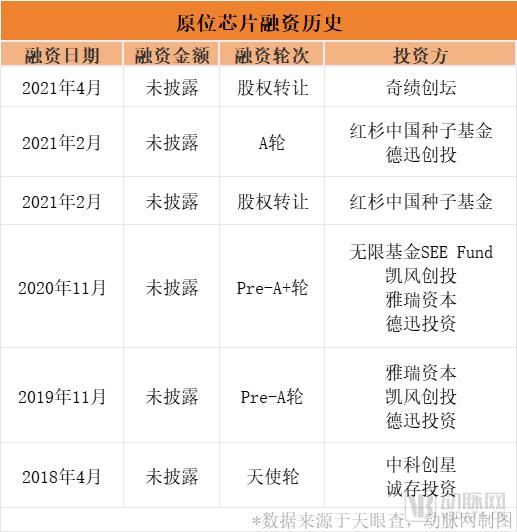
After nine years’ intensive cultivation, the company has mastered more than 60 leading MEMS technologies, and has full-stack R&D and production capacity, and has obtained tens of millions of investments from top VC institutions in China, such as Sequoia China Seed Fund, Infinite Fund SEE Fund, and Qiji Chuangtan.
Ma Shuo, the founder of the company, holds a master’s degree in Micro-Nano Electronics Department in Tsinghua University, and studies under Professor Ren Tianling. During his studies, he focused on the research of MEMS chips, which has broad application prospects in consumer electronics, industry, automobiles, medical care and other fields. However, more than 90% of these key chips have been imported for a long time, especially in the medical field, and the monopoly of MEMS chips is particularly serious.
Faced with such a huge challenge, what Ma Shuo sees is a rare opportunity and the responsibility and mission of microelectronics. After graduation, he resolutely founded the in-situ chip company, aiming at breaking the monopoly of foreign manufacturers and providing China’s medical device industry with independent research and development of "China Core".

Founder of in-situ chip Ma Shuo
At present, the in-situ chip focuses on the MEMS micropump technology platform and MEMS medical liquid flow sensing technology platform. Among them, MEMS insulin micropump module, as the core component of MEMS micropump technology platform, is particularly eye-catching. As the core component of insulin pump, it provides high-precision and low-cost solutions for downstream manufacturers, which is expected to help the breakthrough and popularization of secondary insulin pumps at home and abroad.
Self-developed MEMS insulin micropump module realizes high-precision insulin supply of 0.01U U.
MEMS micropump, that is, Micro Electromechanical Systems micropump, is a kind of small pump manufactured by micromachining technology, which can transport and control fluid on a micro scale. It has the characteristics of small size, light weight, low power consumption, low cost and accurate operation. It is suitable for a variety of application scenarios of precise drug delivery and microfluidic control.
The technical advantage of MEMS micropump lies in its high precision and controllability, which can realize liquid distribution in nanometer scale, provide ultra-smooth and ultra-quiet droplet transportation, and have the ability of rapid response and precise control. In addition, MEMS micropump can also be integrated into complex systems, such as automatic drug delivery equipment and microfluidic experimental platform, thus improving the performance and efficiency of the whole system.
The in-situ chip lasted for 5 years. Through the combination of "silicon-based micropump chip and piezoelectric ceramic driver", MEMS insulin micropump module was developed and produced for high-precision insulin supply.
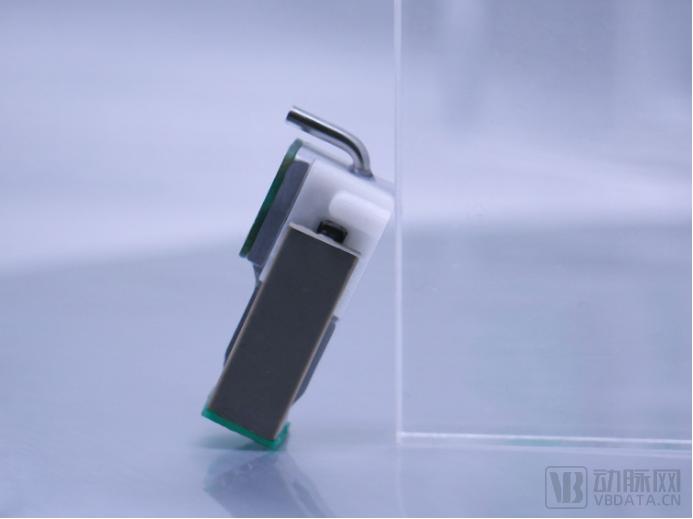
MEMS insulin micropump module
The core of micropump module is mainly composed of two parts, namely micropump chip and piezoelectric ceramics. After receiving the control signal, the piezoelectric ceramics undergo reciprocating deformation based on the inverse piezoelectric effect and act on the pump cavity of the micropump chip. The micro-pump chip integrates a one-way valve and a variable volume pump cavity based on semiconductor technology. Driven by piezoelectric ceramics, the micro-pump chip sucks and outputs a fixed volume of liquid at a time.
This scheme skillfully avoids the high cost and volume problems caused by the need for complex components to be integrated on the MEMS chip, and also breaks through the accuracy limitation of the memory alloy driver, and has the function of fault detection and alarm. The pumping accuracy reaches 5%, and the minimum dosage of pills can reach 0.01U u. At the same time, the volume of the pump body is greatly reduced and the manufacturing cost is reduced, and the high-precision drug delivery control is improved, and the maximum output pressure reaches 16Psi.
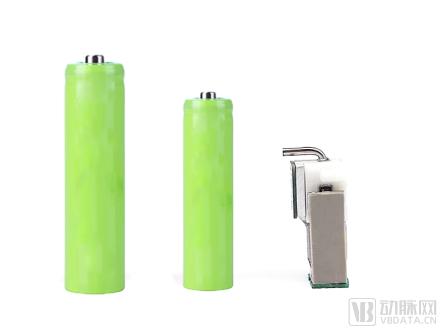
MEMS insulin micropump module is smaller than No.5 and No.7 batteries.
In addition, the in-situ chip has also developed a special packaging process and applied for a number of patents. Moreover, the whole module comes from domestic supply chain, which can provide stable and reliable supply for downstream manufacturers.
"Our MEMS insulin micropump module is safe, reliable and highly modular. What the downstream manufacturers get is a module with high comprehensive performance, which is a mature module composed of micropump chip and pressure sensor chip, which can not only realize pumping, but also realize pressure detection. It not only helps downstream customers’ products to have a more concise and clear internal product structure, but also makes it easier to ensure the reliability of medical products. " Ma Shuo added.
It is reported that the MEMS insulin micropump module with in-situ chip has been favored by many insulin manufacturers. It is hoped that the MEMS micropump module will replace the currently used micromotor, so as to introduce a disposable insulin pump with low cost and high precision to meet the urgent demand of the market for efficient, convenient, economical and practical insulin treatment solutions.
In addition, the module can also be extended to biomedical enterprises to launch animal drug experiments and slow-release drug injection micropumps. Realize the accurate injection and supply of anesthetic, analgesic and other liquid medicines.
Full-stack self-research and patent layout to build a moat have entered the stage of commercialization.
The application of secondary throwing insulin pump has been widely verified overseas. According to the disclosure of the American Insulet company, by 2023, about 425,000 people around the world are using its Omnipod insulin pump system, with an annual revenue of $1.7 billion. In the same year, the approval of domestic secondary throwing insulin pump was blank.
Core components are the key factors that cause this gap. Ma Shuo further revealed three difficulties: firstly, the patent barrier faced by the process design and chip design of the secondary throwing insulin pump constitutes an important obstacle on the road of research and development; Secondly, the know-how of the process is also a difficulty, and the launch of new devices requires a new process that matches it, including the patent protection of packaging process and supporting structure; Finally, the design and development of internal supporting modules can not be ignored, which involves many technical links such as circuit design. After years of hard work, the in-situ chip has achieved full-stack self-research from chip to module, and 27 patents have been granted.
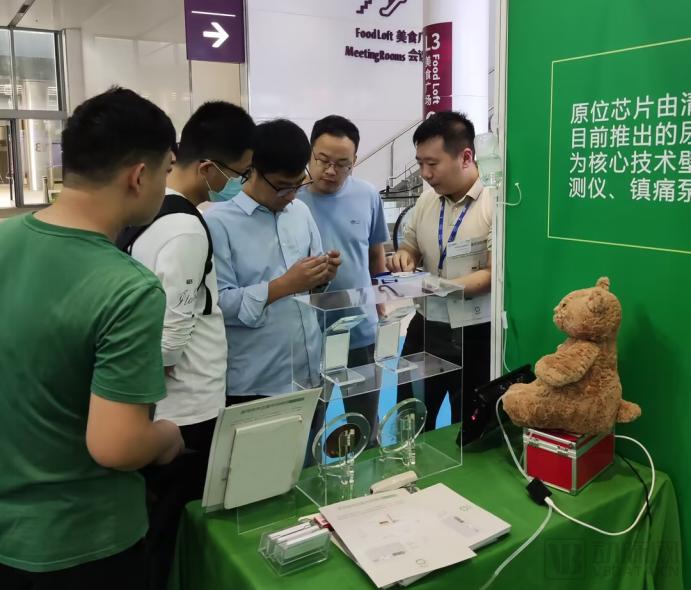
At present, the company’s self-developed MEMS liquid micropump module and medical liquid flow sensor have reached in-depth cooperation with various medical device manufacturers such as insulin pumps and clinical monitoring equipment, filling the gap in the domestic related product market. Next, the company will actively plan the production line of self-built chips, packaging and testing to prepare for the subsequent capacity increase.
Disclaimer: The intellectual property rights of the contents published in Arterial Network are exclusively owned or held by Arterial Network and related obligees. Without permission, it is forbidden to reprint, extract, copy and create mirror images.
Arterial network, the future medical service platform
Original title: "Set off the fourth insulin therapy revolution! Tsinghua alumni independently developed MEMS insulin micropump module to realize the drug supply of 0.01U pellets.
Read the original text